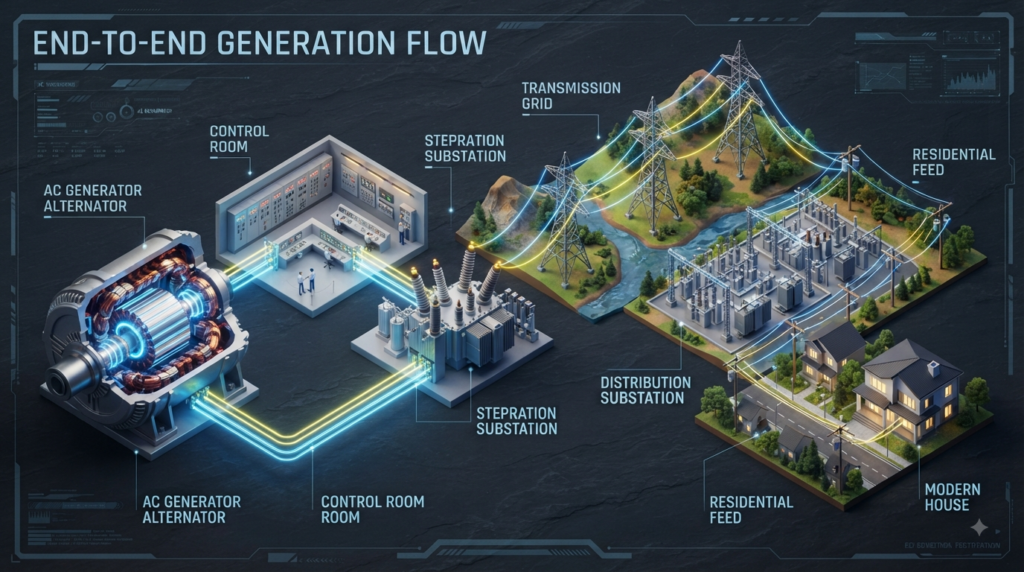
Electricity Kaise Banti Hai?
जब हम घर में पंखा चलाते हैं, मोटर स्टार्ट करते हैं, मोबाइल चार्ज करते हैं या किसी factory में बड़ी मशीन operate करते हैं, तो हमारे दिमाग में अक्सर एक simple सवाल आता है—
“आखिर यह electricity बनती कहाँ है?”
हम switch ON करते हैं और electrical equipment चलने लगता है। लेकिन power plant के अंदर इसके पीछे क्या हो रहा होता है?
- ❓ कौन-सी machine electricity बनाती है?
- ❓ क्या generator खुद बिजली पैदा करता है?
- ❓ Rotor और Stator का क्या काम है?
- ❓ Magnetic field electricity में कैसे बदलता है?
- ❓ और आखिर एक generator से निकलने वाली AC supply हमारे घर, industry और पूरे electrical grid तक कैसे पहुँचती है?
इन सभी सवालों का जवाब हमें AC Generator या Alternator की working को समझकर मिलता है।
एक modern power system में generator सिर्फ एक rotating machine नहीं है। यह वह महत्वपूर्ण electromechanical energy-conversion machine है जो mechanical energy को electrical energy में बदलती है।
लेकिन इस conversion के पीछे Prime Mover, Rotor, Magnetic Field, Stator, Electromagnetic Induction और Three-Phase AC Generation जैसी कई engineering concepts मिलकर काम करती हैं।
इस पूरे article में हम AC Generator को बिल्कुल basic level से समझेंगे और धीरे-धीरे उस point तक पहुँचेंगे जहाँ हमें इसकी complete working एक continuous process की तरह दिखाई देने लगेगी।
📚 इस Article में हम क्या सीखेंगे?
इस Part 1 में हम समझेंगे:
1. Electricity आखिर आती कहाँ से है?
सबसे पहले एक basic misconception दूर करते हैं।
जब हम कहते हैं:
“Generator electricity बनाता है।”
तो यह statement practical language में सही है, लेकिन engineering point of view से इसे थोड़ा और accurately समझना चाहिए।
Generator energy को create नहीं करता। वह available energy को एक form से दूसरी form में convert करता है।
अधिकतर large electrical generators में mechanical energy को electrical energy में बदला जाता है:
यानी generator को पहले mechanical energy देनी पड़ती है। यह mechanical energy अलग-अलग sources से आ सकती है। उदाहरण के लिए:
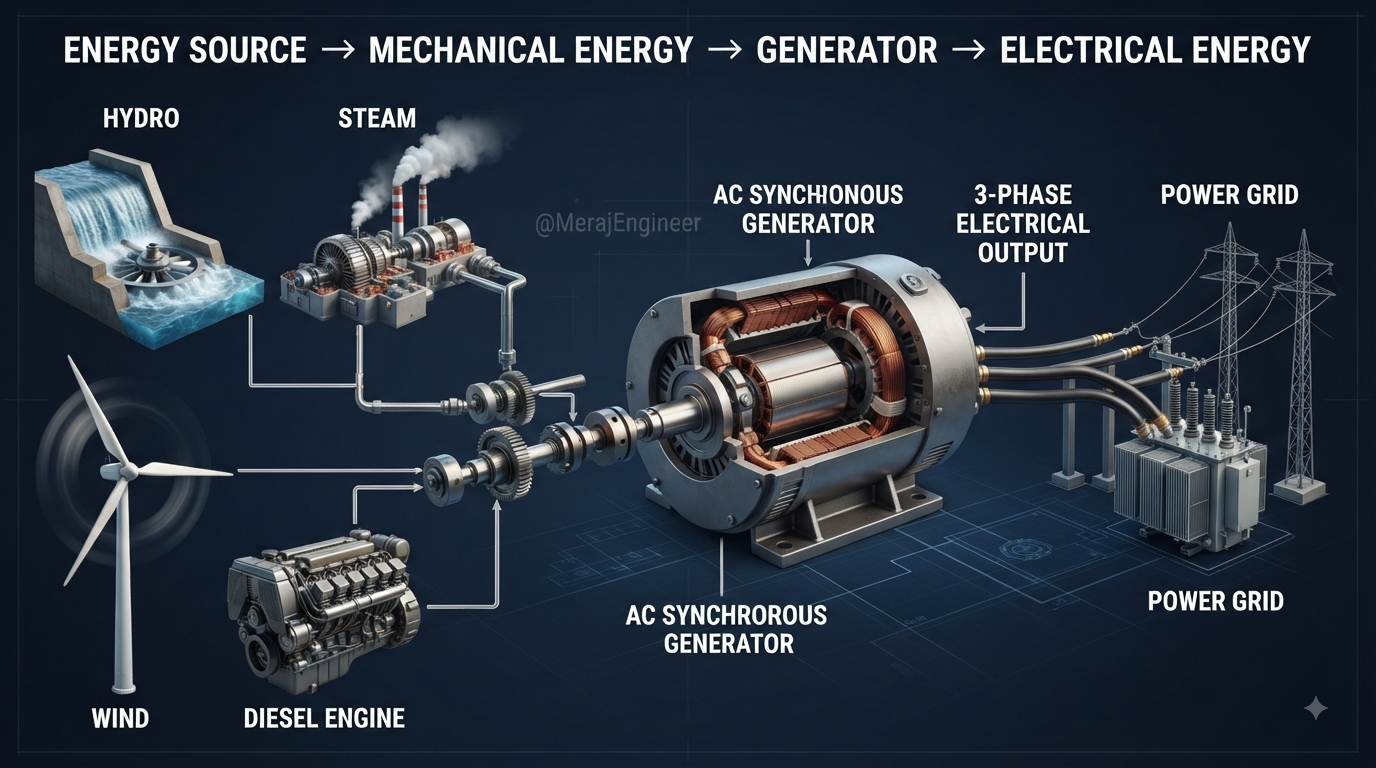
🌊 Hydroelectric Power Plant
बहते या गिरते हुए पानी की energy turbine को घुमाती है।
🔥 Thermal Power Plant
Fuel से heat generate होती है, उससे steam बनती है और steam turbine को घुमाती है।
🌬️ Wind Power Plant
हवा turbine blades को घुमाती है।
🚜 Diesel Generator
Diesel engine mechanical shaft power देता है।
इसलिए generator को एक Energy Converter के रूप में समझना सबसे सही है।
2. Generator क्या है?
अब basic definition समझते हैं।
Electrical Generator एक ऐसी electromechanical machine है जो mechanical energy को electrical energy में convert करती है।
इस conversion का आधार है:
Generator के अंदर mechanical rotation और magnetic field की interaction के कारण electrical EMF उत्पन्न होती है।
Generator की construction और design application के अनुसार अलग-अलग हो सकती है।
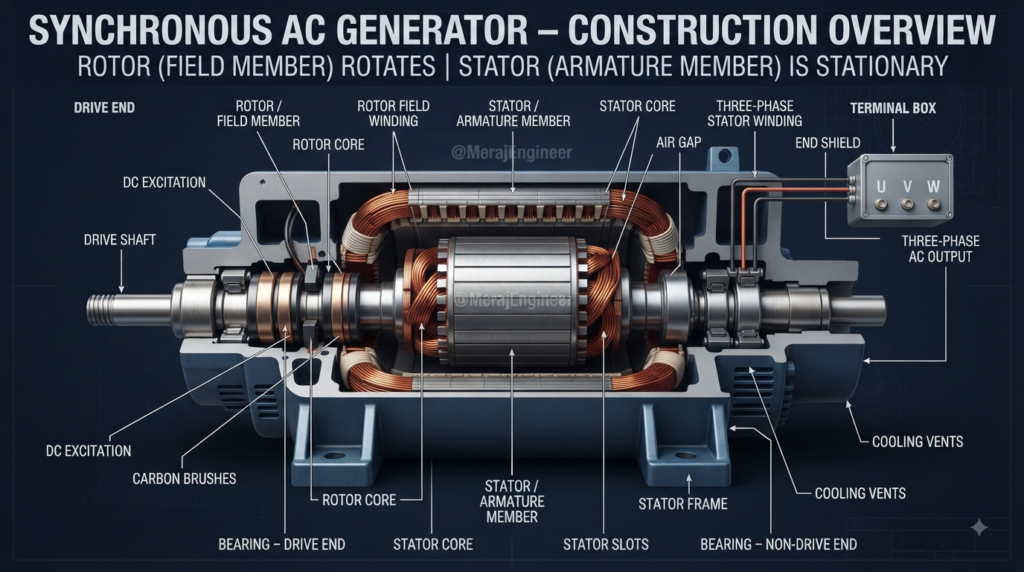
लेकिन AC synchronous generator को समझने के लिए दो मुख्य components सबसे महत्वपूर्ण हैं:
🔄 Rotor
जो घूमता है (Rotating Part)।
🛡️ Stator
जो स्थिर रहता है (Stationary Part)।
Large synchronous alternators में सामान्य arrangement में rotor पर field system और stator पर main armature winding होती है।
3. AC Generator का दिल: Alternator
अब हम AC Generator के एक बहुत important नाम पर आते हैं—
⚡ Alternator
Alternator वह electrical generator है जो alternating current (AC) generate करता है।
Practical power systems में बड़े synchronous generators को सामान्यतः alternators कहा जाता है।
लेकिन यहाँ एक terminology point समझना जरूरी है:
🏢 Generator (Broad Term)
Electrical energy generate करने वाली machines की general category है।
⚡ Alternator (Specific Term)
विशेष रूप से AC generate करने वाला generator है।
यानी हर alternator एक generator है, लेकिन “generator” शब्द अपने आप में केवल alternator तक सीमित नहीं है।
4. Mechanical Energy से Electrical Energy तक
अब generator की पूरी philosophy को समझते हैं।
मान लीजिए हमारे पास एक turbine है। Turbine घूमती है।
Turbine का shaft generator के rotor से mechanically connected होता है:
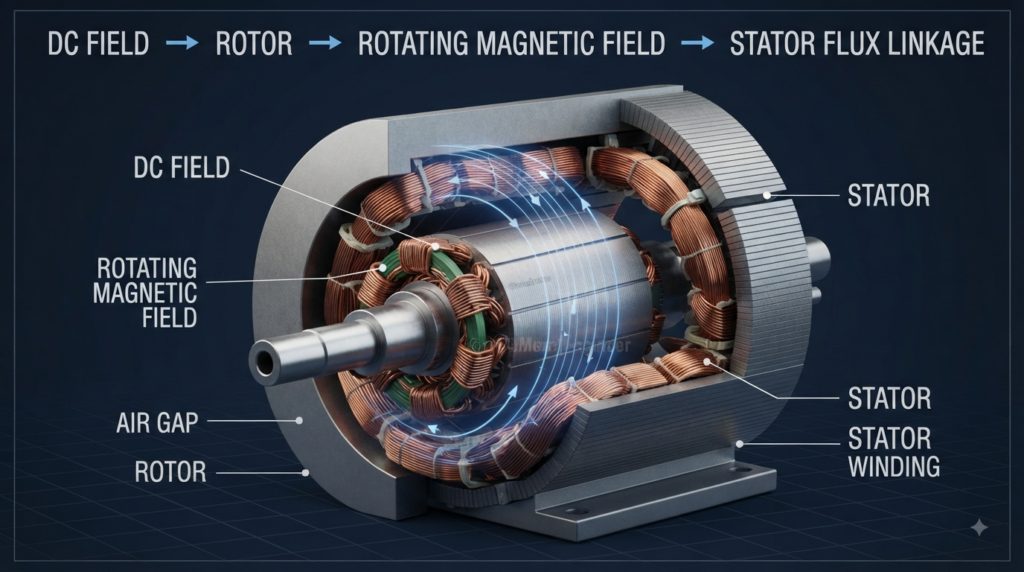
अब rotor पर magnetic field मौजूद है। Rotor के घूमने से magnetic field भी rotate करता है।
यह rotating magnetic field stator winding के साथ interact करता है।
फिर electromagnetic induction के कारण stator winding में EMF उत्पन्न होती है।
यही AC generator की fundamental working है।
5. Electromagnetic Induction क्या है?
अब हम generator के सबसे महत्वपूर्ण principle पर आते हैं—
Simple language में:
“जब किसी conductor या winding के साथ linked magnetic flux समय के साथ बदलता है, तो उसमें EMF induce हो सकती है।”
यही principle generator के operation का मुख्य आधार है।
💡 एक Basic Example:
- मान लीजिए एक coil के पास magnetic field मौजूद है।
- अगर magnetic field और coil के बीच relative movement (आपसी गति) होती है, तो coil से linked magnetic flux बदल सकता है।
- इस changing flux के कारण coil में EMF induce होती है।
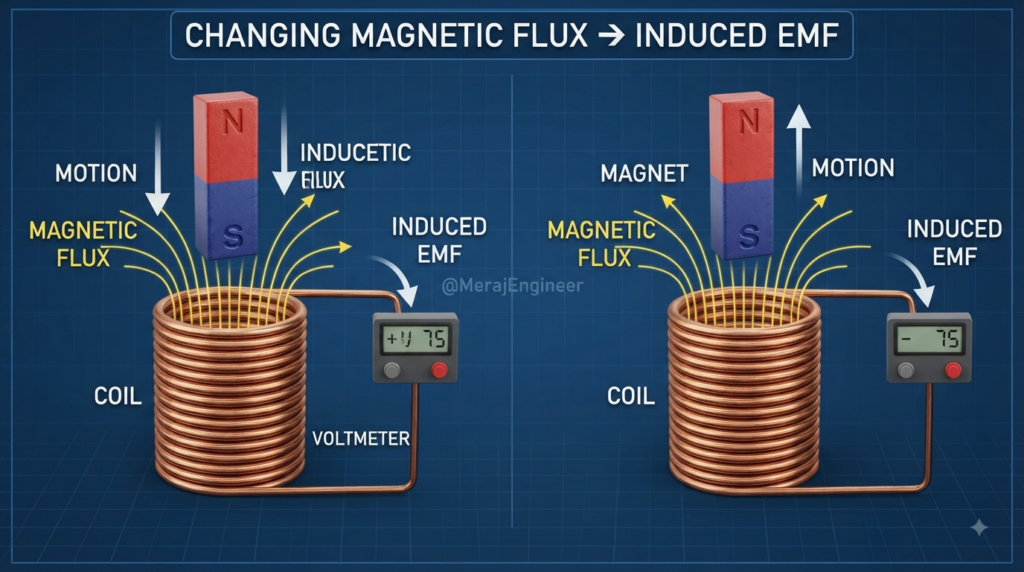
Generator में इसी principle को controlled और continuous तरीके से इस्तेमाल किया जाता है।
6. Faraday’s Law क्या कहता है?
Electromagnetic induction को mathematically समझाने के लिए हम Faraday’s Law का उपयोग करते हैं।
जहाँ variables का मतलब है:
यह equation बताती है कि induced EMF magnetic flux के समय के साथ बदलने की rate पर depend करती है।
- यदि flux linkage तेजी से बदलता है, तो induced EMF का magnitude अधिक हो सकता है।
- और यदि flux change नहीं हो रहा है, तो इस idealized induction relationship में induced EMF का corresponding contribution नहीं होगा।
💡 Equation में Minus (-) Sign भी बहुत महत्वपूर्ण है। यह हमें आगे Lenz’s Law की दिशा से जोड़ता है।
7. Lenz’s Law — Generator को “पीछे से धक्का” क्यों महसूस होता है?
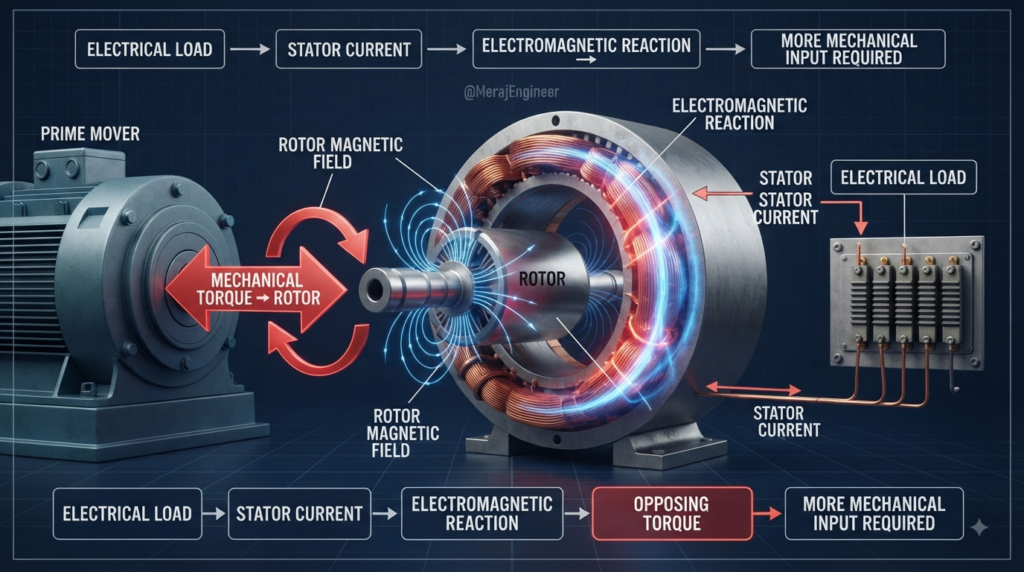
Lenz’s Law के अनुसार induced current की direction ऐसी होती है कि वह उस change का विरोध करती है जिसने उसे उत्पन्न किया।
Generator में यह concept एक बहुत interesting physical consequence देता है।
⚙️ Electromechanical Reaction:
जब generator electrical load को power देता है, तो stator current का electromagnetic effect rotor motion का विरोध करने वाली electromagnetic torque (opposing torque) पैदा करने की tendency रखता है।
इसलिए prime mover को generator को उसी speed पर चलाए रखने के लिए अधिक mechanical torque देना पड़ता है।
यही कारण है कि generator से ज्यादा electrical power लेने पर prime mover को भी ज्यादा mechanical power supply करनी पड़ती है। यहाँ Energy Conservation और Electromagnetic Interaction दोनों साफ़ दिखाई देते हैं।
8. EMF क्या है?
EMF का पूरा नाम है:
लेकिन नाम में “Force” होने के बावजूद EMF वास्तव में कोई mechanical force नहीं है।
यह electrical potential difference से संबंधित quantity है, जो source द्वारा electric charge को energy देने की क्षमता को दर्शाती है।
Generator में electromagnetic induction के कारण generated EMF उत्पन्न होती है:
💡 यदि generator का output open-circuit condition में है, तो terminal voltage, generated internal EMF से closely related होती है (हालांकि practical machines में internal losses के कारण exact equality हमेशा नहीं मानी जाती)।
9. Prime Mover क्या होता है?
Generator को खुद घूमने के लिए mechanical energy की आवश्यकता होती है।
Generator के rotor को mechanical power देने वाली machine को Prime Mover कहा जाता है।
Prime Mover के मुख्य उदाहरण (Examples):
एक simple relationship:
यानी prime mover और generator मिलकर एक complete power-generation system बनाते हैं।
10. Diesel और Gas Engine से Generator Drive
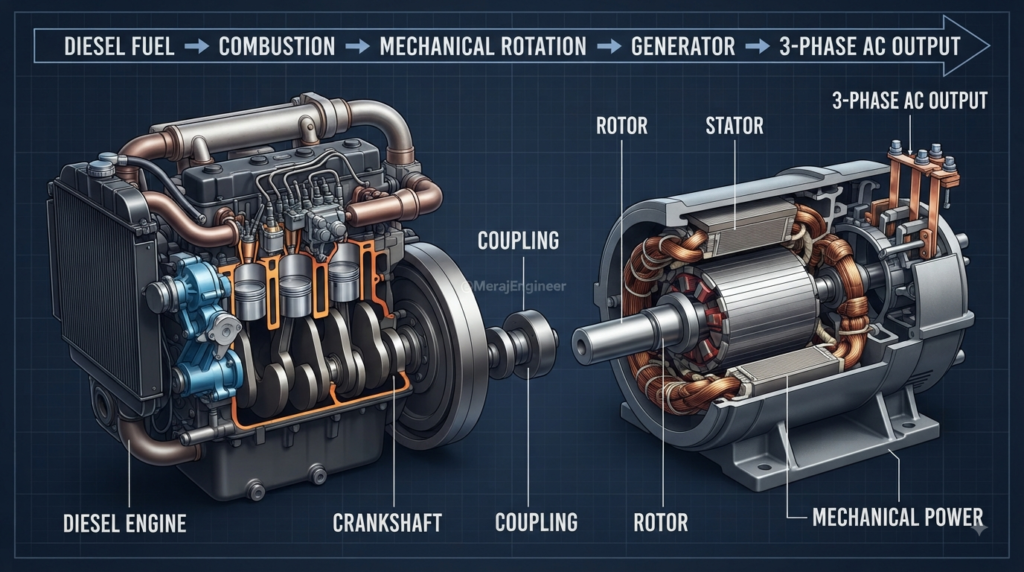
Diesel generator sets (DG Sets) में diesel engine prime mover की भूमिका निभाता है।
Diesel engine fuel की chemical energy को combustion के माध्यम से mechanical energy में convert करता है।
फिर engine का crankshaft generator के rotor shaft से mechanically coupled होता है।
Gas engine भी इसी तरह mechanical shaft power provide कर सकता है।
इस type के systems में engine governor speed को control करने में महत्वपूर्ण role निभाता है।
Synchronous generator में speed (RPM) और frequency का संबंध:
इसलिए frequency को स्थिर रखने के लिए Prime Mover की Speed maintain करना ज़रूरी है।
11. Steam Turbine और Generator
Large thermal power plants में generator को अक्सर steam turbine drive करती है।
Basic Energy Chain:
Steam turbine में high-pressure और high-temperature steam turbine blades पर expansion के दौरान mechanical work करती है।
Turbine shaft generator rotor से coupled होता है, जिससे turbine की rotation generator को mechanical input देती है।
💡 Large turbo-generators में अक्सर high-speed cylindrical rotor design का उपयोग किया जाता है। (इसका detailed construction हम Part 2 में समझेंगे।)
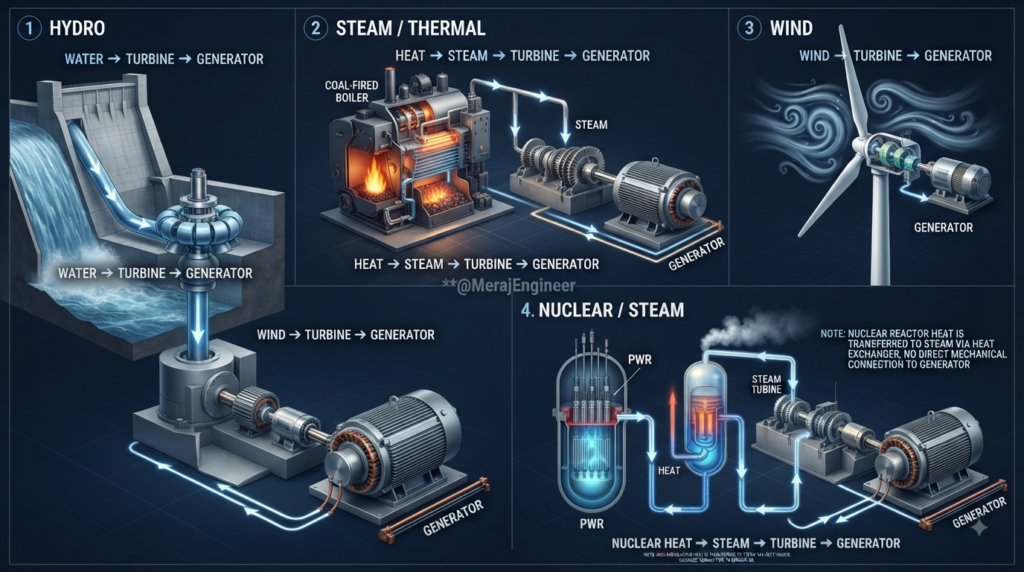
12. Hydro, Wind और Nuclear Power से Generator तक Mechanical Energy
हर power plant में energy conversion path थोड़ा अलग हो सकता है, लेकिन generator तक पहुँचने वाली mechanical input को समझना बहुत आसान है।
🌊 1. Hydroelectric Power Plant
Hydro generators में अक्सर low-speed, high-pole-count (Salient pole type) machines का उपयोग किया जाता है।
🌬️ 2. Wind Power System
Wind-generation systems की electrical architecture conventional synchronous generators से अलग हो सकती है, इसलिए हर wind turbine को traditional synchronous alternator नहीं समझना चाहिए।
⚛️ 3. Nuclear Power Plant
💡 Important Distinction: Nuclear reactor generator को सीधे rotate नहीं करता, बल्कि heat से steam बनाकर turbine के जरिए mechanical torque देता है।
13. Generator और Alternator में क्या Difference है?
अब एक common confusion दूर करते हैं।
⚙️ Generator
एक broad term है जो mechanical energy को electrical energy में convert करने वाली machine को refer करता है।
⚡ Alternator
AC electrical output generate करने वाला specialized generator है।
Modern power systems में large synchronous generators को commonly alternators कहा जाता है।
💡 Important Point (Over-simplification से बचें):
“Generator = DC” और “Alternator = AC” कहना बहुत simplified definition है।
Electrical machines की technology और construction अलग-अलग हो सकती है, इसलिए terminology को उसके सही engineering context के साथ समझना चाहिए।
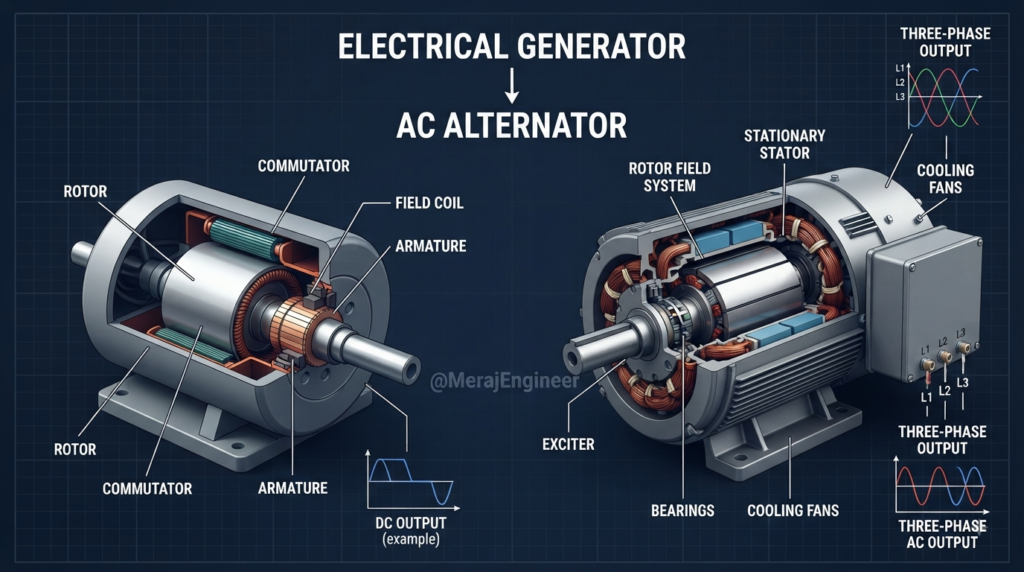
14. AC Generator के Basic Parts
अब हम machine के अंदर जाना शुरू करते हैं।
एक Industrial AC Synchronous Generator के मुख्य भाग (Major Components):
💡 Note on Construction:
हर generator का exact construction निम्न कारकों पर depend करता है:
इसलिए हर alternator का दिखने में रूप थोड़ा अलग हो सकता है, लेकिन सबका fundamental electrical principle एक ही रहता है।
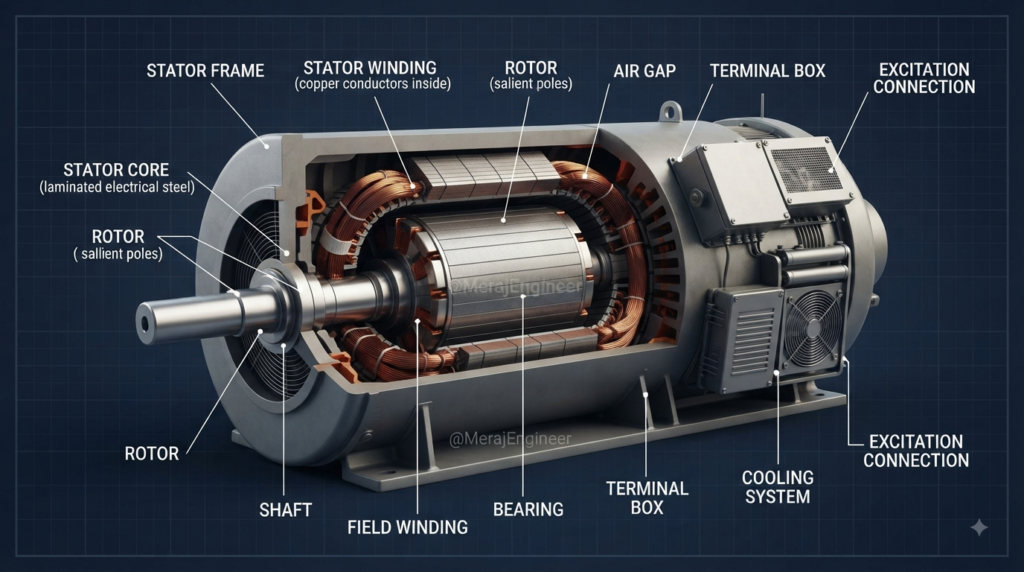
15. Stator और Rotor
AC synchronous generator को समझने के लिए दो मुख्य शब्द हमेशा याद रखें:
🏢 Stator
Stator पर main armature winding होती है, जिसमें generated AC EMF induce होती है।
🔄 Rotor
Rotor पर field system होता है और इसे DC excitation दी जाती है।
💡 Practical Engineering Advantage:
High-power output को स्थिर (stationary) stator terminals से हासिल करना बहुत आसान और सुरक्षित होता है। यह व्यवस्था mechanical और electrical engineering दोनों की दृष्टि से सबसे उपयुक्त है।
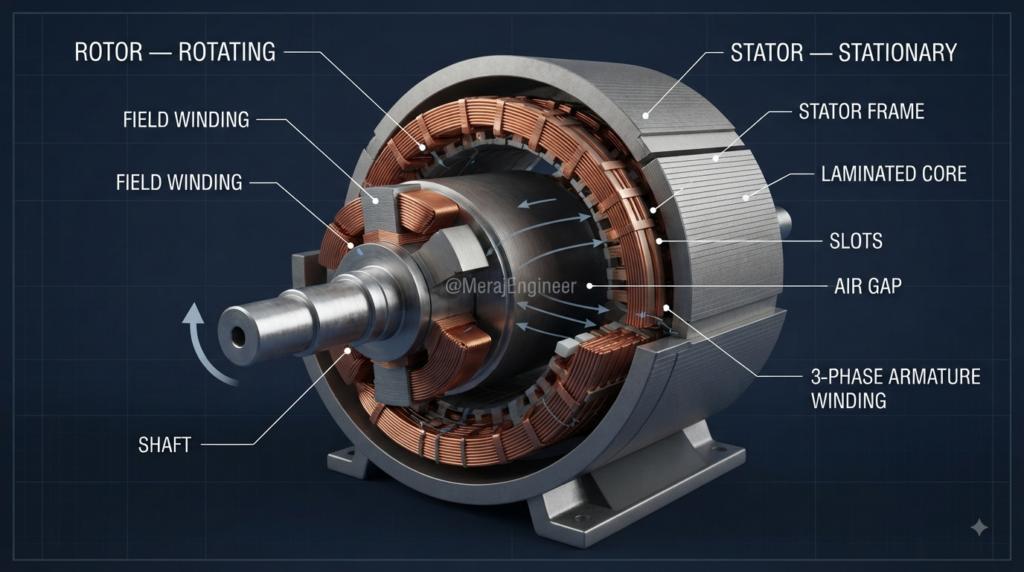
16. Rotating Magnetic Field का Principle
अब generator की सबसे important physical process पर आते हैं।
यही AC generation का core mechanism है।
17. Single-Phase और Three-Phase AC Generation
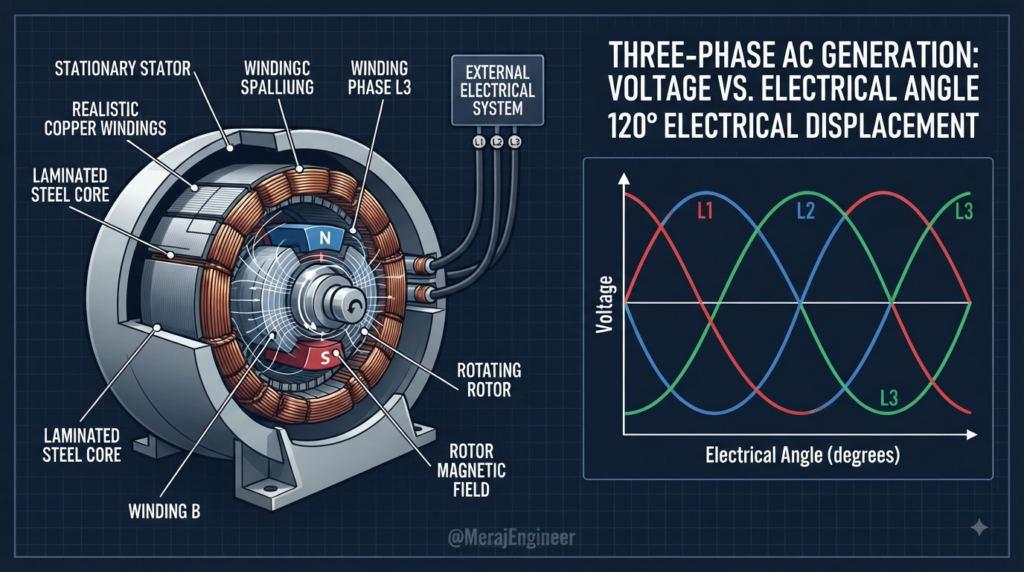
AC generation एक phase में भी हो सकती है और multiple phases में भी। लेकिन electrical power systems में three-phase generation सबसे महत्वपूर्ण है।
Phase Represent करने की Terminology:
Three-phase generation का उपयोग power generation, transmission और industrial loads में व्यापक रूप से होता है।
💡 इसके detailed phase relationships, Star/Delta connections और line/phase quantities को हम आगे Part 3 में विस्तार से समझेंगे।
18. Frequency क्या है?
📌 Definition (परिभाषा):
किसी periodic waveform के एक second में कितने complete cycles होते हैं, उसे Frequency कहते हैं।
इसका अर्थ है कि AC waveform 1 second में 50 complete cycles repeat करती है।
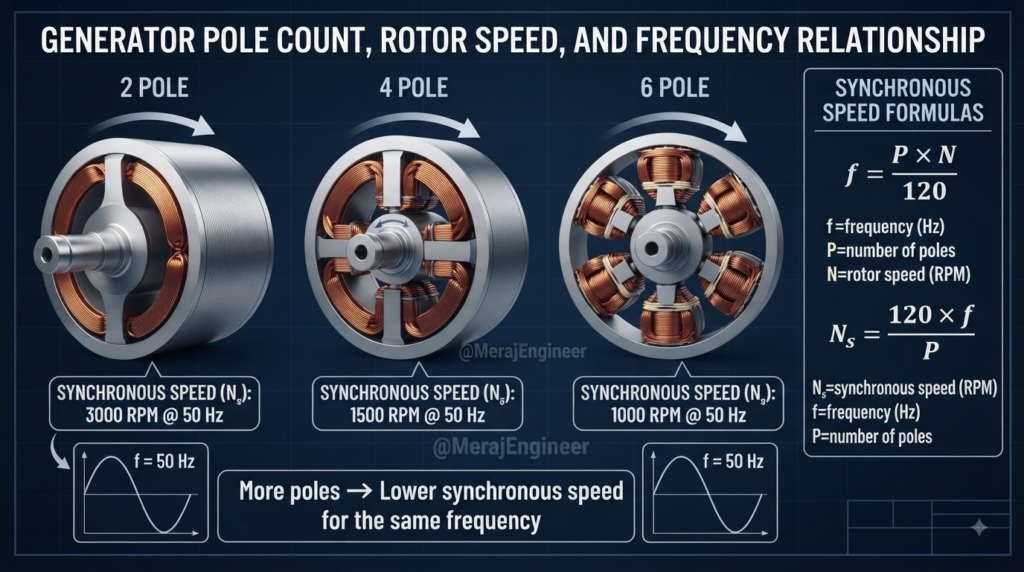
Frequency, generator की operating speed और pole count से जुड़ी होती है।
इसलिए generator की speed (N), number of poles (P) और output frequency (f) एक-दूसरे से directly related हैं।
19. Poles, Rotor Speed और RPM
अब generator के मुख्य तीन टेक्निकल पैरामीटर्स (Terms) को आपस में जोड़कर समझते हैं:
🧲 Poles (P)
Generator के magnetic field system में magnetic poles (North & South) की कुल संख्या।
🔄 RPM (N)
Rotor प्रति मिनट कितने चक्कर लगाता है (Revolutions Per Minute)।
⚡ Frequency (f)
Output AC तरंग प्रति सेकंड कितनी cycles per second (Hz) पूरी करती है।
Synchronous machine में इन तीनों का आपस में एक निश्चित (Fixed) संबंध होता है:
💡 practical importance (व्यावहारिक महत्व):
इस सूत्र का practical significance बहुत अधिक है। यदि आपको Grid Frequency ($f$) और Generator Pole Count ($P$) पता है, तो generator की आवश्यक Synchronous Speed ($N_s = \frac{120 \times f}{P}$) आसानी से निकाली जा सकती है।
20. Frequency, Poles और RPM का Relationship
🧮 Practical Calculation Example:
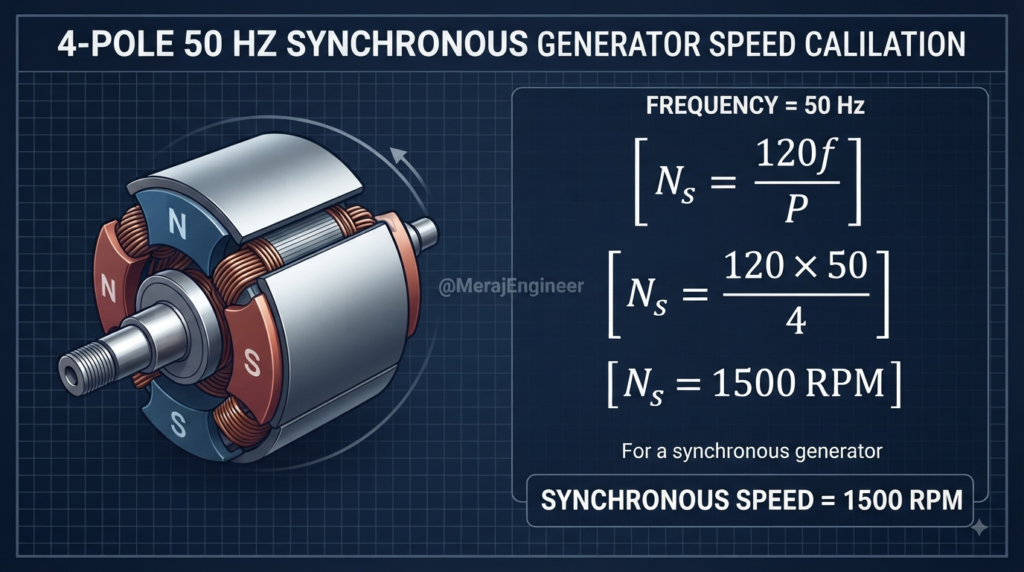
मान लीजिए f = 50 Hz और P = 4 Poles है, तो Synchronous Speed:
अर्थात 50 Hz, 4-pole synchronous generator की synchronous speed 1500 RPM होती है।
⚡ 50 Hz Frequency पर Poles बदलने पर Synchronous Speed:
💡 यह Relationship power-generation engineering में generator डिजाइनिंग और स्पीड कंट्रोल के लिए अत्यंत महत्वपूर्ण है।
21. Practical Numerical Examples
आइए इस कॉन्सेप्ट को स्पष्ट रूप से समझने के लिए 3 व्यावहारिक न्यूमेरिकल्स देखते हैं:
Formula: Ns = (120 × f) / P
Ns = 6000 / 4
Formula: Ns = (120 × f) / P
Ns = 6000 / 6
P = 4, N = 1500 RPM | f = (P × N) / 120
f = 6000 / 120
💡 Engineering Meaning (मुख्य निष्कर्ष):
Frequency, rotor speed और pole count independent quantities नहीं हैं। Synchronous generator में ये mathematically एक-दूसरे से पूरी तरह जुड़े हुए (linked) हैं।
22. AC Generator में Voltage कैसे Generate होती है?
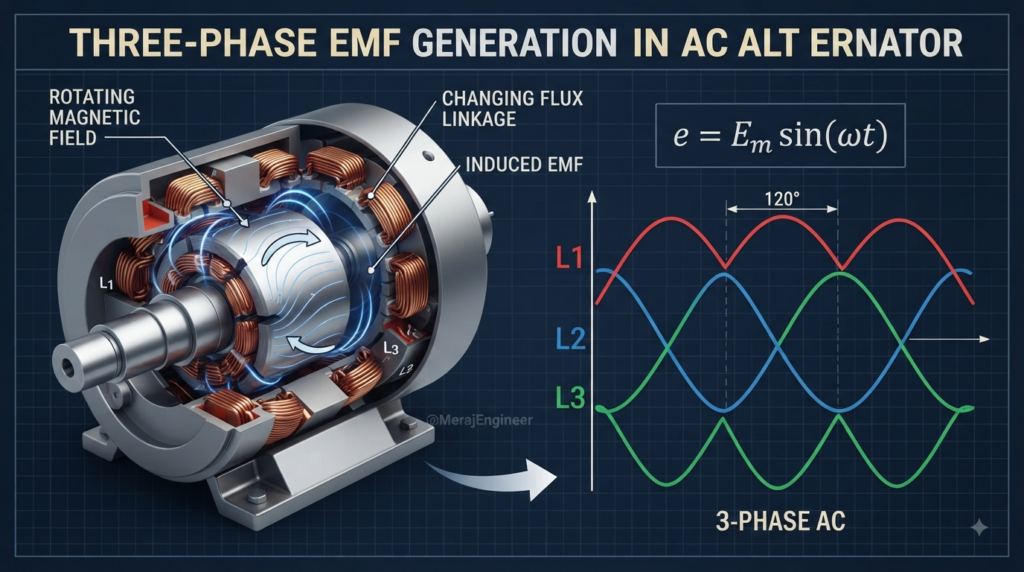
अब तक हमने जितने भी कांसेप्ट समझे हैं, आइए उन सभी को एक साथ जोड़कर पूरी प्रक्रिया देखते हैं:
⚙️ Complete Generation Sequence:
23. Generated AC Voltage और Three-Phase Output
यदि Stator Winding सही ढंग से अरेंज (Properly Arranged) है, तो उसमें जनरेट होने वाली EMF शुद्ध Alternator Sinusoidal Waveform का रूप ले लेती है।
⚡ Three-Phase AC Output
Three-phase machine में तीनों phase EMFs आपस में electrical angle पर 120° Displaced होती हैं, जिन्हें हम मुख्य रूप से L1, L2, L3 से दर्शाते हैं:
🔌 Electrical Power Delivery:
जब बाहरी Load Connect किया जाता है, तो Circuit Conditions के अनुसार Stator Winding में Current बहने लगता है और Generator बाहरी लोड को Electrical Power Deliver करता है।
24. No-Load से Load तक Generator में क्या होता है?
आइए generator की कार्यप्रणाली को व्यवहारिक स्थिति (Practical Situation) में समझते हैं:
⚪ No-Load Condition
जब generator के terminals पर कोई बाहरी लोड जुड़ा नहीं होता है, तब stator में कोई मुख्य धारा (current) नहीं बहती।
⚡ On-Load Condition & Armature Reaction
जब load जुड़ता है, तो stator winding में धारा बहती है। Stator current का अपना चुंबकीय प्रभाव बनता है जिसे Armature Reaction कहते हैं।
📑 यह Armature Reaction वोल्टेज और मैग्नेटिक बिहेवियर को प्रभावित करता है। इससे जुड़े एडवांस टॉपिक्स Part 3 में विस्तार से आएँगे:
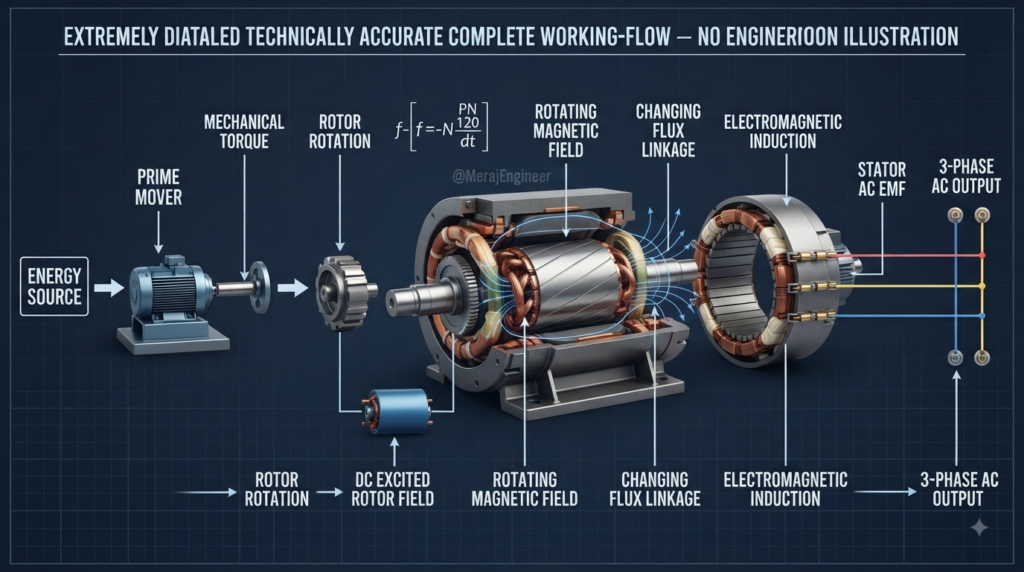
25. Complete AC Generator Working + Final Revision
आइए एक Hydro Power Plant का उदाहरण लेकर पूरे AC Generator की working का फाइनल रिवीजन करते हैं:
यही AC Generator / Alternator की पूरी और बुनियादी (Fundamental) Working Principle है।
📌 Part 1 — Quick Revision
पूरे Part 1 के मुख्य बिंदुओं को जल्दी से याद रखने के लिए यहाँ एक क्विक समरी दी गई है:
📐 Part 1 — Important Formulas
⚠️ Common Misconceptions (आम भ्रांतियाँ)
🎯 Conclusion (निष्कर्ष)
अब अगर आपसे कोई पूछे:
लेकिन इस एक वाक्य के पीछे हमने पूरी Engineering Chain देखी:
यही वह fundamental principle है जिस पर modern AC power generation की पूरी कहानी खड़ी है। अब हमें यह स्पष्ट है कि generator electricity generate क्यों और कैसे करता है।
🔗 AC Generator Series
AC Generator: कैसे बनती है AC Electricity? Alternator की पूरी कहानी
AC Alternator की Construction: Stator, Rotor, Winding और Excitation की पूरी कहानी
Part 2 में हम alternator को practically “खोलकर” उसके अंदर के components को समझेंगे—stator core से लेकर rotor, field winding, excitation system और cooling तक।
यह article educational purpose के लिए है। Practical generator operation, testing, maintenance, protection या electrical work हमेशा applicable standards, manufacturer documentation और qualified electrical professionals की procedures के अनुसार किया जाना चाहिए।
इस article में educational visualization के लिए कुछ images AI-assisted/generated हो सकती हैं। ये images conceptual और explanatory purpose के लिए हैं; actual equipment की exact dimensions, construction या manufacturer-specific design अलग हो सकती है।