
12V AC se 220V DC Kaise Banta Hai? Generator Explained
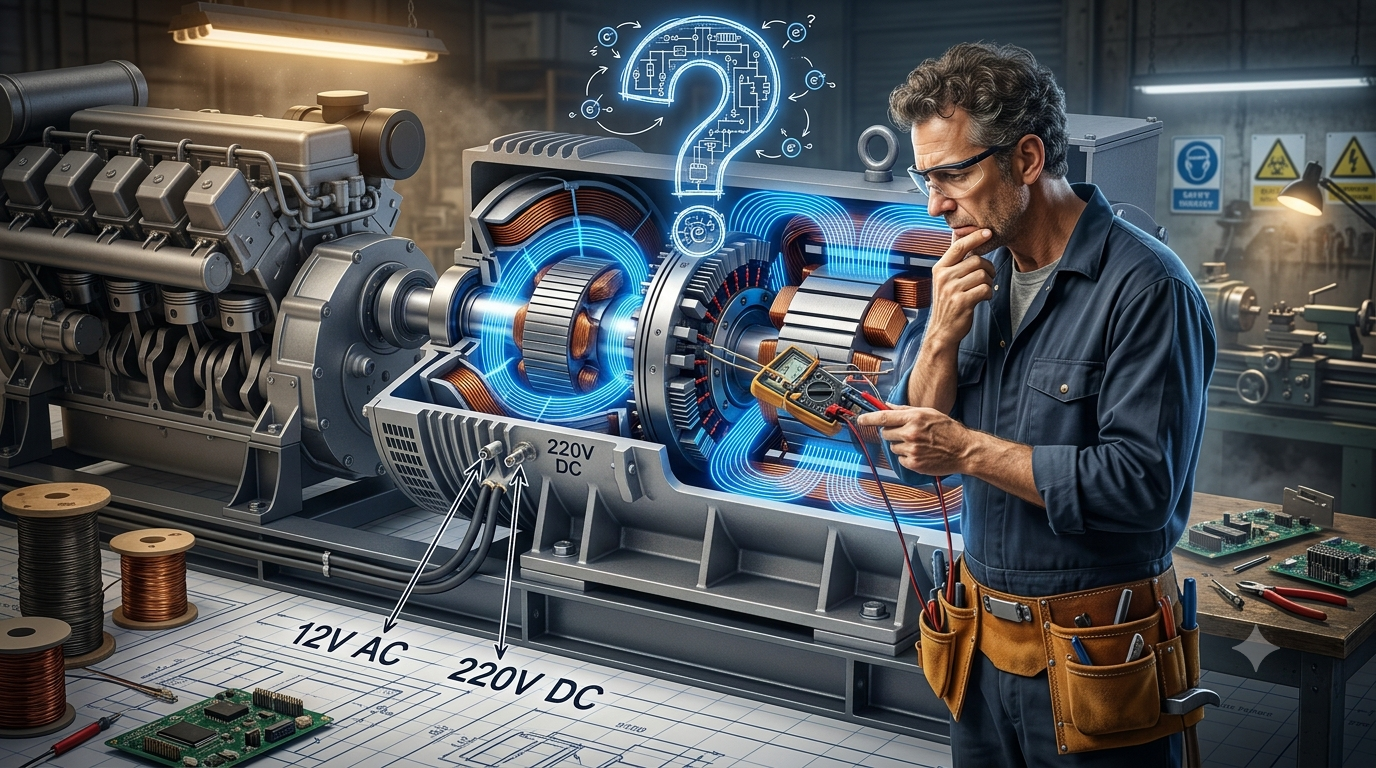
Aaj hum Generator Excitation System ka ek aisa sabse bada doubt clear karne wale hain jo aksar electrical technicians puchte hain. ‘Generator ki exciter winding se sirf 12 Volt AC nikalta hai, to main rotor field me 220 Volt DC kaise pahunch jata hai?’
Internet par iske bahut galat jawab milte hain.
Aaj hum assumptions nahi, balki generator ke actual electromagnetic working principle ko samjhenge.”
1. Sabse Pehle Ek Myth (Galat-fahmi)
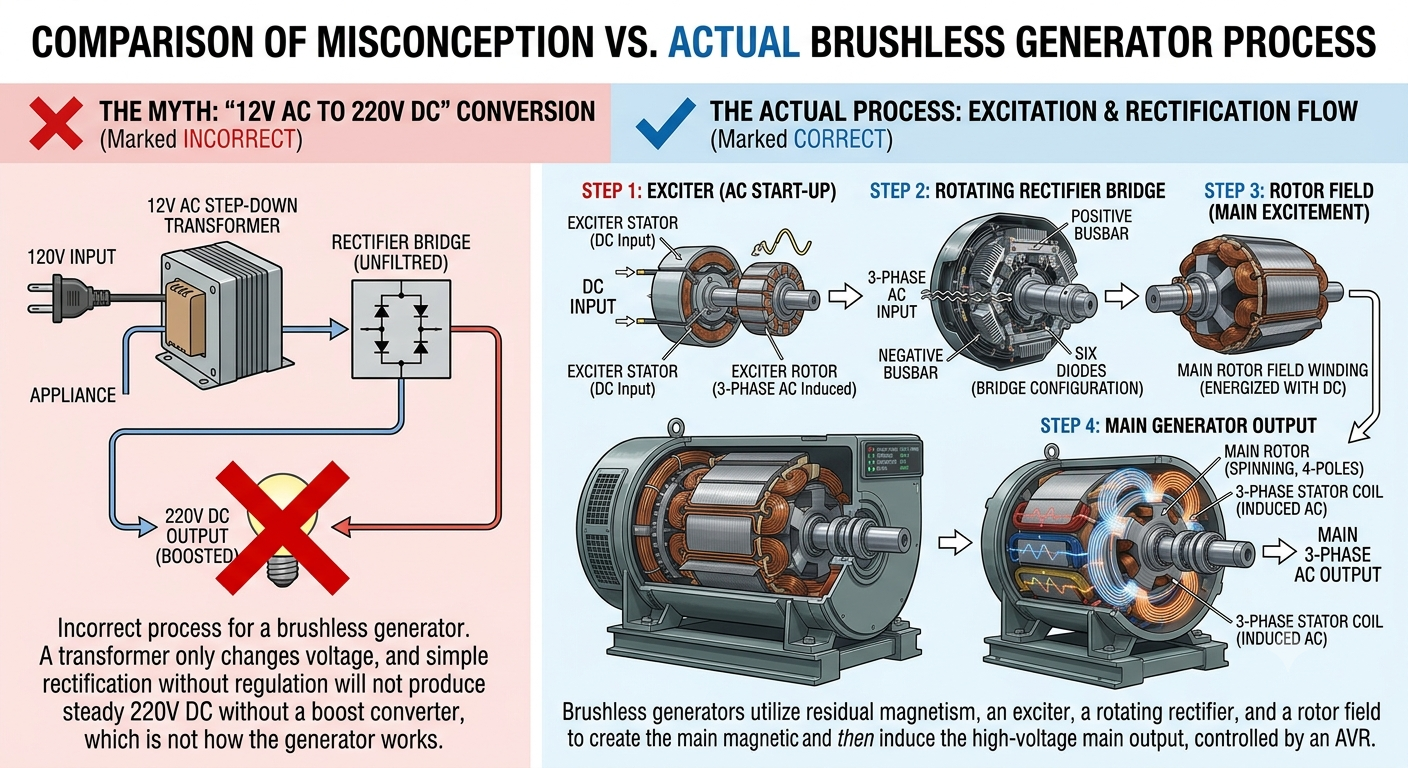
“Aaj kal ke modern brushless alternators me log aksar excitation system aur voltage levels ko lekar kafi confuse ho jaate hain. Sabse bada myth ye phaila hua hai ki generator ka diode rectifier 12V AC ko badha kar 220V DC me convert kar deta hai.
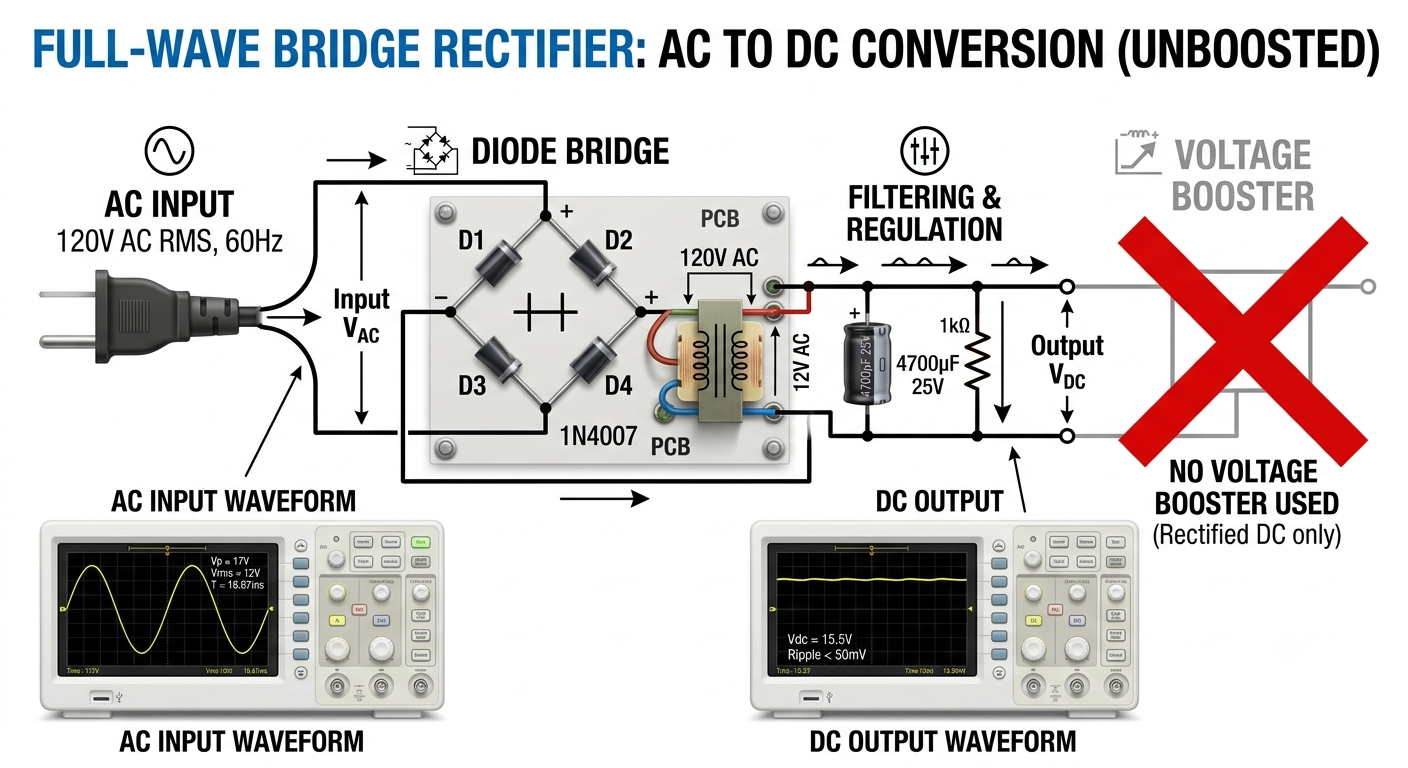
Fact Check: Rectifier koi step-up transformer ya voltage multiplier nahi hai. Diode bridge rectifier ka kaam sirf AC current ko DC current me badalna hai. Ye voltage ko multiply ya boost nahi karta.
VDC ≈ VAC × 1.414 − Diode Drop
Agar aap bridge rectifier ko 12 Volt AC input denge, to losses aur peak waveform ke hisab se output sirf 14V–16V DC hi milega. 220 Volt DC kabhi nahi ban sakta!”
2. Generator Exitation System: To 220V DC Aata Kahan Se Hai?
“Jab rectifier voltage nahi badhata, to main rotor field me 220V DC kahan se pohochta hai?
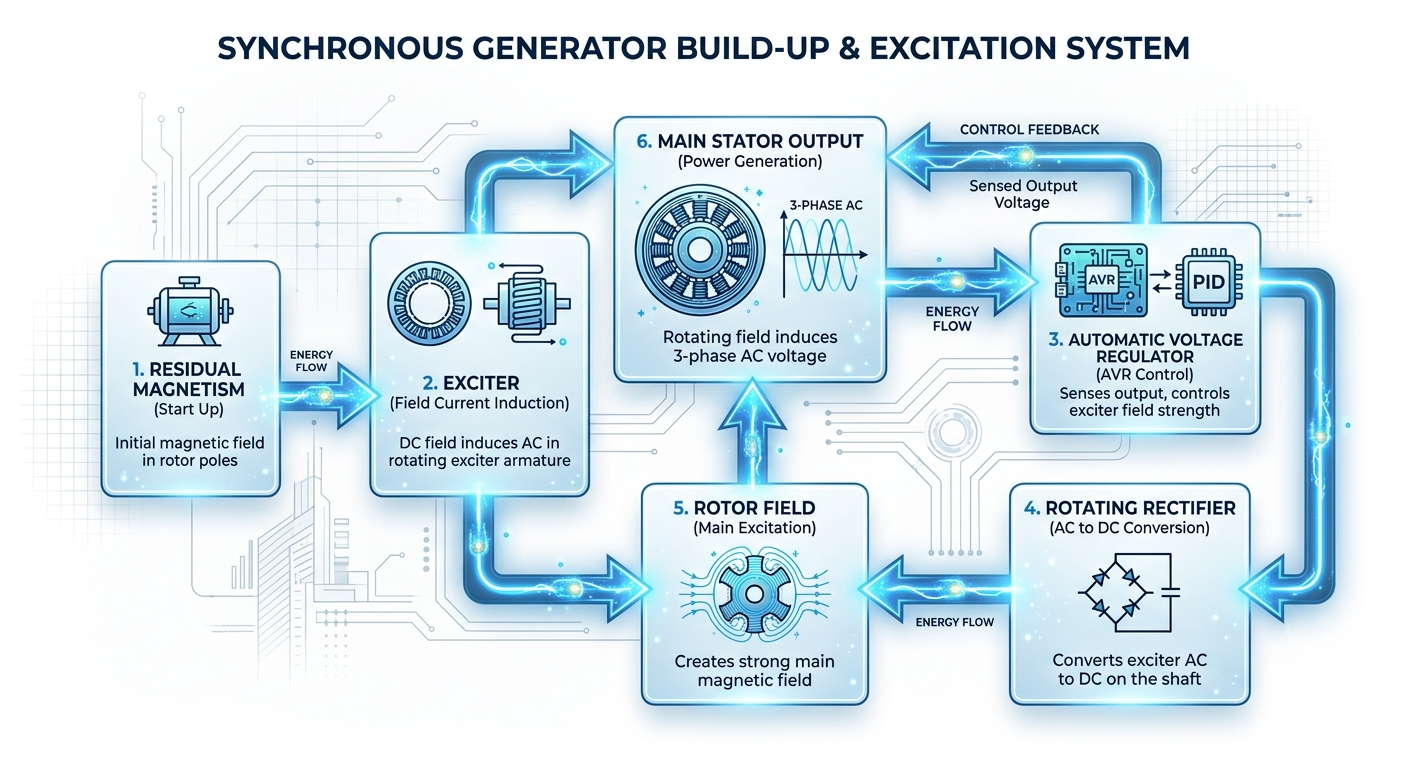
Iska jawab generator ke internal design aur Excitation Power Flow System me chhupa hai. Generator me excitation process niche diye gaye flow me chalta hai:
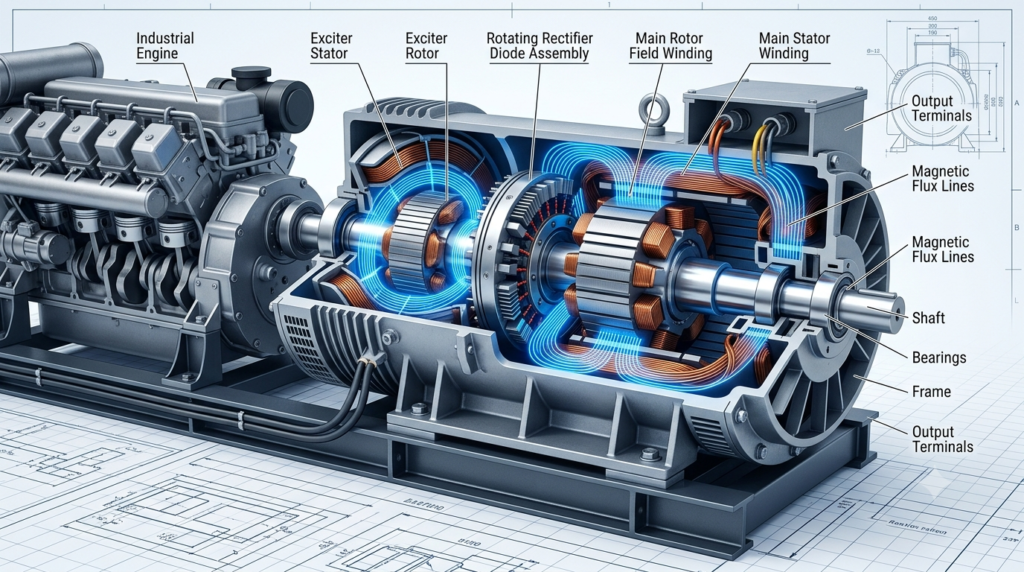
- Prime Mover (Engine) → Engine mechanical torque generate karta hai.
- Main Shaft → Shaft sabhi rotating parts ko ghumata hai.
- PMG (Permanent Magnet Generator / Optional) → AVR ko initial clean power deta hai.
- AVR (Automatic Voltage Regulator) → Stator output ko sense karke Exciter Stator ko controlled DC power deta hai.
- Exciter Stator & Rotor → Magnetism se 3-phase AC voltage generate karta hai.
- Rotating Rectifier → High-voltage 3-Phase AC ko pure DC me convert karta hai.
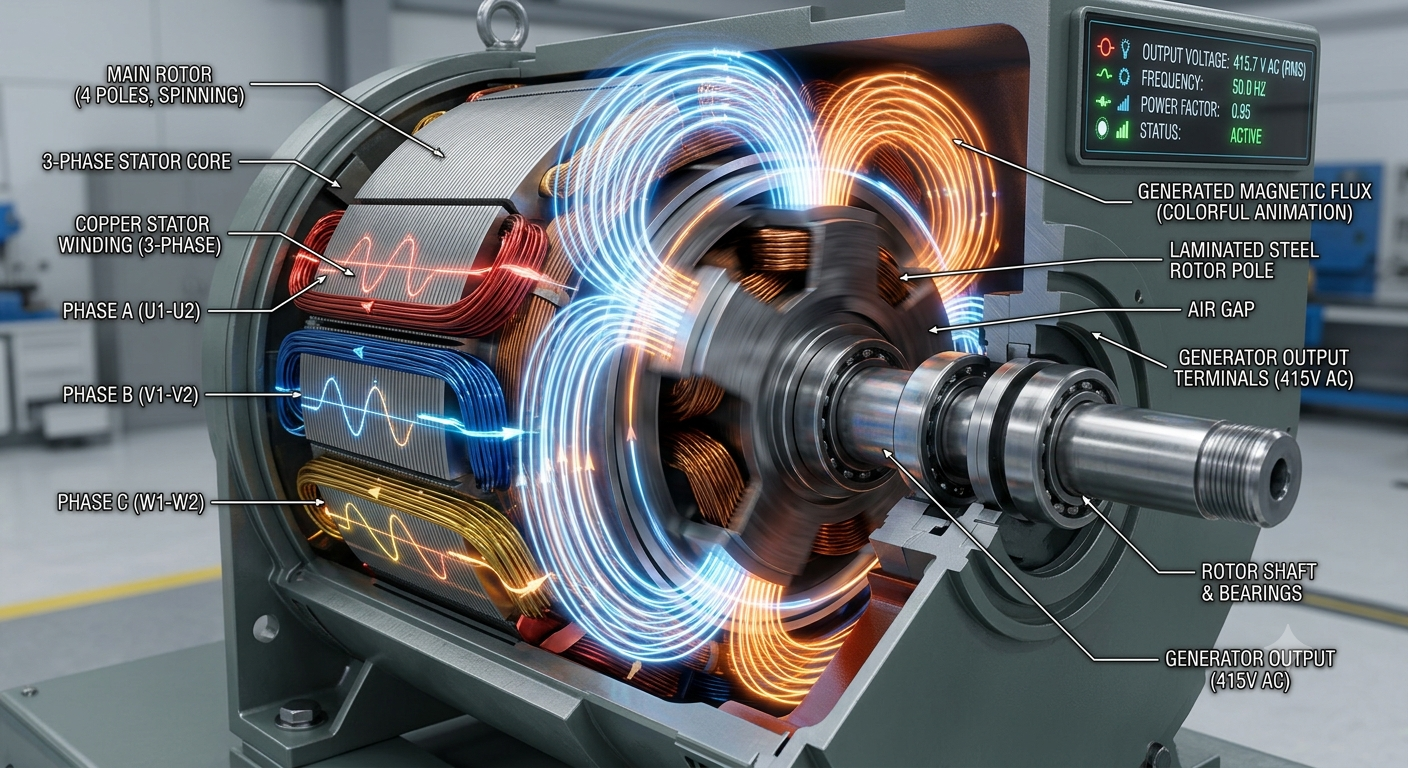
- Main Rotor Field → Strong electromagnet banata hai jo Main Stator me main voltage induce karta hai.
3. Exciter Kya Hai aur Exciter Working Kaise Hoti Hai?
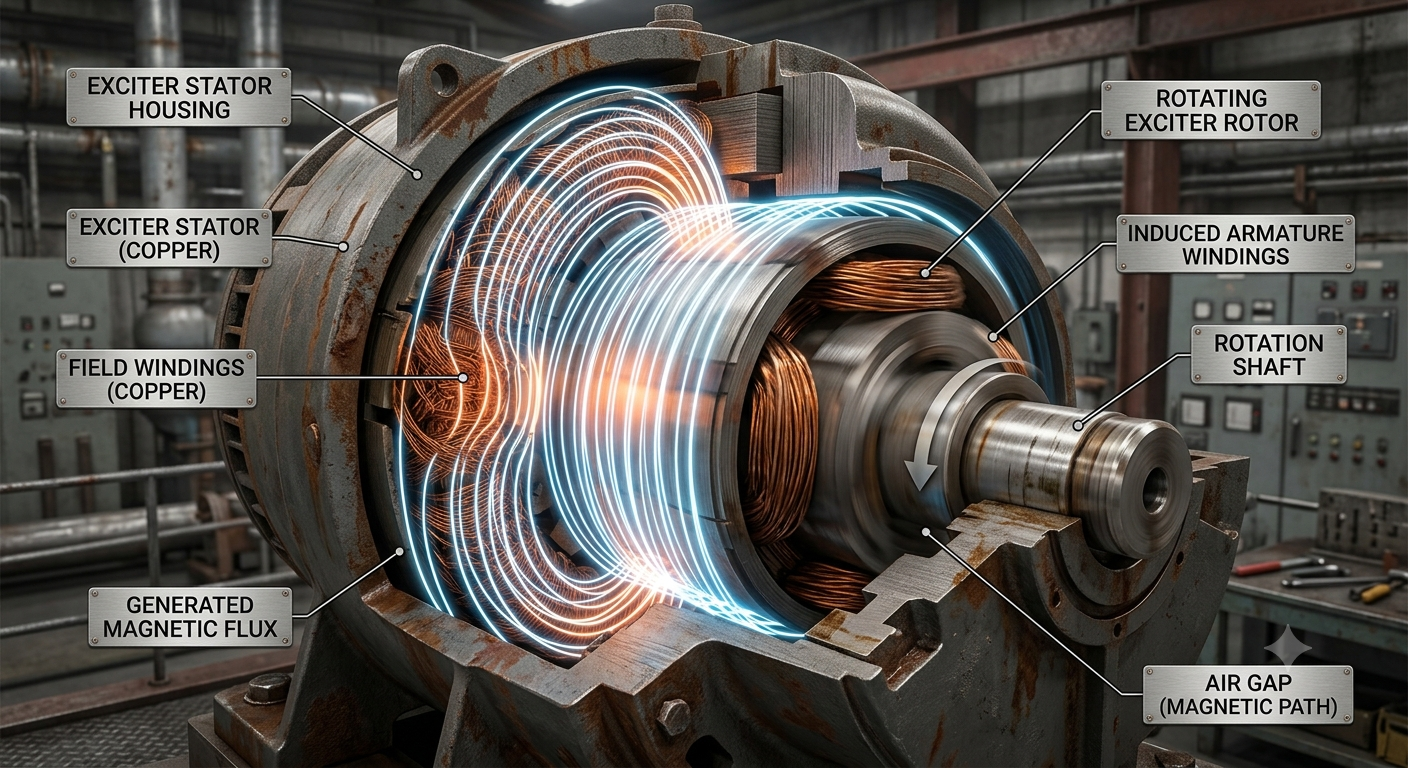
“Exciter darasal ek chhota Inverted AC Generator hota hai jo main alternator ke shaft par hi fit rehta hai:
Exciter Generator Excitation System ka ek important part hota hai.
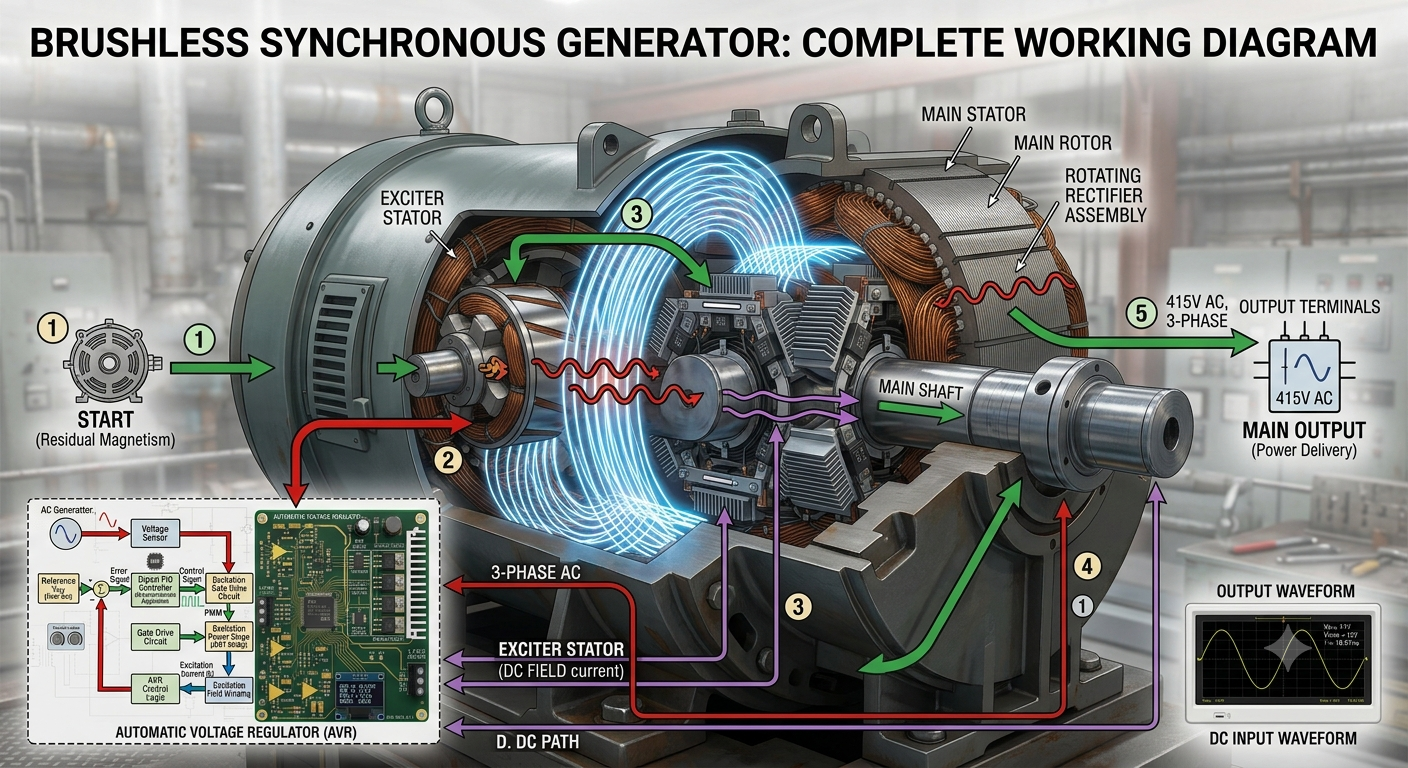
- Exciter Stator (Stationary): Ye generator ke outer frame par fixed rehta hai. Isme AVR se DC current aata hai jo ek stationary magnetic field banata hai.
- Exciter Rotor (Rotating): Ye main shaft ke saath fast ghoomta hai. Jab ye rotor exciter stator ke magnetic lines ko cut karta hai, to iske andar 3-Phase AC Voltage generate hota hai.
Exciter ka kaam main power supply dena nahi hota, balki main generator rotor ko excitation power feed karna hota hai.”
4. Rotating Rectifier Ka Role
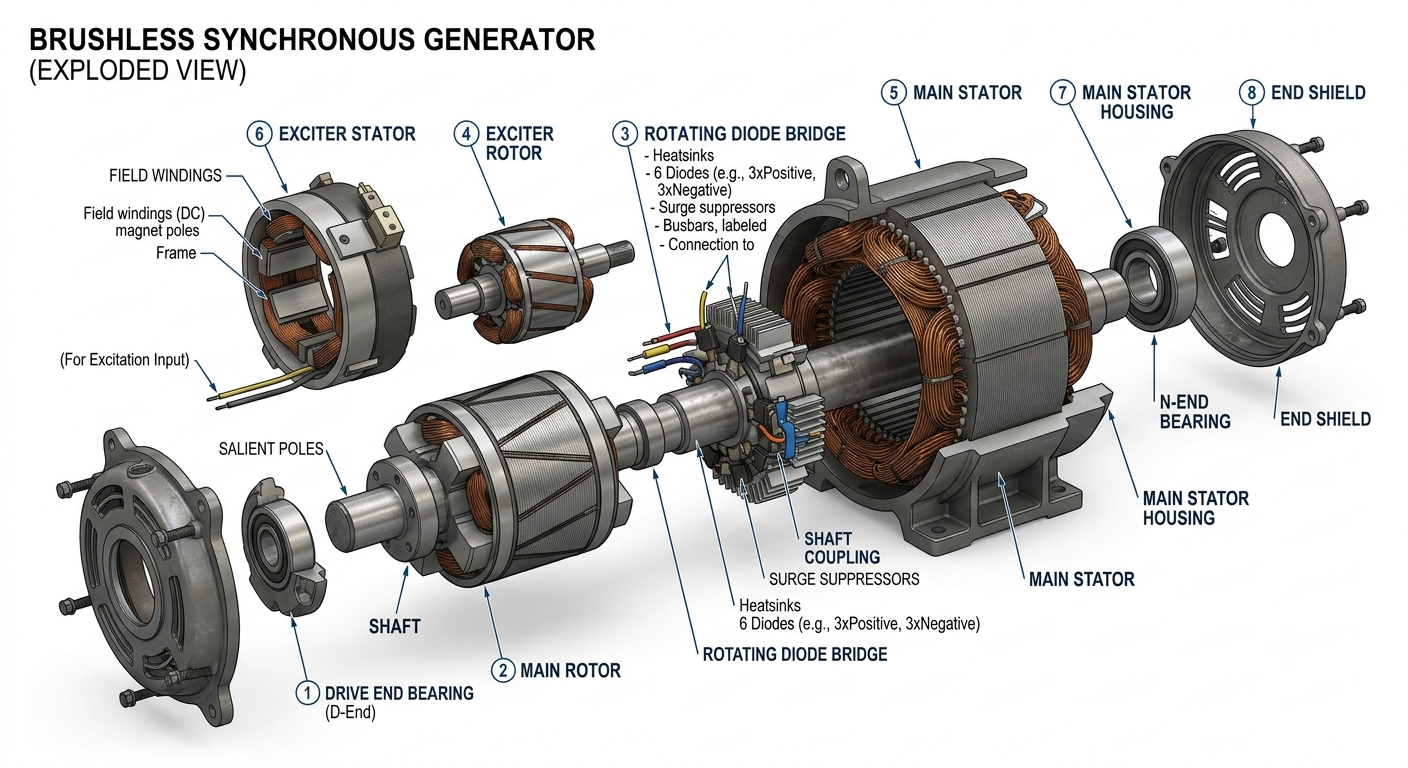
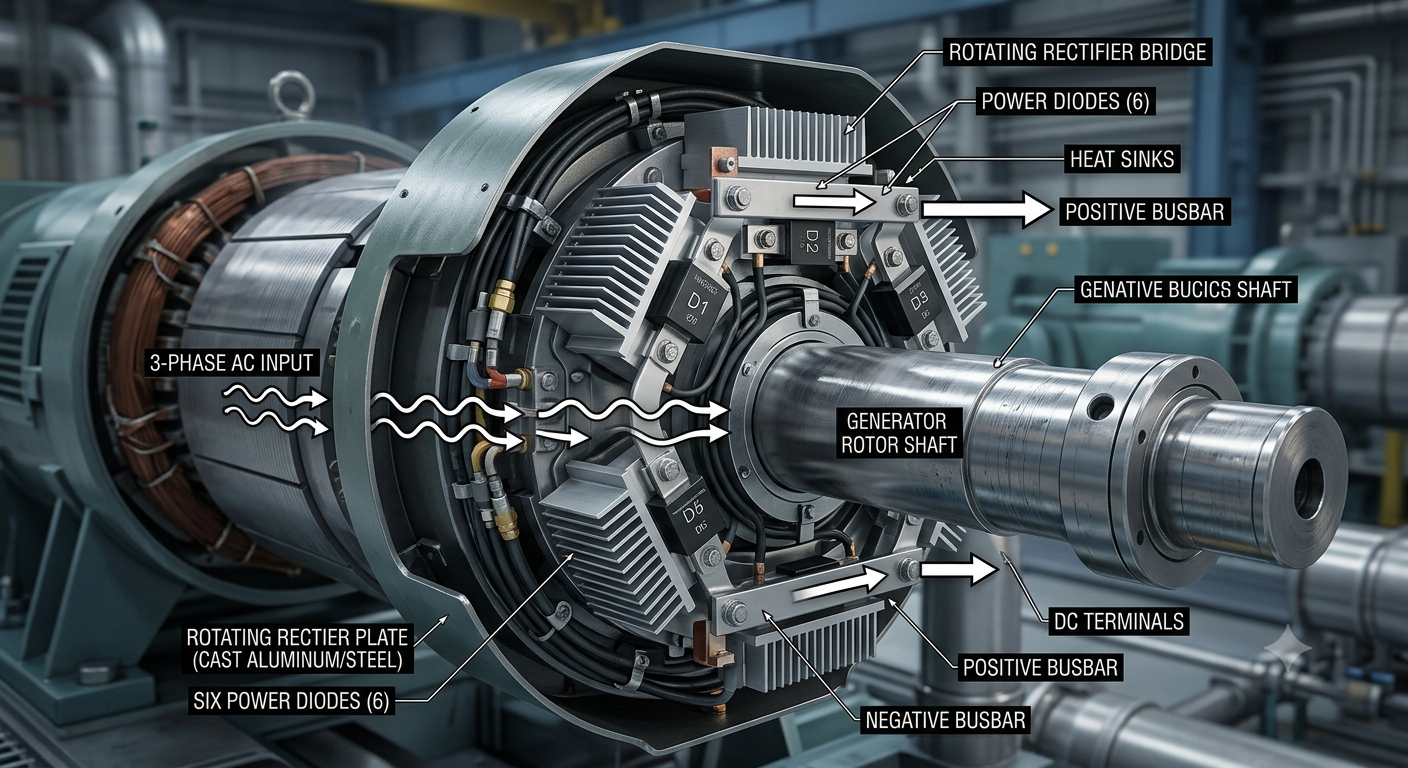
“Exciter Rotor jo 3-phase AC generate karta hai, wo main shaft par hi mount kiye gaye Rotating Diode Bridge (Rotating Rectifier) me jata hai.
“Exciter Rotor jo 3-phase AC generate karta hai, wo main shaft par hi mount kiye gaye Rotating Diode Bridge (Rotating Rectifier) me jata hai.
Is System me Carbon Brushes aur Slip Rings ki zaroorat nahi padti:
- Diode assembly shaft ke saath hi rotation me rehti hai.
- Ye Exciter ke 3-phase AC voltage ko smoothing DC voltage me convert kar deti hai.
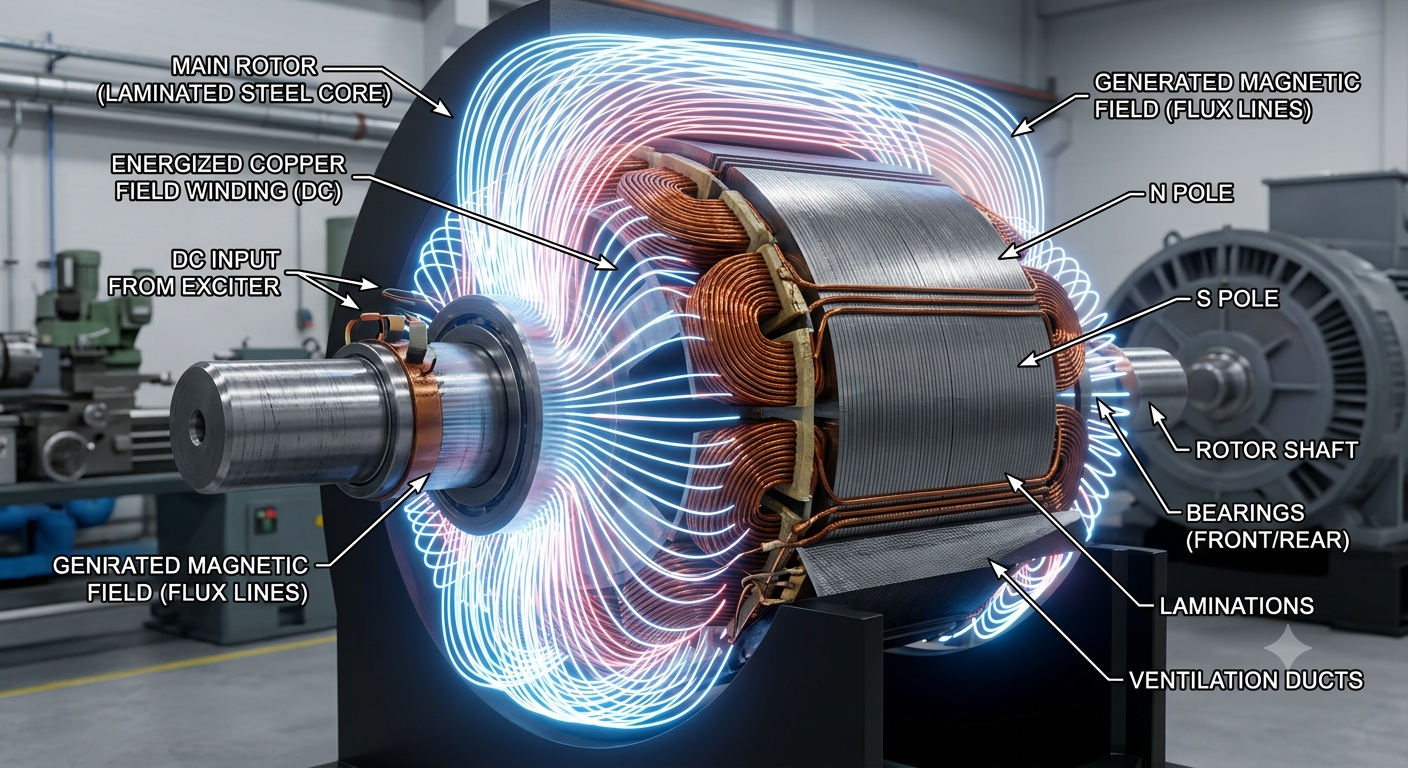
- Ye DC current seedha internal connections ke zariye Main Rotor Winding ko feed kiya jata hai, jisse wahan ek powerful rotating magnetic field taiyar hoti hai.”
5. AVR Working Principle in Generator
“AVR (Automatic Voltage Regulator) generator ka brain hota hai,
AVR Generator Excitation System ko continuously control karta hai.
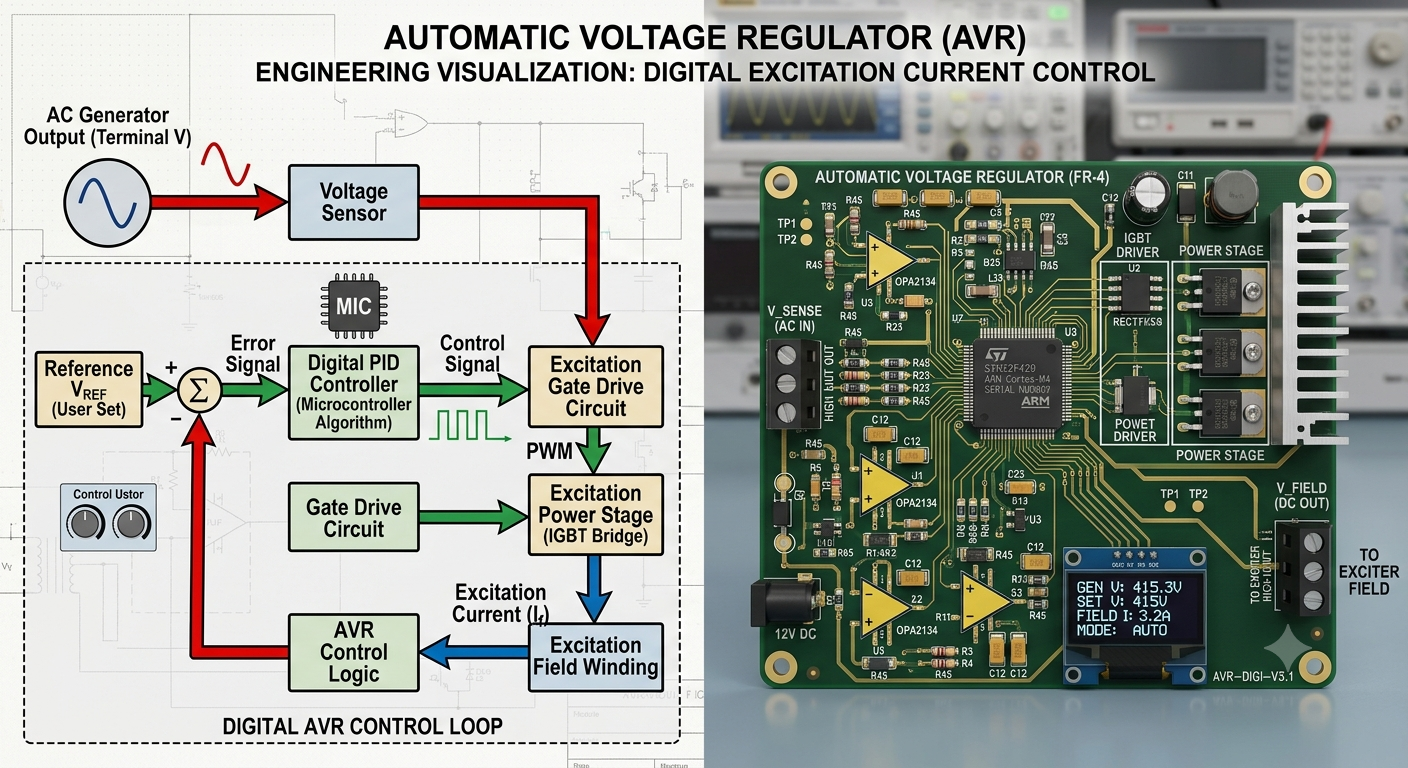
- AVR main stator ke output voltage ko constantly monitor/sense karta rehta hai.
- Jab load badhta hai aur voltage drop hota hai, to AVR Exciter Stator ko diya jaane wala current badha deta hai.
- Jab load kam hota hai ya voltage rise karta hai, to AVR excitation current ko reduce kar deta hai.
Is continuous feedback loop ki wajah se generator par chahay load zero ho ya full, output voltage hamesha stable (maslan 415V/230V) rehta hai.”
NOTE: Pleae Read Our Other Blog: AC Generator & Alternator Complete Engineering Guide
6. Kya Exciter Voltage Hamesha 12V Hota Hai?
“Nahi, 12V AC ek bahut bada misconception hai. Exciter output voltage kabhi fixed 12 Volt nahi hota. Ye generator ke KVA rating aur manufacturer design par depend karta hai:
- Small Alternators (5 – 15 KVA): 15V – 30V DC Field Voltage
- Medium Alternators (20 – 125 KVA): 40V – 70V DC Field Voltage
- Large Industrial Alternators (250 KVA+): 90V – 180V+ DC Field Voltage
Agar kisi industrial generator ke rotor ko 220V DC ki zaroorat hai, to uska exciter rotor 160V se 180V AC generate karne ke hisab se hi design kiya jata hai. Rectifier bas us high AC ko 220V DC me badalta hai.”
7. Agar Field Voltage 220V DC Hai To Kyon?
“Bade industrial alternators me main rotor field voltage 100V se 220V DC tak kyon rakha jata hai? Iska seedha sambandh electrical efficiency se hai.
Power ka formula hai:
P = V × I
- Agar hume 50 kW ki magnetic field power chahiye:
- Low Voltage (12V DC): Current requirement lagbhag 4166 Amperes hogi.
- High Voltage (220V DC): Current requirement sirf lagbhag 227 Amperes reh jayegi.
- Higher voltage choose karne se current kam ho jata hai, jisse copper losses (I²R), heating effect, aur wire thickness sabhi drastically reduce ho jaate hain.
8. Agar Sach me Field Voltage 12V DC Rakha Jaye To Kya Hoga?
“Maan lijiye agar 500 KVA generator me hum 12V field voltage use karne ki koshish karein:
- Heavy Copper Wire: Massive current carry karne ke liye moti winding wires ki zaroorat hogi, jisse rotor ka weight aur cost bahut badh jayega.
- Extreme Heat Losses (I²R Losses): High current ki wajah se rotor winding burn out hone ka khatra rahega.
- Low Efficiency: Generator ki overall power conversion efficiency drop ho jayegi.
Isi karan bade alternators me hamesha higher field voltages (70V se 220V DC) ko preference di jaati hai.
9. Viewer Query: “12V AC se 220V DC Kaise Bana?”
“Direct Answer: 12 Volt AC se 220 Volt DC kabhi nahi ban sakta.balki Generator Excitation System inherently.
Jo log sochte hain ki 12V input se 220V DC ban gaya, wo system ka actual AC output voltage step measure karna bhool jaate hain. Jis generator ke main rotor field ko 220V DC milta hai:
- AVR pehle se hi Exciter Stator ko higher voltage/current feed kar raha hota hai.
- Exciter Rotor inherently 160V-180V AC (3-Phase) output produce karta hai.
- Rotating Rectifier us high-voltage 3-phase AC ko convert karke 220V DC bana deta hai.
Wahan 12V AC ka koi wajood hota hi nahi hai.”
10. Real Engineering: Generator Exitation System Build-up Process
“Jab generator start hota hai, tab zero voltage se full rated voltage tak pohochne me 1 se 2 seconds lagte hain. Ye complete step-by-step cycle aise kaam karta hai:
“Jab generator start hota hai, tab zero voltage se full rated voltage tak pohochne me 1 se 2 seconds lagte hain. Ye complete step-by-step cycle aise kaam karta hai:
- Residual Magnetism: Exciter Stator ke iron core me pehle se thoda residual magnetism (avshesh chumbakatva) hota hai.
- Initial Voltage Generation: Shaft ghoomne par exciter rotor me chhota AC voltage (2V – 5V) banta hai.
- Bridge Rectification: Ye chhota AC, DC me convert hokar main rotor me jata hai aur main stator me 20V – 40V AC generate karta hai.
- AVR Sensing & Feedback: AVR is initial voltage ko sense karta hai aur Exciter Stator ko aur zyada power bhejta hai.
- Excitation Ramp-Up: Step-by-step Exciter output aur Main Rotor magnetic field rapidly boost hote hain.
- Rated Output Achieved: 1-2 second me Generator final rated voltage (415V / 230V) par stabilize ho jata hai.”
11. Voltage Multiplier vs Standard Rectifier (Bonus Clarification)
“Electrical circuits me Cockcroft-Walton Voltage Multiplier jaise special circuits hote hain jo diodes aur capacitors ka combination use karke voltage ko 2x ya 4x multiply kar sakte hain.
Lekin Generator Rotating Rectifier me ye multiplier circuits use NAHI hote. Generator me sirf heavy-duty silicon bridge diodes hote hain jo continuous high-current rectifications ke liye bane hote hain, voltage multiplier networks ke liye nahi.”
Conclusion
Aasha hai ki ab aapka ye confusion poori tarah dur ho gaya hoga ki rectifier voltage ko multiply nahi karta, balki exciter output hi higher voltage par design kiya jata hai.
Agar aap generator technology, AVR wiring aur alternator troubleshooting ko detail me samajhna chahte hain, to humare Perfect Engineer YouTube channel ko zaroor subscribe karein!
Disclaimer & Copyright Notice:
Information Validity: Is lekh me di gayi jankari valid sources se li gayi hai aur ise sahi rakhne ka pura dhyan rakha gaya hai. Lekin kisi bhi technical data ya concept ko apply karne se pehle ise verify zaroor kar lein. Kisi bhi galti ya nuksan ke liye website ya author ki koi zimmedari (liability) nahi hogi. Standard guidelines ke liye IEEE Official Standards yahan dekh sakte hain.AI Images & Ownership: Is lekh me istemal ki gayi images AI-generated hain jo sirf illustrative purpose ke liye hain; real diagrams alag ho sakte hain.Feedback & Corrections: Agar aapko koi galti dikhti hai, to kripya comment karke apna sujhav zaroor dein.
Thanks for Visiting