
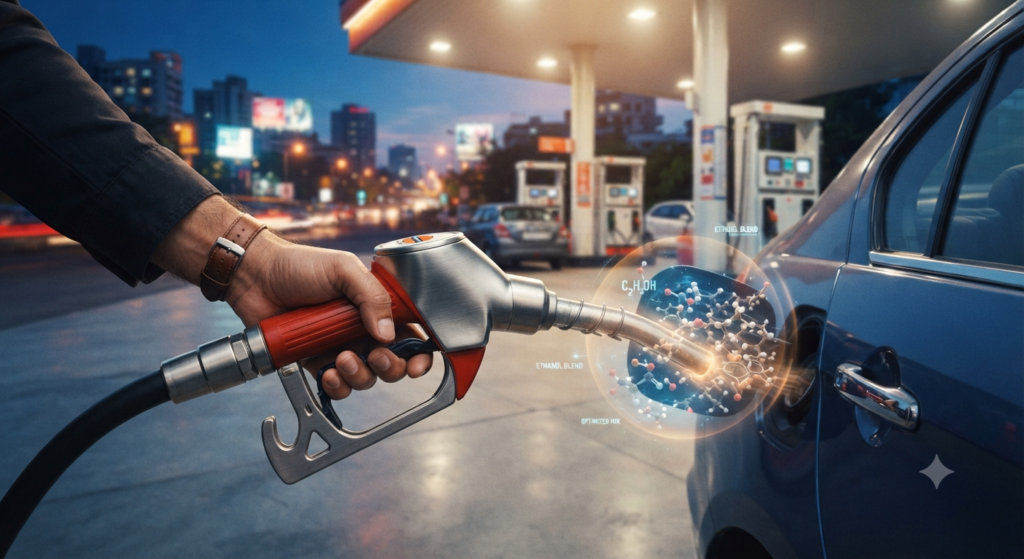
Ethanol Blending in India: A Technical & Engineering Deep Dive into Policy, Engineering, and Environment
Part_1: The Genesis & Global Scenario
Bharat ka fuel landscape badal raha hai. Kya ethanol blending in India sach mein ek ‘green revolution’ hai, ya iske sath hume kuch mahatvapurna takniki aur paryavarniya pehluon (critical technical & environmental factors) ko bhi samajhna hoga? Is Technical & Scientific Analysis mein, hum policy se lekar engine block tak har us pehlu ka vashleshan (analytical study) karenge jo aam aadmi aur automobile users ko janna zaroori hai.
Chapter 1: Introduction to Ethanol Blending: What is the Buzz About?
Aajkal mainstream media se lekar alternative journalism tak, har jagah ek hi shabd sabse zyada charcha mein hai—Ethanol Blending in India. Lekin kya yeh ethanol sach mein koi naya chamatkar hai ya fir ek established technology ko naye dhang se paish kiya ja raha hai? Simple engineering terms mein kahein toh, ethanol C2H5OH ek renewable biofuel hai jise biomass (jaise sugarcane, maize, aur kharab anaaj) ke fermentation se banaya jata hai.
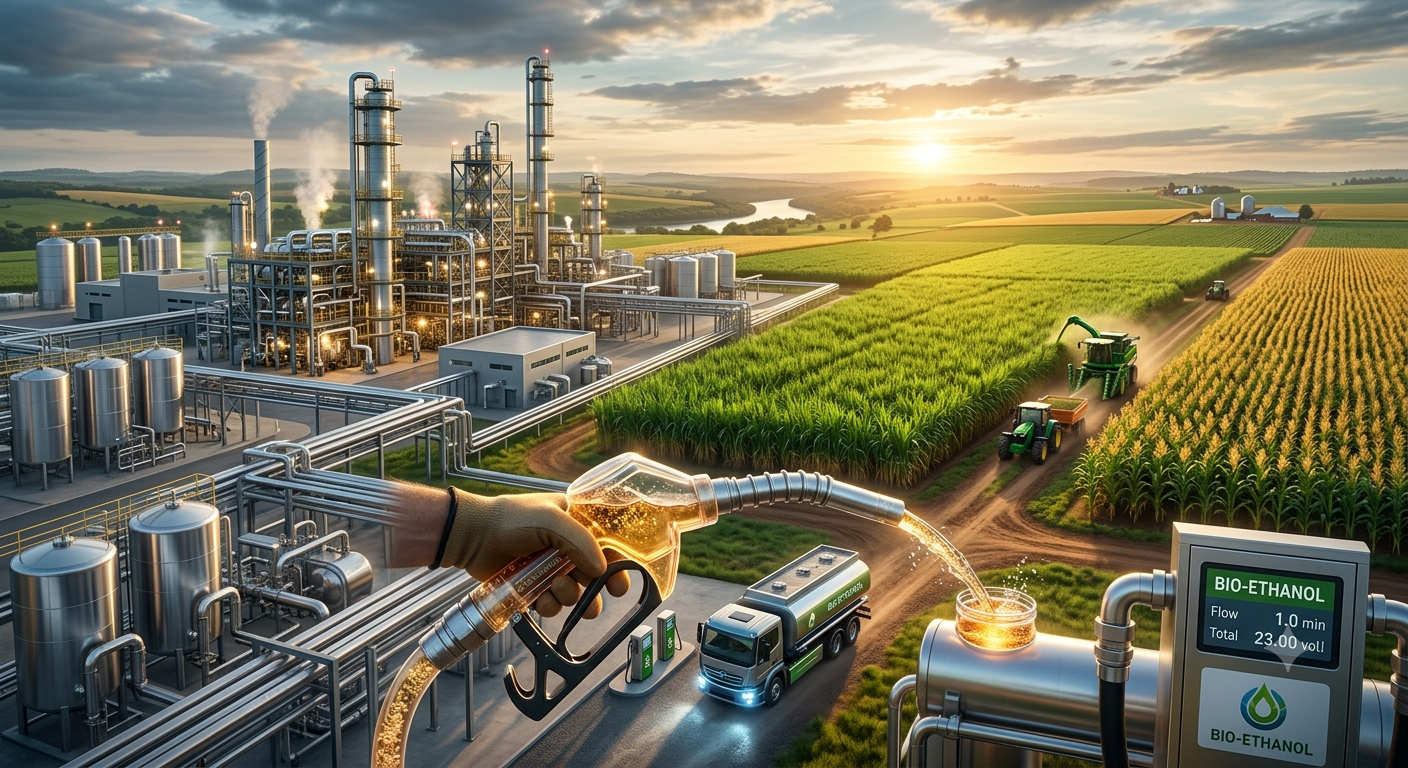
Jab hum Ethanol Blending ki baat karte hain, toh iska seedha matlab hota hai pure petrol mein ek nishchit maatra (percentage) ethanol ki milawat karna. Global fuel dynamics aur domestic economic pressures ke beech, Bharat sarkar ne biofuel ko lekar ek actively-paced aur ranneetik (strategic) national strategy apnayi hai. Is buzz ke peeche teen sabse bade mukhya kaaran hain: desh ka lagbhag 85% crude oil import bill kam karna, carbon emissions ko ghatana, aur domestic agriculture surplus ko leverage karna.
Is rapid policy implementation (teji se lagoo kiye gaye kadam) ne jahan desh ke liye naye opportunities paida kiye hain, wahin iske sath kai mahatvapurna engineering, environmental aur logistical pehluon par dhyan dena bhi aavashyak ho gaya hai.
Chapter 2: The Chemical & Engineering Breakdown: E10, E20, E85, & E100 Explained
Ek engineer ke nazariye se, fuel sirf ek liquid nahi hai; yeh thermal efficiency, calorific value, aur material compatibility ka ek complex combination hai. Jab ethanol ko petrol ke sath blend kiya jata hai, toh uski chemistry badal jati hai.
Ethanol mein lagbhag 35% oxygen hota hai, jo fuel ke internal combustion ko behtar banata hai aur Carbon Monoxide CO ke emissions ko kam karta hai. Lekin, ethanol ki energy density pure petrol ke mukable lagbhag one-third kam hoti hai, jiska aanshik asar (minor impact) vehicle ki fuel economy aur thermal efficiency par pad sakta hai.
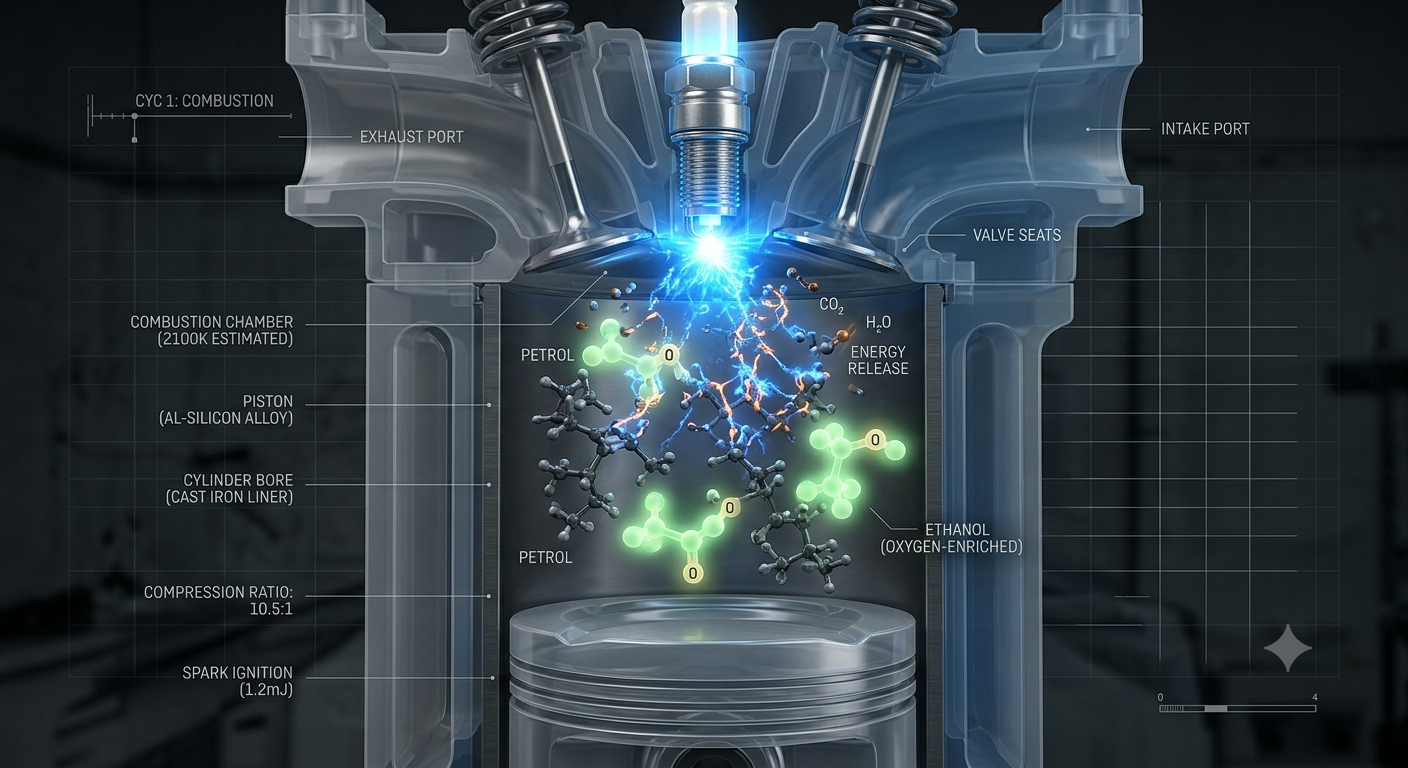
Alag-alag blending ratios ko unke technical codes se pehchana jata hai:
1. E10 Fuel (10% Ethanol + 90% Petrol)
Yeh Bharat mein pichle kuch saalon se standard fuel raha hai. Zyadatar puraane aur naye engines is ratio ko bina kisi mechanical impact ya modification ke aasaani se manage kar lete hain. Isme corrosion aur moisture absorption (phase separation) ke prabhav ki sambhavna na ke barabar hoti hai.
2. E20 Fuel (20% Ethanol + 80% Petrol)
Yeh abhi ka sabse bada discussion point hai. E20 fuel ke sath engine ke andar combustion temperature badhta hai. Isme sabse bada takniki pehlu (technical challenge) yeh hai ki ethanol ek hygroscopic liquid hai, yani yeh hawa se moisture (paani) ko absorb kar leta hai. Agar gaadi kaafi dino tak static (khadi) rahe, toh fuel tank ke andar moisture separation (Phase Separation) ki sthiti ban sakti hai, jiske liye engine components ki durability ko optimize karna zaroori hota hai.
3.E27 Fuels (27% Ethanol + 73% Petrol)
Auto industry aur government ke beech chal rahi research ke mutabik, ab E25 aur E28 (25% aur 28% Ethanol blending) jaise higher blends par bhi kaam shuru ho chuka hai. Yeh upcoming high-blend fuels future ke advanced flex-fuel engines ke liye design kiye ja rahe hain, jisse desh ki crude oil par nirbharta aur bhi zyada kam ho sake. Iske liye manufacturers ko aane wale samay mein engine calibration aur material durability ko ek naye level par upgrade karna hoga.
4. E85 Fuel (85% Ethanol + 15% Petrol)
Ise ‘Flex-Fuel’ kaha jata hai. Yeh standard internal combustion engines (ICE) mein nahi chal sakta. Iske liye specially designed Flex-Fuel Vehicles (FFVs) ki zaroorat hoti hai, jinke fuel injectors, spark plugs, aur ECU (Engine Control Unit) ko alag tarike se calibrate kiya jata hai taaki woh badalte hue fuel ratios ko automatically adjust kar sakein.
5. E100 Fuel (100% Pure Ethanol)
Yeh poori tarah se petrol-free driving ka concept hai. E100 par gaadi chalane ke liye engine ke poore metallurgy ko badalna padta hai. Chunki high-concentration ethanol standard plastics aur rubber gaskets ke sath react kar sakta hai, isliye E100 engines mein advanced stainless steel lines, Teflon-coated seals, aur high-grade modified aluminum alloys ka istemaal kiya jata hai.
📊 Comprehensive Technical Comparison Table
“Note: Yeh Risk Levels sirf standard internal combustion engines (ICE) ke liye hain. Advanced Flex-Fuel Vehicles aur material-upgraded engines mein yeh factors fully managed hote hain.”
| Fuel Type | Ethanol % | Petrol % | Energy Density (vs Pure Petrol) | Material Compatibility Requirement | Phase Separation Risk |
| Pure Petrol (E0) | 0% | 100% | 100% (Base) | Standard OEM Metallurgy | None |
| E10 | 10% | 90% | ~96-97% | Standard Legacy Engines | Very Low |
| E20 | 20% | 80% | ~93-94% | Material Compliant Rubber/Plastics | Manageable / Minor |
| E85 | 85% | 15% | ~70-72% | Dedicated Flex-Fuel Components | Requires Adaptation / High (Requires Material Upgrade) |
| E100 | 100% | 0% | ~65-67% | Full Stainless Steel & Teflon Lines | Specialized Design Required |
Pure Ethanol (E100) ki energy density pure petrol ke mukable lagbhag 33% kam hoti hai. Lekin hum gaadiyon mein pure ethanol nahi, balki E20 (20% ethanol blend) istemaal kar rahe hain, isliye mileage par iska asar behad niyamit (minimal) hota hai.
Chapter 3: Global History of Biofuels: How the World Started Blending
Biofuels ka itihaas koi naya ya sirf 21st-century ka invention nahi hai. AC generator aur alternator ke evolution ki tarah hi automotive powertrains ka safar bhi kaafi purana hai. Sach toh yeh hai ki jab Henry Ford ne 1908 mein apni mahan Model T car design ki thi, toh unhone use ethanol par chalane ke liye hi optimize kiya tha.
Ford ka manna tha ki tatkalin agriculture sector biofuel ke dum par energy ka ek bada aur sustainable source ban sakta hai. Lekin us daur mein saste aur bharpoor maatra mein milne wale petroleum (crude oil) ki khoj ne ethanol ko mukhya commercial fuel market se thoda peechhe dhel diya.
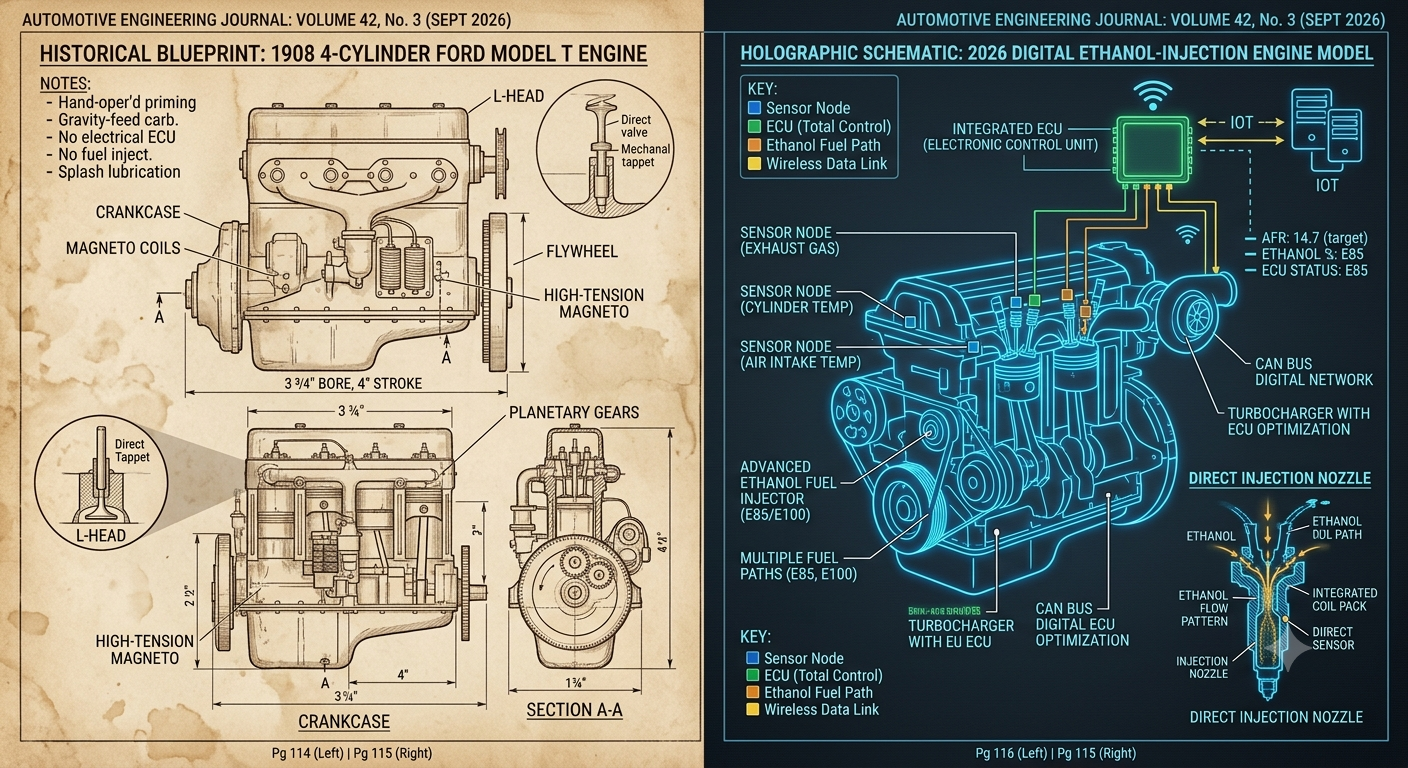
Global level par ethanol blending ka asli punarjanm (re-birth) 1970s ke Oil Crisis (OPEC oil embargo) ke dauran hua. Jab crude oil ki supply chain prabhavit hui, toh duniya ke bade desho ko samajh aaya ki kisi ek single resource par poori tarah nirbhar rehna unki energy security ke liye kitna bada challenge ho sakta hai.
Is economic shift ke baad, Brazil aur United States ne apne domestic sugar aur corn industries ko leverage karke bade paimane par commercial ethanol programs launch kiye, jo aaj poore global biofuel ecosystem ka foundation hain.
Chapter 4: International Rules: Biofuel Mandates in the US, Brazil, and Europe
Global biofuel landscape ko agar samajhna hai, toh hume do sabse bade players—Brazil aur United States—ke regulatory frameworks ko dekhna hoga. In deshon ne kai dashkon ki engineering aur pricing testing ke baad apne standards set kiye hain.
1. Brazil (The Pioneer of E27 and E100)
Brazil duniya ka sabse bada aur successful ethanol integration model mana jata hai. Wahan ke ANP (National Agency of Petroleum, Natural Gas and Biofuels) ke mutabik, poore desh mein milne wale petrol mein E27 (27% Ethanol) ka use mandatory hai.
Iske alawa, Brazil ke lagbhag har gas station par pure E100 (Hydrous Ethanol) ka alag dispensing point hota hai. Wahan chalne wali 80% se zyada gaadiyan Flex-Fuel Vehicles (FFVs) hain, jinhe major automotive OEMs ne local agricultural requirements aur cane-sugar industry ke sath milkar design kiya hai.
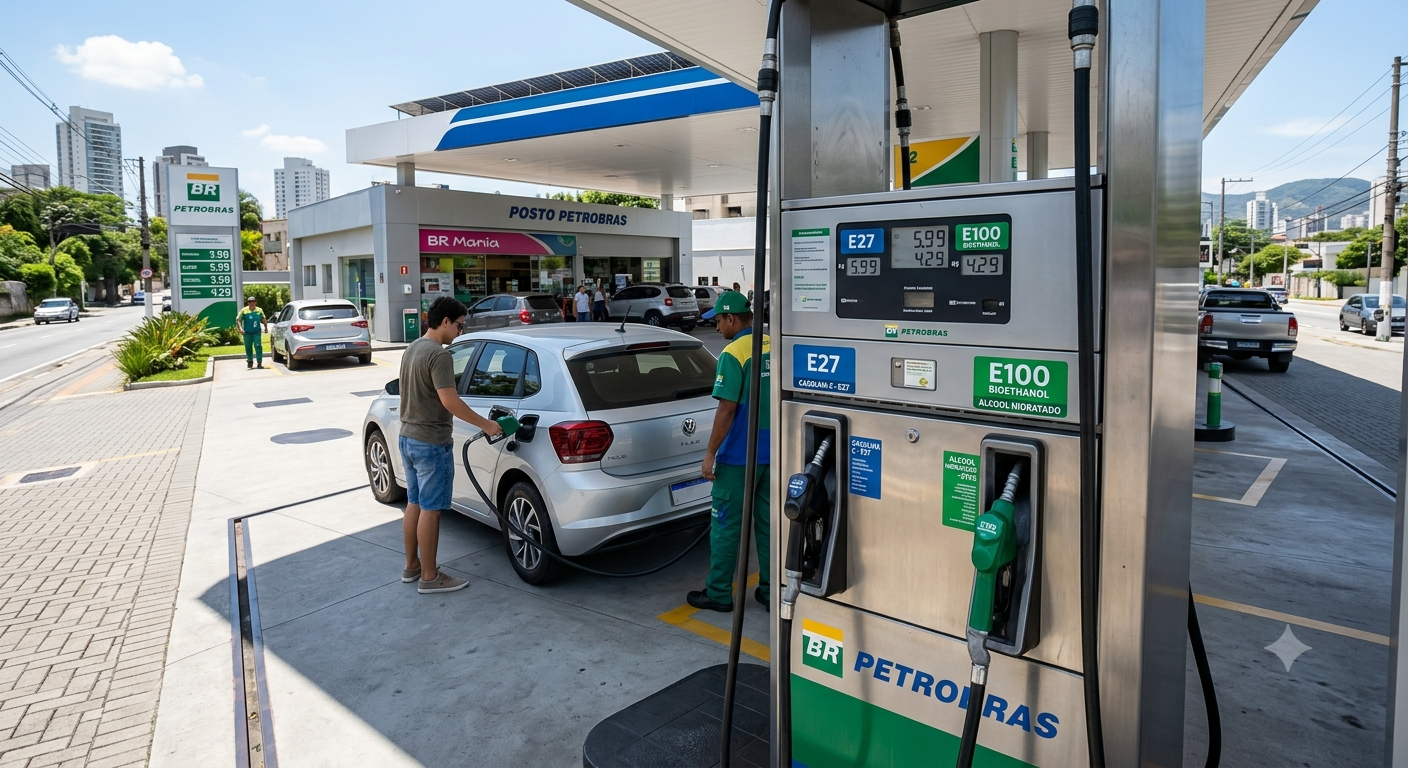
“…Global benchmarks ki baat karein to Brazil pichle kai dashko se higher ethanol blends ko successfully use kar raha hai. Iski official management aur biofuels regulations ko aap Brazil ki official regulatory body Agência Nacional do Petróleo, Gás Natural e Biocombustíveis (ANP) par dekh sakte hain.”
2. United States (The Corn-Ethanol Mandate & E15)
US Environmental Protection Agency (EPA) ke Renewable Fuel Standard (RFS) program ke tehat, America apne domestic corn (makka) surplus ko ethanol mein convert karta hai. US mein standard fuel E10 hai, lekin haal hi mein wahan E15 (15% Ethanol) ko bade paimane par integrate kiya ja raha hai.
EPA ke safety and environmental guidelines ke mutabik, 2001 ke baad bane Light-Duty vehicles mein hi E15 use karne ki compatibility nirdharit ki gayi hai, jabki legacy motorcycles aur specialized heavy-duty marine vehicles mein iska upyog restricted hai.
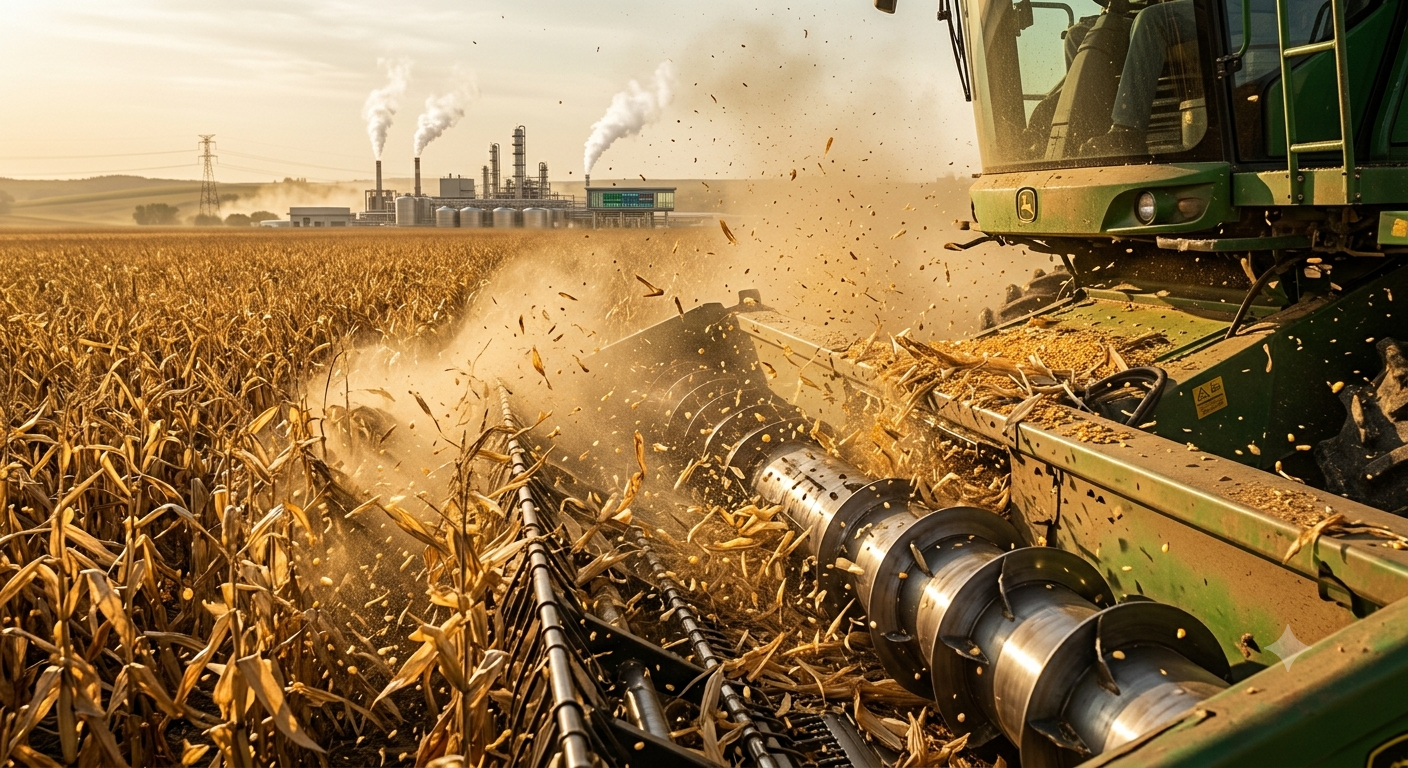
Ethanol blending aur iske global standards ko lekar aap US EPA (Environmental Protection Agency) Alternative Fuels Guide par unki official report dekh sakte hain.”
3. European Union (The Feedstock Optimization & Balance)
Europe ka approach biofuel ko lekar kafi regulatory aur standard-focused raha hai. EU ke Renewable Energy Directive (RED II) ke mutabik, member countries mein standard blending E5 se E10 ke beech hi set hai.
Europe ka mukhya focus yeh hai ki biofuel production aur agricultural food resources ke beech ek sateek santulan (balance) bana rahe, jise technical terms mein Indirect Land Use Change (ILUC) analysis kaha jata hai. Isliye EU ab First-Generation (crop-based) ethanol ke sath-sath Second-Generation (agricultural waste-based) par teji se transition kar raha hai.
“…Sirf Brazil hi nahi, balki European Union (EU) mein bhi carbon emissions ko kam karne ke liye transport sector mein biofuels aur bioethanol blending ko lagatar badhava diya ja raha hai. Iski poori jankari aur unki official transition policies aap European Commission – Biofuels Guide par check kar sakte hain.”
Chapter 5: “Global Observations: Countries with Strict Regulations and Key Technical Challenges”
Duniya ke kuch deshon mein ethanol blending ko lekar kuch vishesh takniki chintayein (technical concerns) hain aur wahan iske upyog par kade niyam lagaye gaye hain.
1. Germany & Classic Car Federations (Strict Restrictions)
Germany mein halanki E10 milta hai, lekin wahan ki sarkar ne har petrol pump par parallel roop se pure petrol (E5 ya E0 Super Plus) rakhna mandatory kiya hua hai.
Germany ki automotive authority ADAC ki reports ke mutabik, puraane engines (classic/vintage cars) aur kai pre-2010 models mein ethanol fuel system ke aluminum components par impact daal sakta hai aur fuel lines ki durability ko kam kar sakta hai.
“…Europe ke kai bade desho mein carbon emissions ko control karne ke liye purane fuels ko phase-out kiya ja raha hai. Official data ke mutabik, Austria aur France jaise desho ne apne yahan kam ethanol wale Super E5 petrol par poori tarah ban laga diya hai. Yahan tak ki Germany ki sabse badi automobile association ADAC (Allgemeiner Deutscher Automobil-Club) bhi ab Germany mein E5 fuel ko ban karke har jagah E10 compulsory karne ki wadat kar rahi hai.”
2. The United Kingdom (The Protected Fuel Clause)
UK ne jab 2021 mein standard fuel ko E5 se badal kar E10 kiya, toh unhone officially ek technical guidance list jaari ki. UK Department for Transport ke mutabik, desh mein chal rahi lagbhag 5-7 lakh puraane vehicles E10 compatible nahi hain.
Isliye, sarkar ne law banaya hai ki bade fuel stations par Super Unleaded (E5) humesha available rahega taaki consumers ke paas alternative fuel select karne ka option ho.
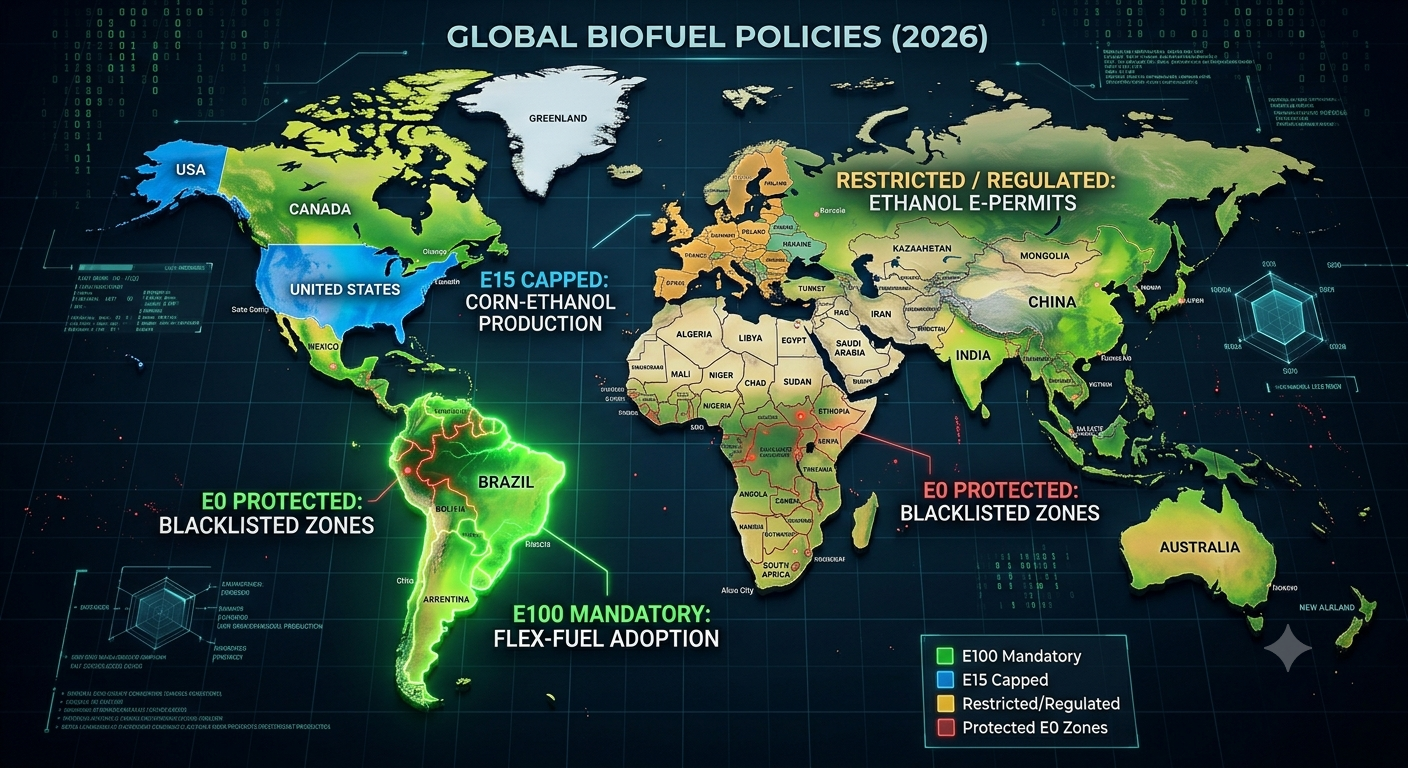
3. Food Insecure Nations (The Ethical Framework)
Kai African aur Central American deshon mein jahan malnutrition aur anaaj ki upaj ko lekar chintayein hain, sarkaaron ne commercial crop-to-ethanol diversion par strict regulatory caps lagaye hue hain. Iske peeche ek behad sateek vichar chalta hai jo Germany jaise viksit desho mein bhi dheere-dheere dhyan khinch raha hai—‘Teller statt Tank’ (Pehle khadya suraksha, baad mein fuel utility).
Khane ki faslo ko fuel mein badalne se badhne wale khadya sankat aur zameen par padne wale negative impacts (land degradation) par Germany ke Federal Ministry for the Environment (BMUKN) ne bhi global reports sajha ki hain, jahan is tarah ke crop-based biofuels par kade niyam lagane ki baat ki gayi hai.”
Part_2: Ethanol Blending in India & Goverment Policy
Chapter 6: Ethanol Blending in India: The Roadmap From E5 to the 2026
Bharat mein Ethanol Blending ka safar shuruat mein behad niyamit (gradual) raha, lekin pichle kuch saalon mein isme ek teji se badhtav (significant progress) dekhne ko mila hai, jo global energy markets mein ek charcha ka vishay bana hua hai. Desh mein 2014 tak ethanol blending ka ratio lagbhag 1.5% ke aas-pass thahra hua tha.
Halaat tab badle jab NITI Aayog aur Ministry of Petroleum and Natural Gas (MoPNG) ne milkar ek comprehensive plan tayaar kiya—“Roadmap for Ethanol Blending in India 2020-25”. Is policy ke tehat, Bharat ne pehle 2030 tak 20% blending (E20) ka target rakha tha, lekin badhti energy needs aur positive progress ko dekhte hue sarkar ne is timeline ko advance karke direct 2025-2026 kar diya.
Accelerated Policy: The NITI Aayog trajectory pushing India towards strategic energy self-reliance.
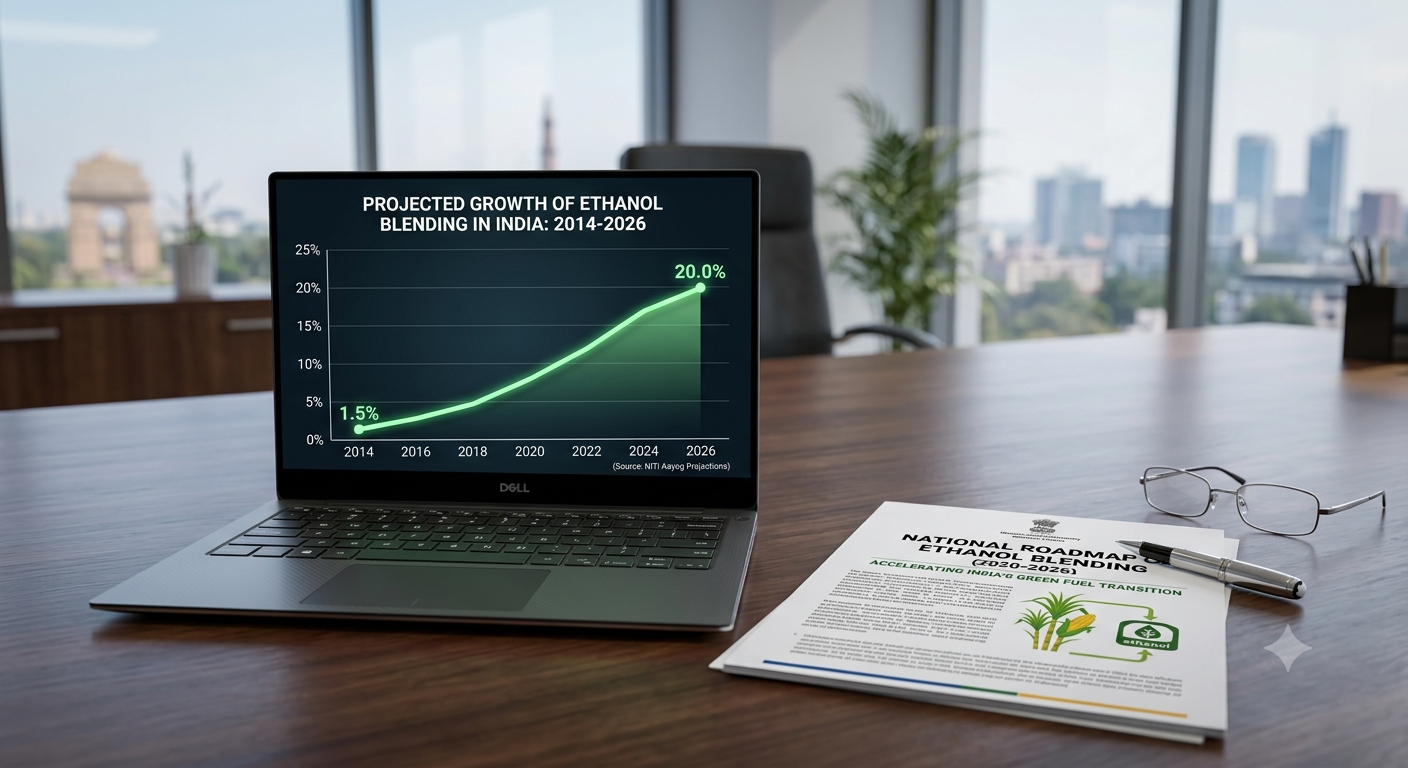
Abhi ka status yeh hai ki desh ke ek bade hisse mein E20 fuel successfully roll out kiya ja chuka hai, aur ab Automotive Research Association of India (ARAI) ke sath milkar sarkar E25 aur Flex-Fuel Prototype ki testing advanced stages mein kar rahi hai. Is policy ka ultimate technical goal yeh hai ki 2026 tak pure desh ke automotive ecosystem ko ek naya aur sustainable direction diya jaye aur car manufacturers ko is badlav ke liye teji se adapt karne ke liye encourage kiya jaye.
📈 India’s Blending Acceleration Timeline
[2014] ──► 1.5% Blending (Initial Phase)
[2022] ──► 10% Blending (E10 Achieved Nationwide)
[2025] ──► E20 Fuel Rollout in Major Cities
[2026] ──► 20% Universal Target & E25/FFV Testing (Current Status)
Official Policy Reference: Data and implementation timelines sourced directly from the Ministry of Petroleum and Natural Gas (MoPNG) – Ethanol Blending Programme Official Report. (Click Here)
Chapter 7: Official Ministry Guidelines: MoPNG, NITI Aayog, and MoEFCC Directives
Bharat mein ethanol blending koi single-isolated project nahi hai, balki yeh teen bade ministries ka ek high-level coordinated framework hai. Agar isko legal aur technical nazariye se dekhein, toh iske peeche teen alag-alag sarkaari bodies ke nirdharit dishanirdesh (established directives) kaam kar rahe hain:
1. NITI Aayog (The Master Strategist)
NITI Aayog ne apni report “Roadmap for Ethanol Blending in India 2020-25” ke tehat poore desh ke liye target timelines aur supply-chain structures ko nirdharit kiya hai. Inke guidelines ke mutabik, domestic auto manufacturers ke liye apne engine systems ko E20 compliant banana nirdharit (mandated) kiya gaya hai.
NITI Aayog ka estimation hai ki agar desh successfully E20 target ko retain karta hai, toh har saal lagbhag ₹30,000 Crore se zyada ki foreign exchange (crude oil import bill) ki bachat hogi.
Note: NITI Ayog Official Report: Click Here
2. MoPNG – Ministry of Petroleum and Natural Gas (The Implementer)
MoPNG seedhe roop se OMCs (Oil Marketing Companies jaise IOCL, BPCL, HPCL) ko ethanol procurement pricing aur distribution rules jaari karta hai.
MoPNG ke standard protocols ke mutabik, OMCs ko distilleries se ek fixed remunerative price (sarkar dwara taya kiya gaya rate) par ethanol kharidna hota hai, jisse ethanol banane wali companies ko ek pre-determined assured profit margin milta hai.
Note: MoPNG Official Report pdf: Click Here
3. MoEFCC – Ministry of Environment, Forest and Climate Change (The Regulator)
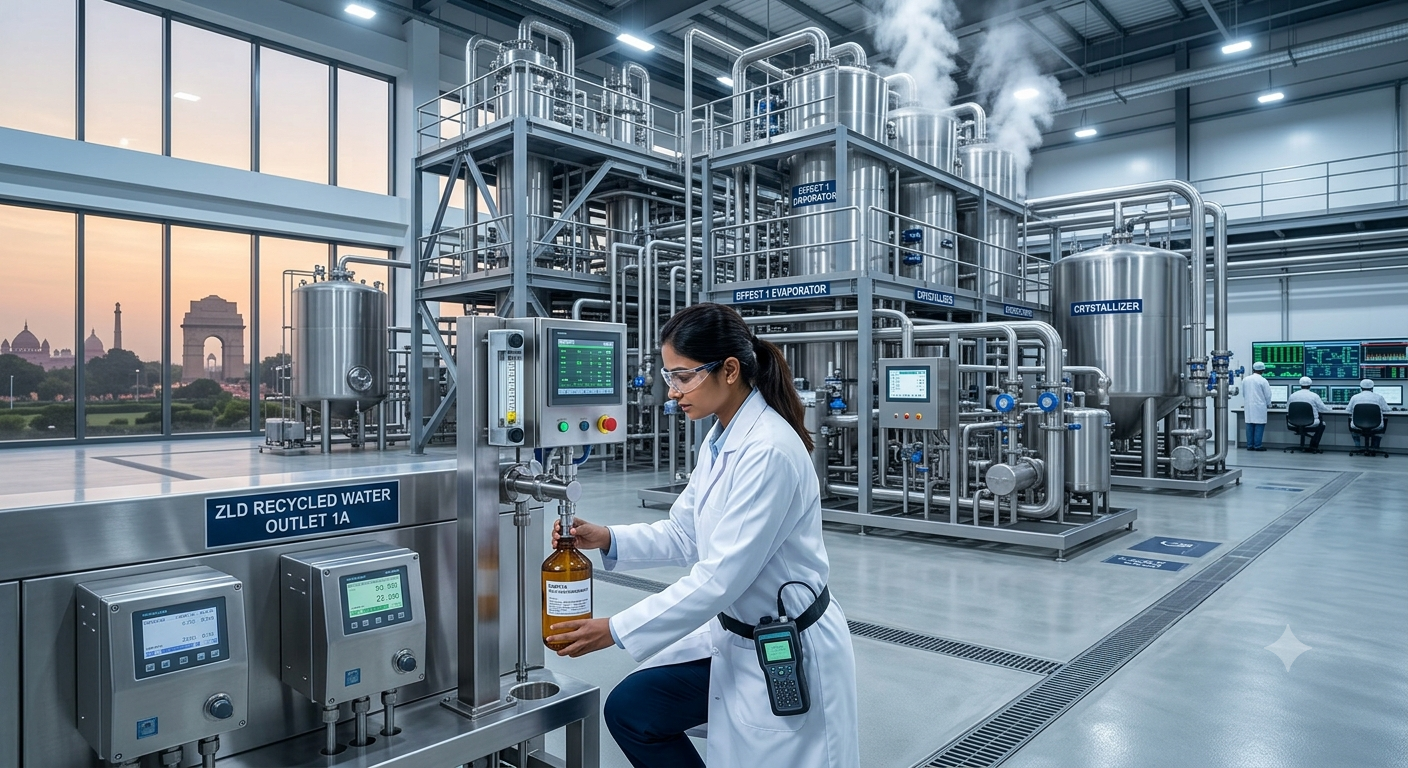
MoEFCC ka kaam hai distilleries ko environmental clearances dena. Ethanol plants se nikalne wale liquid waste (spent wash) ke management ke liye, MoEFCC ne sabhi plants ke liye Zero Liquid Discharge (ZLD) mechanism ko install karna compulsory kiya hai.
Iske tehat koi bhi plant apna dushit paani baahar kisi nadee ya zameen par nahi baha sakta, balki use recycle ya vaporize karna hota hai.
Note: MoEFCC: Click Here
Chapter 8: State-wise Production: Which Indian States are Leading and Why?
Bharat ke har rajya mein ethanol banane ki capacity ek jaisi nahi hai. Geographical location, pani ki availability aur crop pattern ke hisab se kuch states is race mein sabse aage nikal chuke hain.
1. Uttar Pradesh (The Sugarcane King)
Uttar Pradesh desh mein ethanol production ke maamle mein top par bana hua hai. Iska kaaran hai UP ki vishaal sugarcane (ganna) belt.
UP ki distilleries ganne ke ras aur B-Heavy Molasses ka ek bada aur efficient network chala rahi hain. State government ki single-window clearance aur supportive ethanol plant incentives ne yahan ek bada industrial development khada kar diya hai.
2. Maharashtra (The Co-operative Powerhouse)
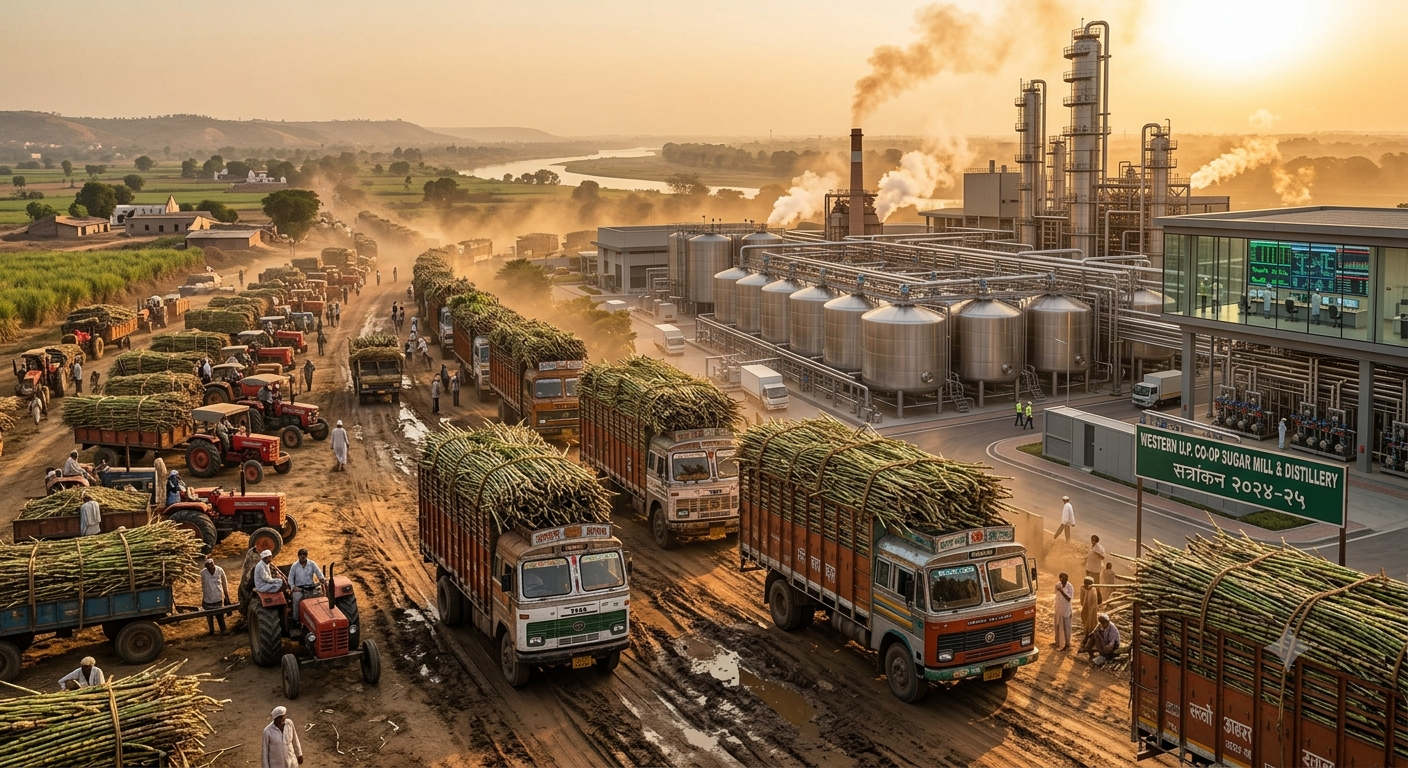
Maharashtra doosra sabse bada producer hai. Maharashtra ka poora model unke co-operative sugar factories (sahakari sakhar karkhana) par chalta hai. Maharashtra mein pichle kuch saalon mein sugar production ke sath-sath ethanol production par kafi focus kiya gaya hai.
International market mein sugar pricing ke utaar-chadaav ke beech, ethanol sugar mills ke liye ek stable aur reliable revenue source ban gaya hai.
3. Karnataka & Bihar (The Grain-Based Emerging Zones)
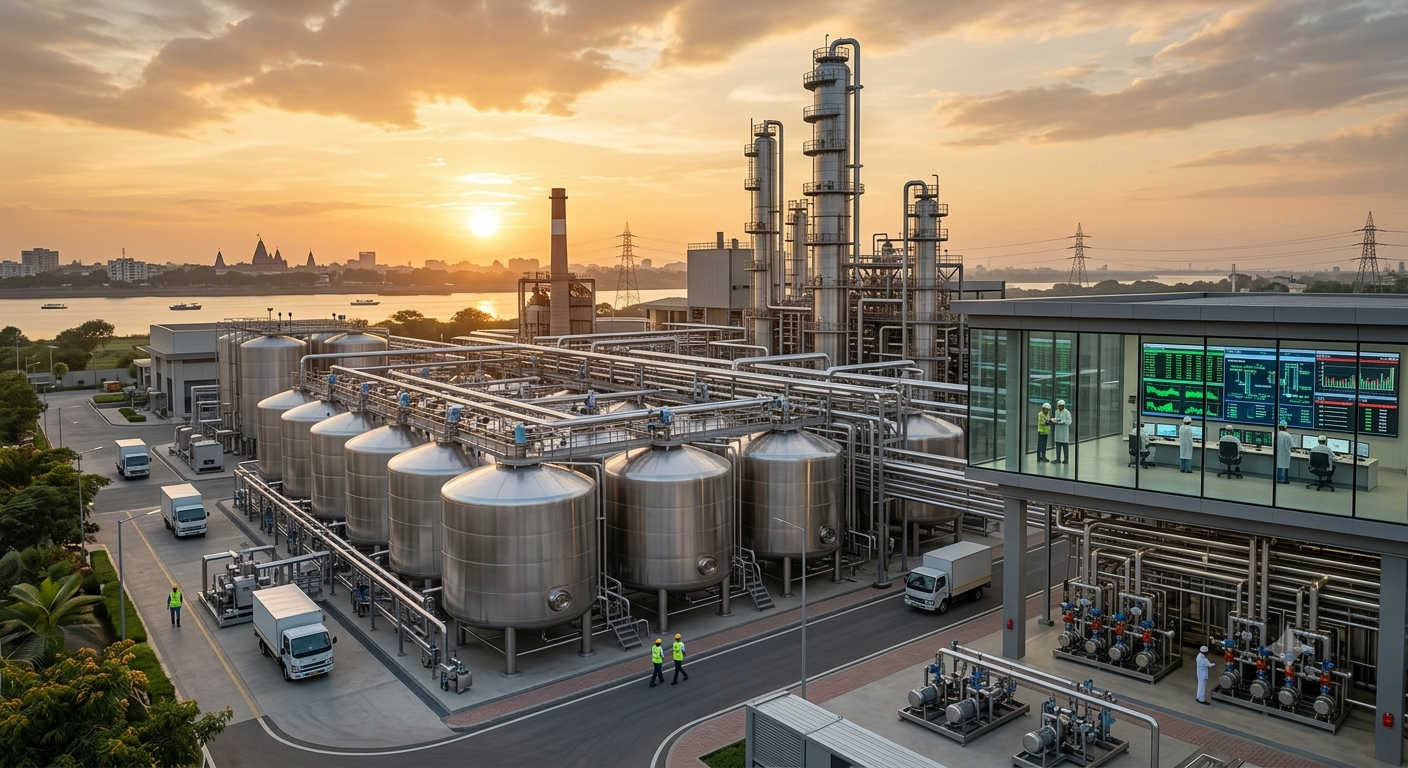
Karnataka sugarcane aur corn dono ka upyog karke high production retain kar raha hai. Wahin doosri taraf, Bihar ne apni alag Ethanol Production Promotion Policy launch ki hai. Bihar ke paas ganna kam hai, isliye unhone broken rice (kharab chawal) aur maize (makka) se ethanol banane wali grain-based distilleries ka ek naya aur efficient hub taiyar kiya hai.
Chapter 9: The Industrial Backbone: Who is Supplying the Biofuel Infrastructure?
Bharat mein ethanol blending programme ka execution kisi ek single entity par nirbhar nahi hai, balki yeh poore desh ke sugar cooperative networks aur diverse industrial manufacturing units ke capital par aadharit hai. Desh ki sugar mills aur modern distilleries ne ethanol blending targets ko achieve karne ke liye apni distillation capacity ko kaafi badhaya hai.
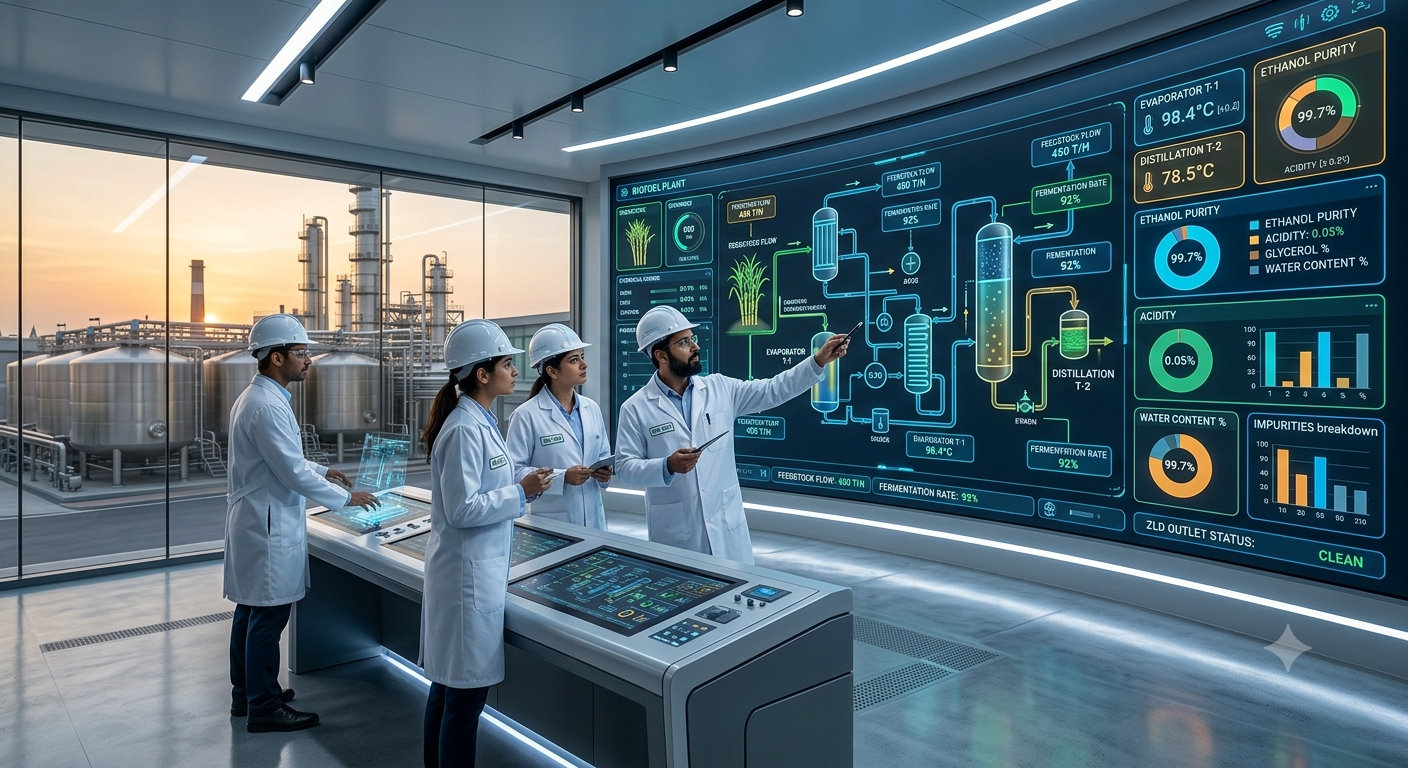
Is pure infrastructure ko deploy karne ke liye specialized chemical engineering aur distillation systems ka upyog kiya jata hai, jo Zero Liquid Discharge (ZLD) aur high-purity ethanol dehydration processing par kaam karte hain. Yeh broad industrial participation desh ke rural economy ko industrial market se jodti hai, jisse multi-source supply network ko aur bhi mazbooti milti hai.
Part_3: The Raw Materials & Manufacturing Process
Chapter 10: The Raw Material Matrix (Sugarcane vs Grains Production in India)
Bharat mein industrial aur automotive fuel requirements ko poora karne ke liye biofuels ka production unke multi-feedstock availability par aadharit hota hai. Kisi bhi agro-based refining infrastructure ki continuous scaling is baat par depend karti hai ki alag-alag seasons mein raw inputs ki supply line prabhavit na ho.
Isiliye desh ke advanced distillation units ko alag-alag biomass variants ke hisab se optimize kiya jata hai taaki dynamic blending standards ko retain kiya ja sake.
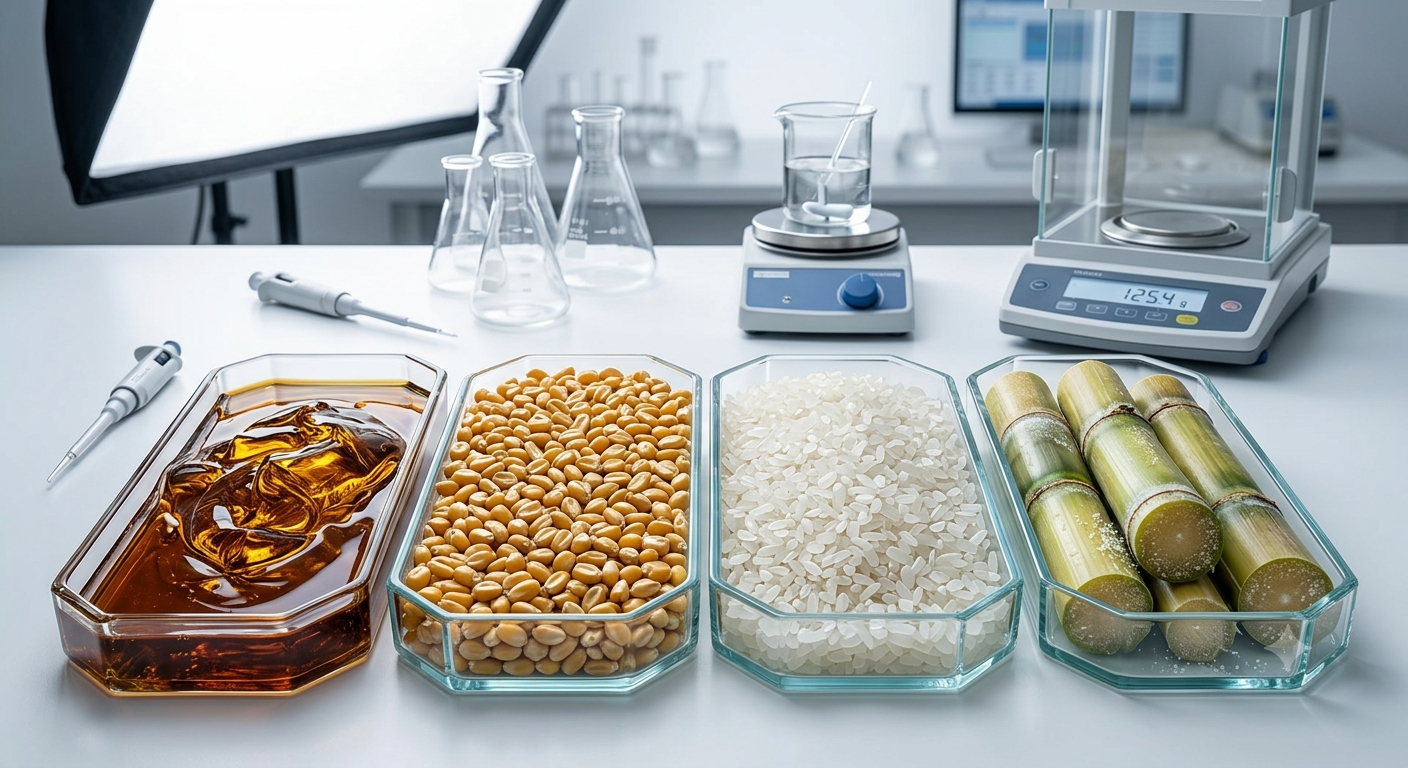
Bharat mein ethanol blending programme ki safalta poori tarah se raw material (feedstock) ki supply aur unki continuous availability par nirbhar karti hai.
Industrial scale par ethanol banane ke liye do mukhya sources ka upyog kiya jata hai: 1G (First Generation) Sugar-based aur Grain-based feedstocks. In dono materials ki apni-apni supply chain logistics aur technical capabilities hain.
Sugarcane juice aur molasses (gur ka sheera) ko ethanol production ke liye sabse efficient mana jata hai kyunki inme sucrose content high hota hai, jisse fermentation process tezi se poora hota hai.
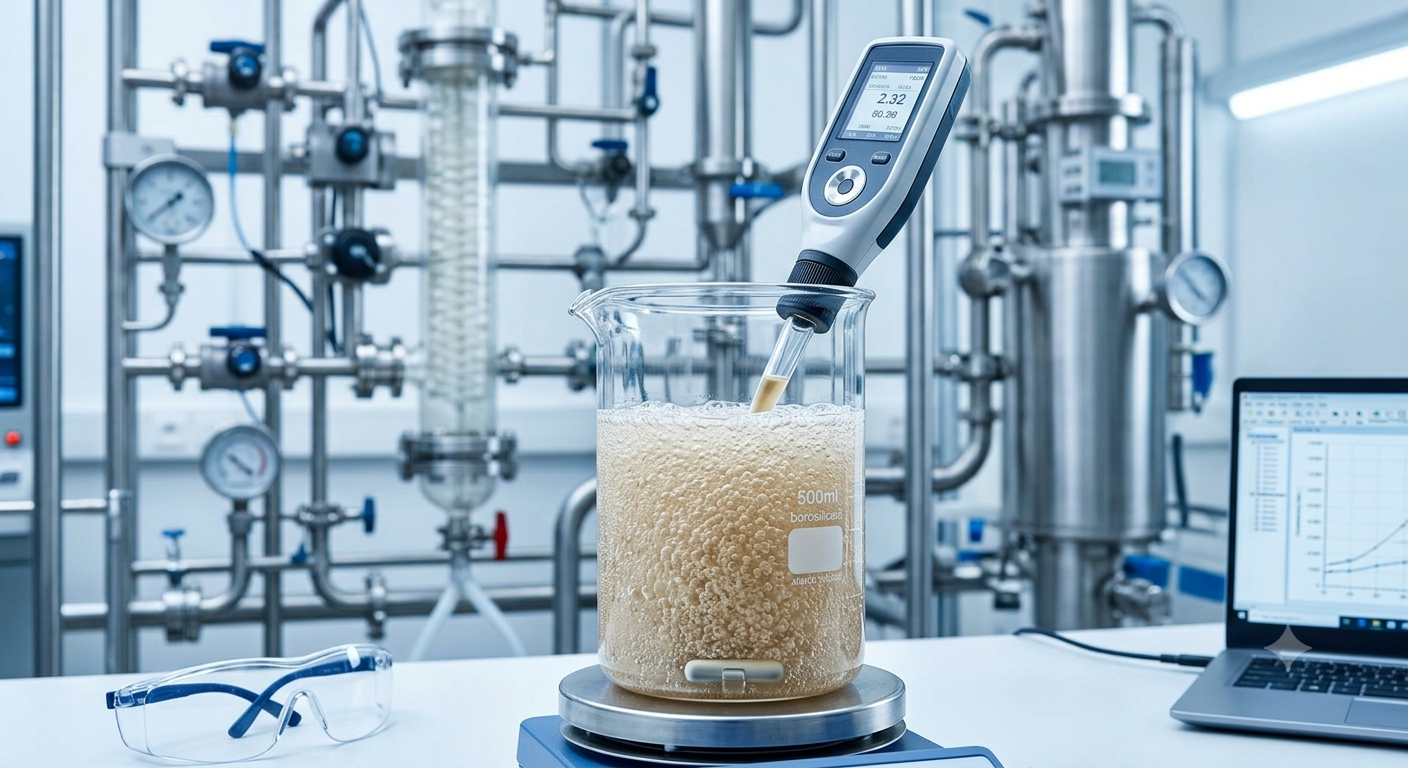
Wahin doosri taraf, grain-based feedstock (jaise maize aur damaged food grains) ka upyog un ilaqon mein badh raha hai jahan ganne ki kheti niyamit (limited) hoti hai.
Grains se ethanol banane ke liye pehle starch ko glucose mein convert karna padta hai, jo ek additional mechanical step badha deta hai, lekin yeh desh ke multi-feedstock model ko mazbooti deta hai taaki kisi ek single crop source par poori tarah nirbhar na rehna pade.
Chapter 11: The Step-by-Step Manufacturing Process: Inside a Modern Distillery
Ek modern ethanol plant ya distillery ke andar ka process chemical engineering ka ek utkrisht namuna hai. Is poori manufacturing process ko char mukhya charnon (stages) mein banaya ja sakta hai:
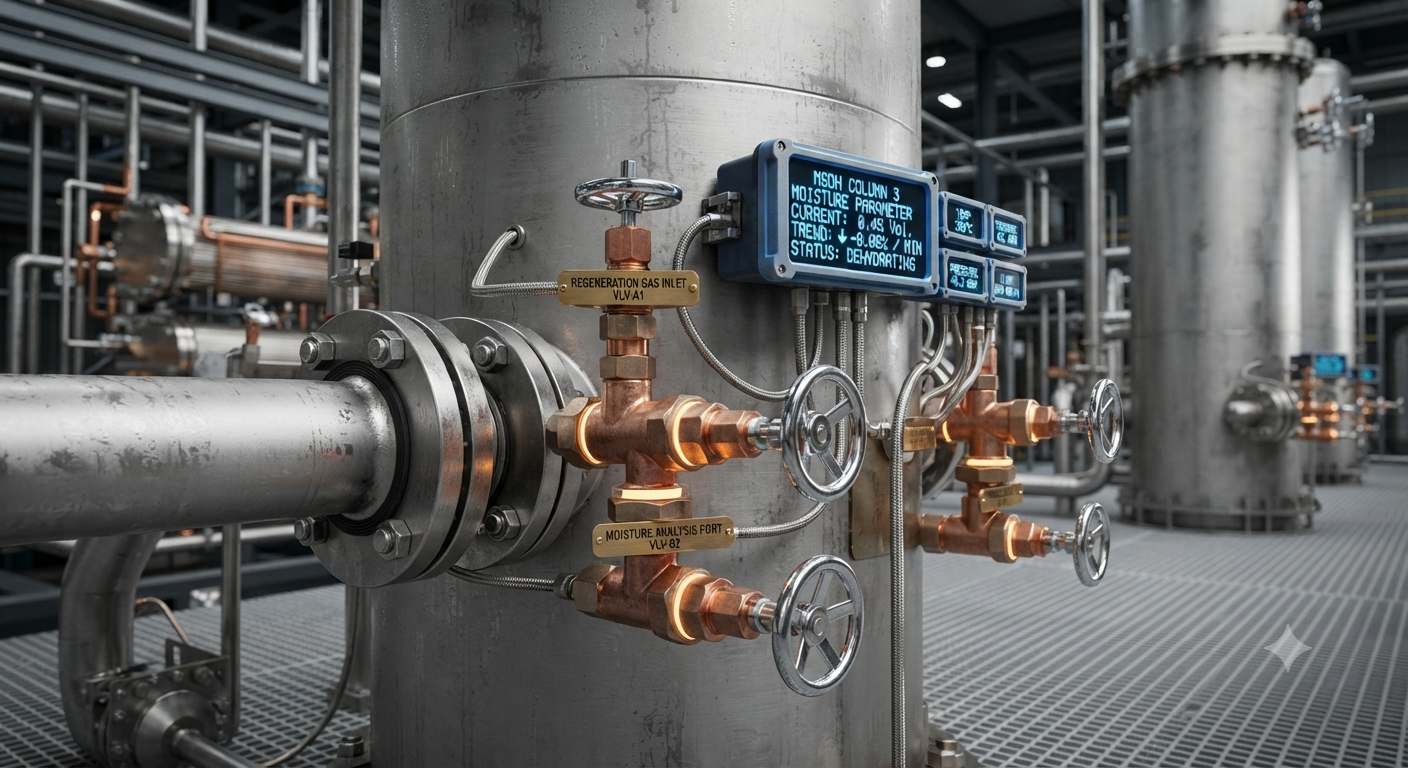
- Dehydration (Molecular Sieve Technology): Petrol mein milane ke liye ethanol mein paani ki ek boond bhi nahi honi chahiye (Anhydrous Ethanol). Isliye, Molecular Sieve Dehydration (MSDH) technology ka upyog karke bacha hua 5% moisture bhi nikal diya jata hai, jisse 99.6%+ Pure Fuel-Grade Ethanol tayaar hota hai.
- Milling and Feedstock Preparation: Sabse pehle raw material ko grind kiya jata hai. Agar grain feedstock hai, toh starch ko break karne ke liye specific enzymes milaye jate hain, aur agar sugarcane hai, toh juice ko direct fermentation tank mein procces ke liye bheja jata hai.
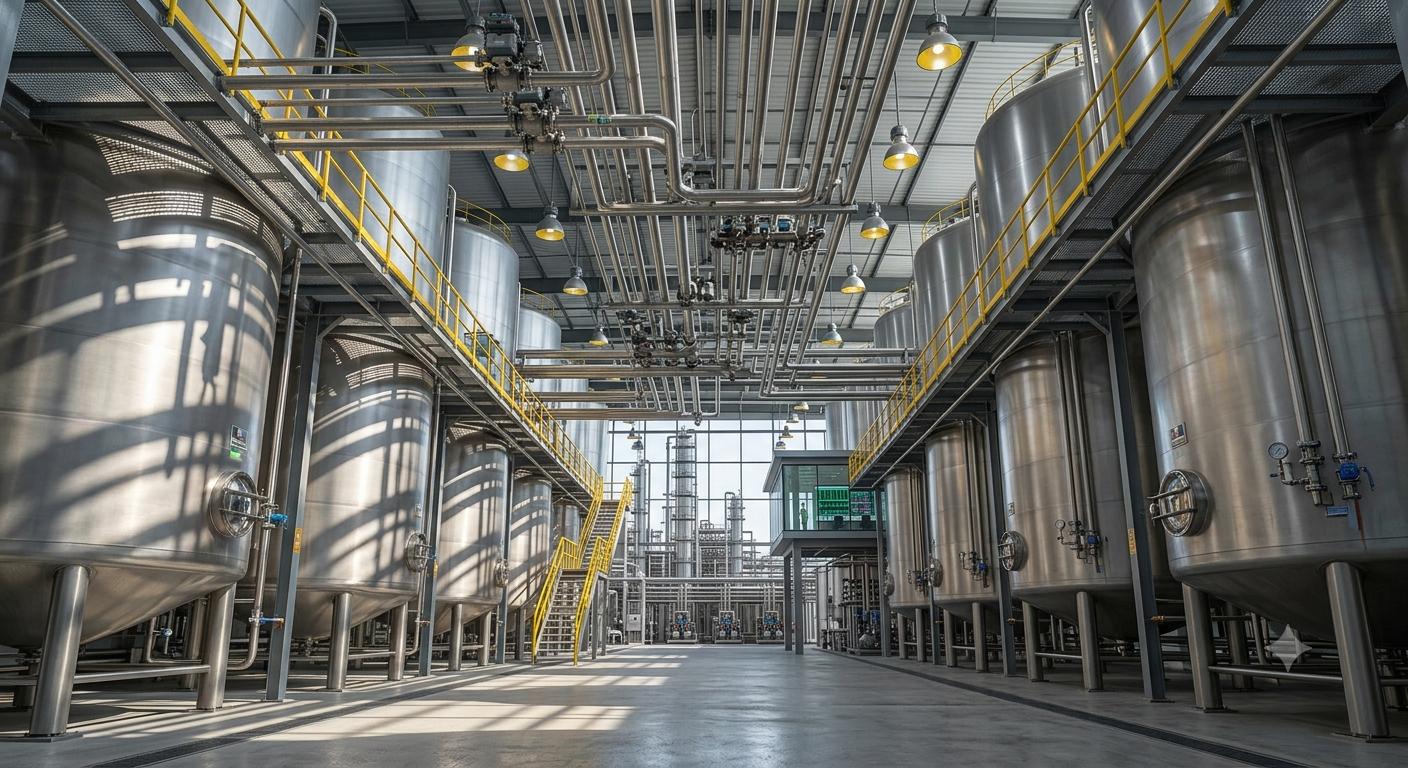
3. Fermentation: Is stage mein Saccharomyces cerevisiae (yeast) ka upyog karke sugar ko alcohol (C2H5OH) aur Carbon Dioxide (CO2) mein convert kiya jata hai. Yeh process lagbhag 24 se 72 ghante tak chalta hai, jisse ‘Beer’ ya crude alcohol tayaar hota hai jisme 10-12% alcohol content hota hai.
4. Distillation: Crude alcohol ko multi-stage distillation columns mein heat kiya jata hai. Chunki alcohol aur paani ka boiling point alag hota hai, isliye vapors ko collect karke 95% pure Rectified Spirit banaya jata hai.
Chapter 12: Industrial, Pharmaceutical, and Future Directives of Ethanol
Fuel-grade ethanol ke alawa, is chemical compound ke kai doosre mukhya industrial aur commercial upyog hain jo domestic economy mein bada yogdan dete hain. Ethanol ki purity aur grade ke hisab se iske applications badal jate hain:
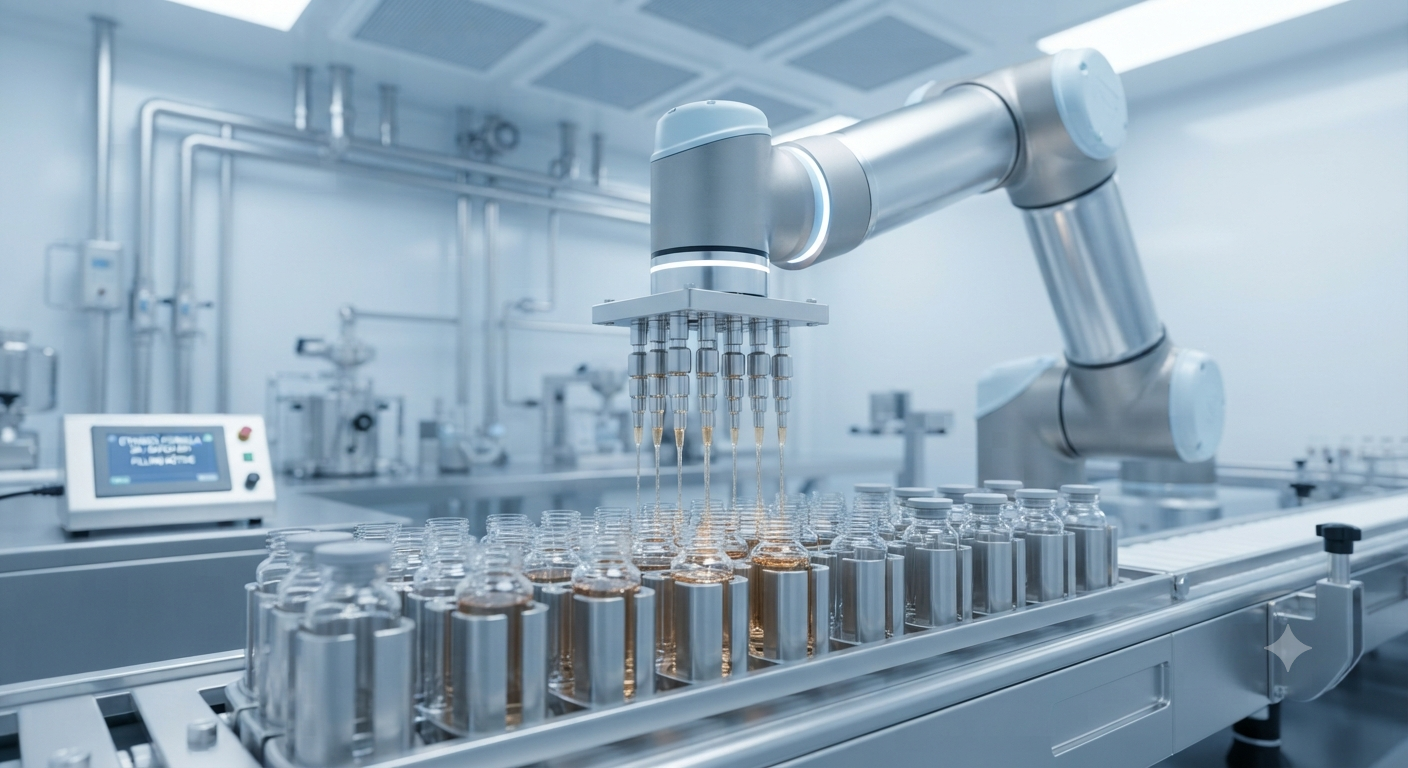
Pharmaceutical Grade (IP Grade): Yeh ethanol high-purity standard ka hota hai, jiska upyog life-saving medicines, cough syrups, antiseptic liquids, aur medical hand sanitizers banane mein hota hai.
Industrial Solvents (Absolute Alcohol): Chemical plants mein iska upyog ek versatile solvent ke roop mein high-quality paints, inks, aur cosmetics (perfumes aur lotions) banane mein kiya jata hai.
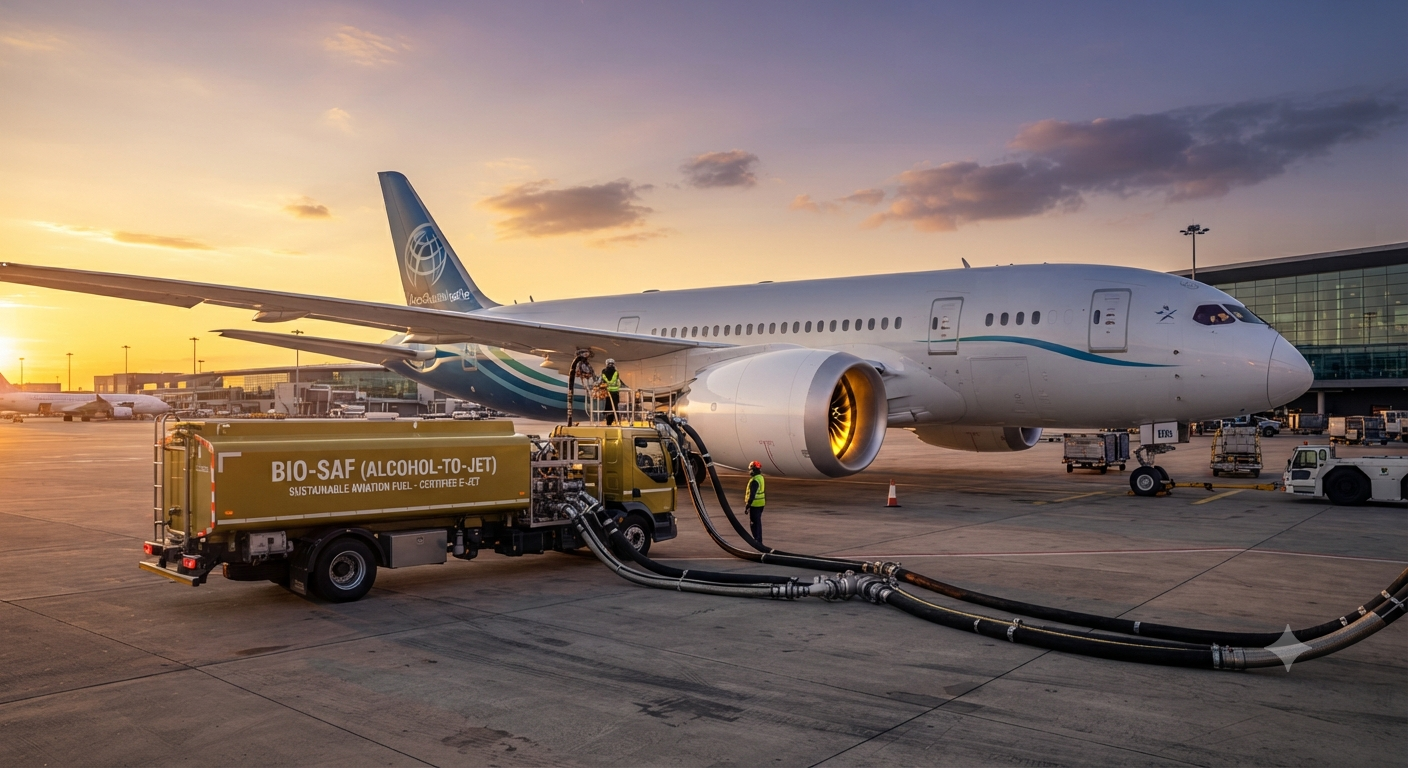
Future Directives (Sustainable Aviation Fuel – SAF): Biofuel roadmap ke agle charan mein, scientists ethanol-to-jet-fuel technology par active research kar rahe hain. Iska goal aane wale samay mein aviation turbine fuel (ATF) mein ethanol-based compounds ko blend karna hai, jo aviation transport sector ke carbon footprint ko mazeed kam karne mein madad karega.
Part_4: The Environmental Exposure (The Water Management)
Chapter 13: The Water Footprint of Ethanol Blending in India
Biofuel production ke environmental life-cycle assessment mein sabse bada topic aata hai—Water Footprint. Kisi bhi renewable fuel ko evaluate karte samay sirf uske tailpipe emissions (gaadi se nikalne wale dhuwen) ko nahi dekha jata, balki uske poore supply chain ke water-energy nexus ko samjha jata hai.
Academic research aur agricultural data ke mutabik, 1 liter sugarcane-based ethanol banane ke liye agricultural stage se lekar distillation tak ek nirdharit water volume consume hota hai.
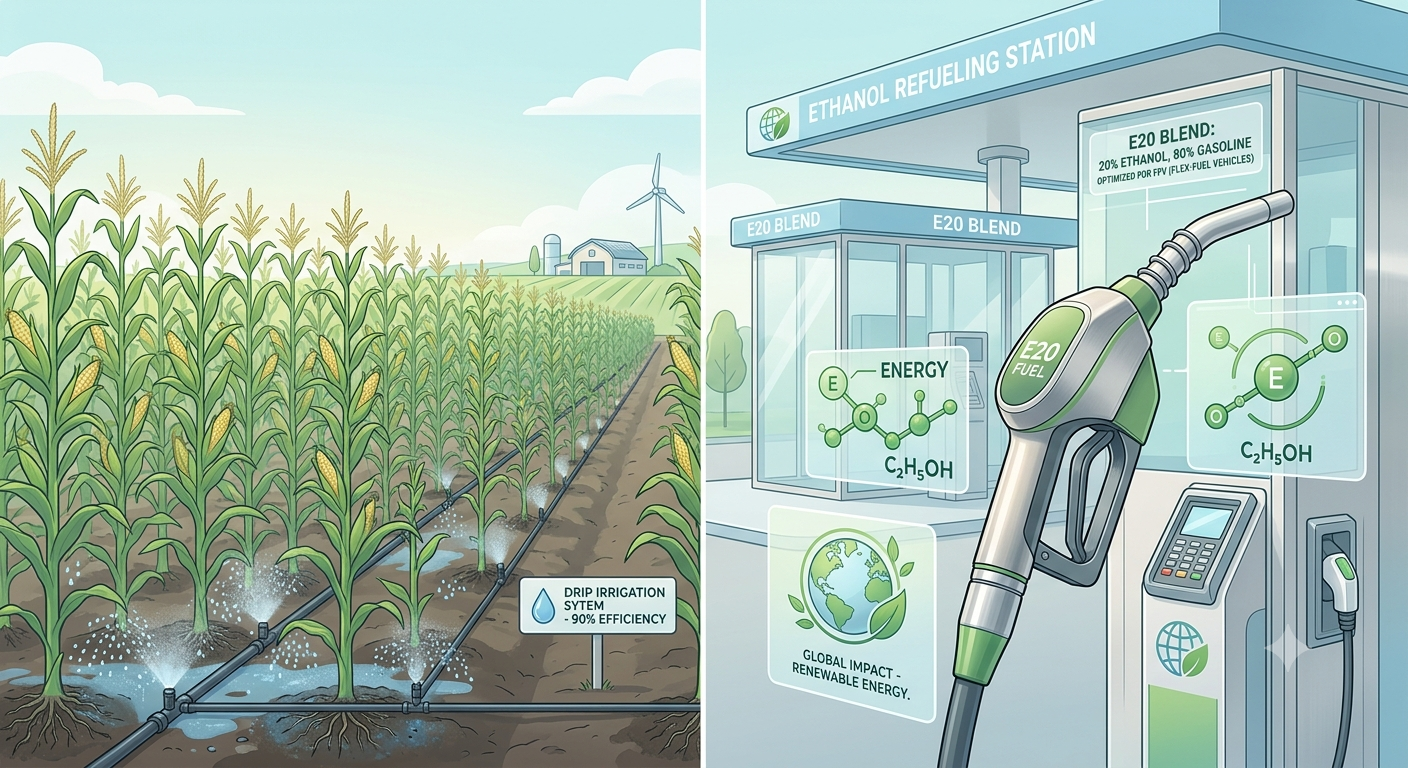
Is water footprint ko balance karne ke liye Bharat sarkar multi-feedstock approach par zor de rahi hai, jahan grain-based production (maize/broken rice) ko badhava diya ja raha hai kyunki grains ka crop water requirement sugarcane ke mukable kaafi niyamit (lower) hota hai.
Iske alawa, agricultural scientists drip irrigation aur water-efficient farming techniques ko push kar rahe hain taaki ground water levels par stress ko effectively manage kiya ja sake.
Chapter 14: Wastewater Management: Processing the Spent Wash Reality
Distillery engineering mein ethanol production ke sath-sath ek organic byproduct nikalta hai jise Spent Wash (ya distillery effluent) kehte hain.
Yeh liquid waste highly acidic hota hai aur iska chemical oxygen demand (COD) aur biochemical oxygen demand (BOD) kaafi zyada hota hai. Isiliye industrial protocols ke tehat iska proper treatment kiya jata hai taaki nearby ecosystem aur soil composition poori tarah surakshit rahe.
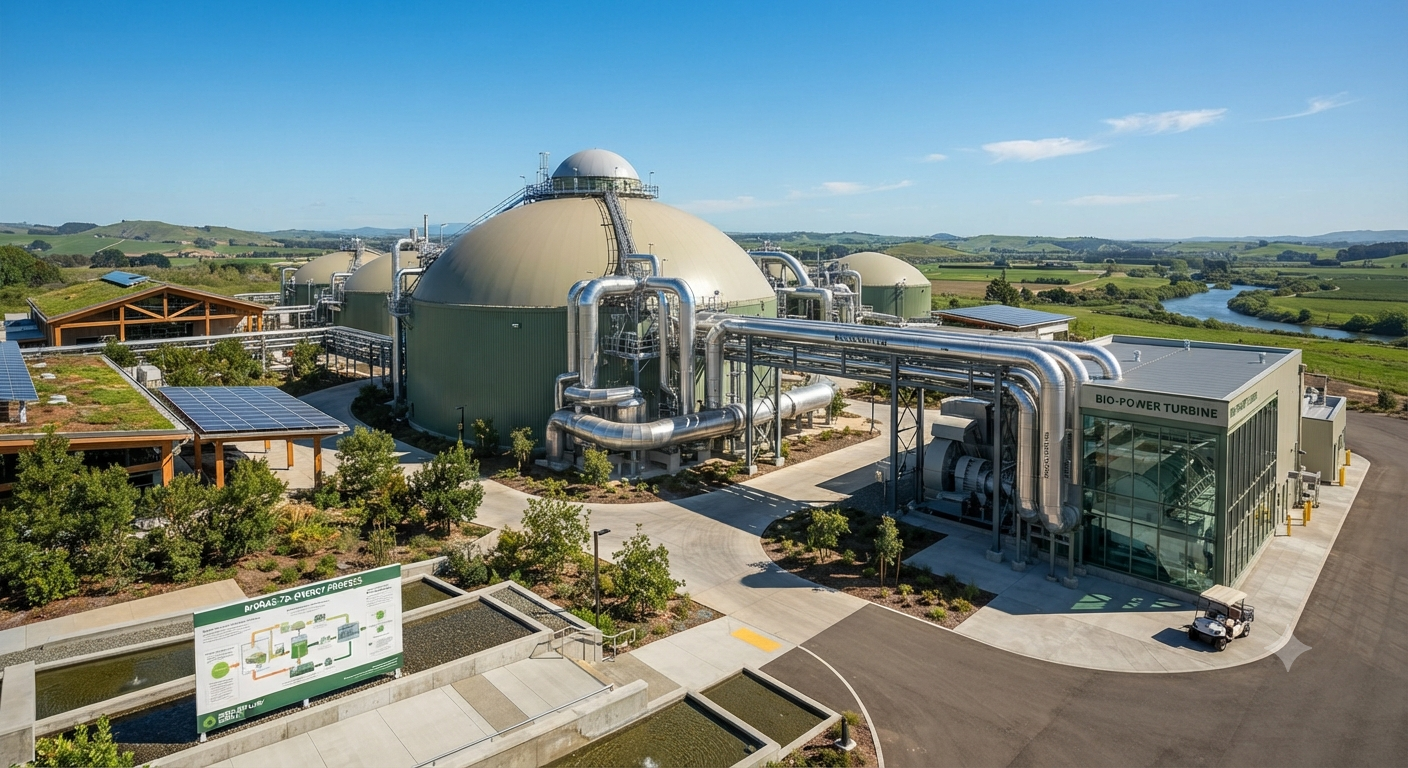
Is technical challenge ko tackle karne ke liye modern distilleries mein advanced wastewater treatment structures install kiye jate hain. Spent wash ko directly discharge karne ke bajay, use anaerobic digesters mein process karke Bio-Gas (Methane) generate ki jaati hai, jise plant ke boilers mein fuel ke roop mein re-use kiya jata hai.
Iske baad bache hue solids ko pressmud ke sath mila kar organic bio-compost fertilizer banaya jata hai, jo kisano ke liye ek behtar khad ka kaam karta hai.
Chapter 15: Zero Liquid Discharge (ZLD) Reality Check: Engineering and Cost Overheads
Central Pollution Control Board (CPCB) aur Ministry of Environment, Forest and Climate Change (MoEFCC) ke nirdharit dishanirdeshon (established guidelines) ke mutabik, Bharat mein chalne wali har ek ethanol distillery ke liye Zero Liquid Discharge (ZLD) status achieve karna legally mandated hai.
ZLD ka matlab hota hai ki plant se industrial process ka paani campus ke baahar discharge nahi hona chahiye, balki use poori tarah recycle aur reuse kiya jaye.
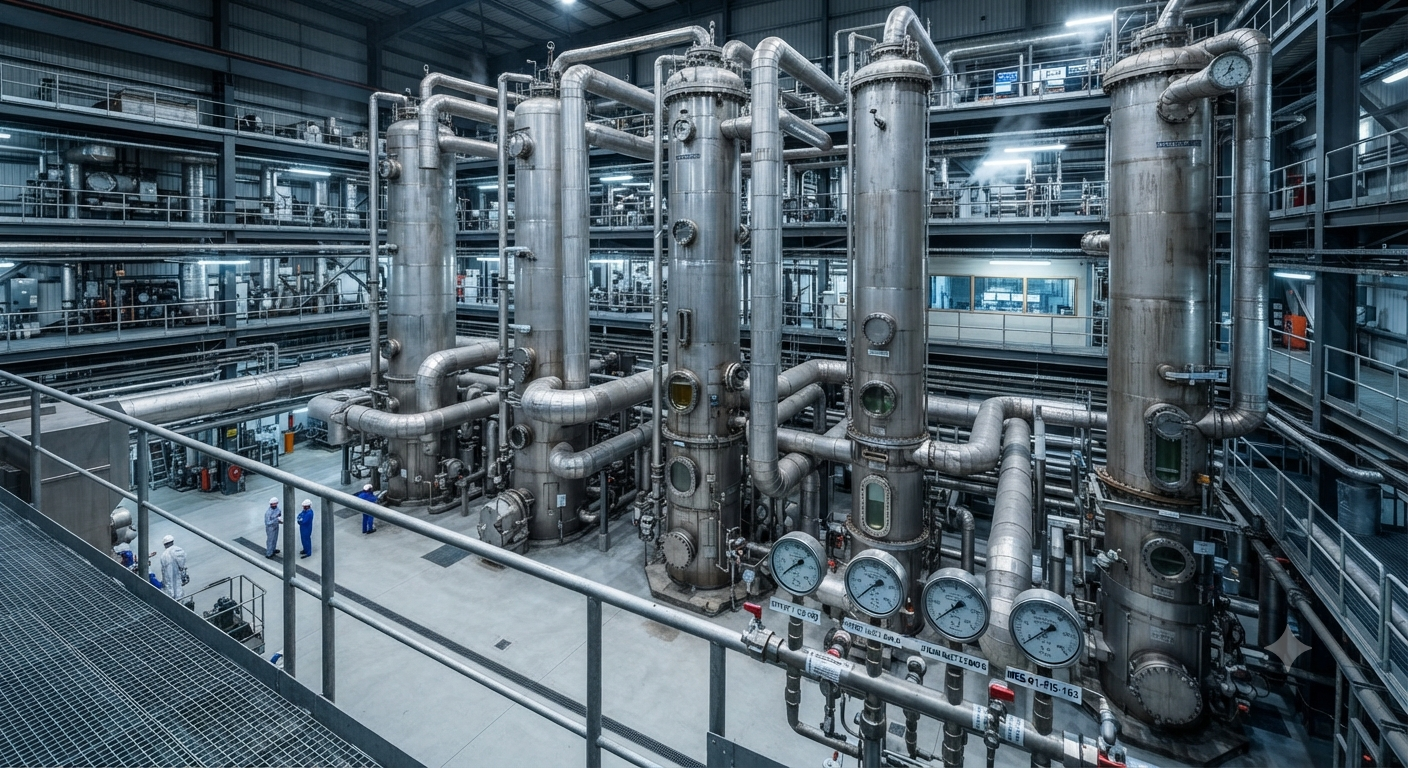
ZLD Mechanical Execution:
- Multi-Effect Evaporators (MEE): Spent wash ko alag-alag chambers mein heat karke evaporate kiya jata hai, jisse paani vapor ban kar alag ho jata hai aur peeche sirf thick condensate roop (slurry) bachta hai.
- Incineration Boilers: Is thick slurry ko specialized incineration boilers mein burn kiya jata hai, jisse steam aur electricity generate hoti hai. Yeh power poore plant ko self-sustainable (co-generation) banati hai.
- Capital Expenditure (CapEx): ZLD systems ko install karne ki cost kaafi high hoti hai. Ek medium-scale plant ke liye ZLD setup lagane mein bade investment ki aavashyakta hoti hai, jo small-scale manufacturers ke liye ek bada financial aspect hai, lekin environmental compliance ke liye yeh ek non-negotiable standard protocol hai.
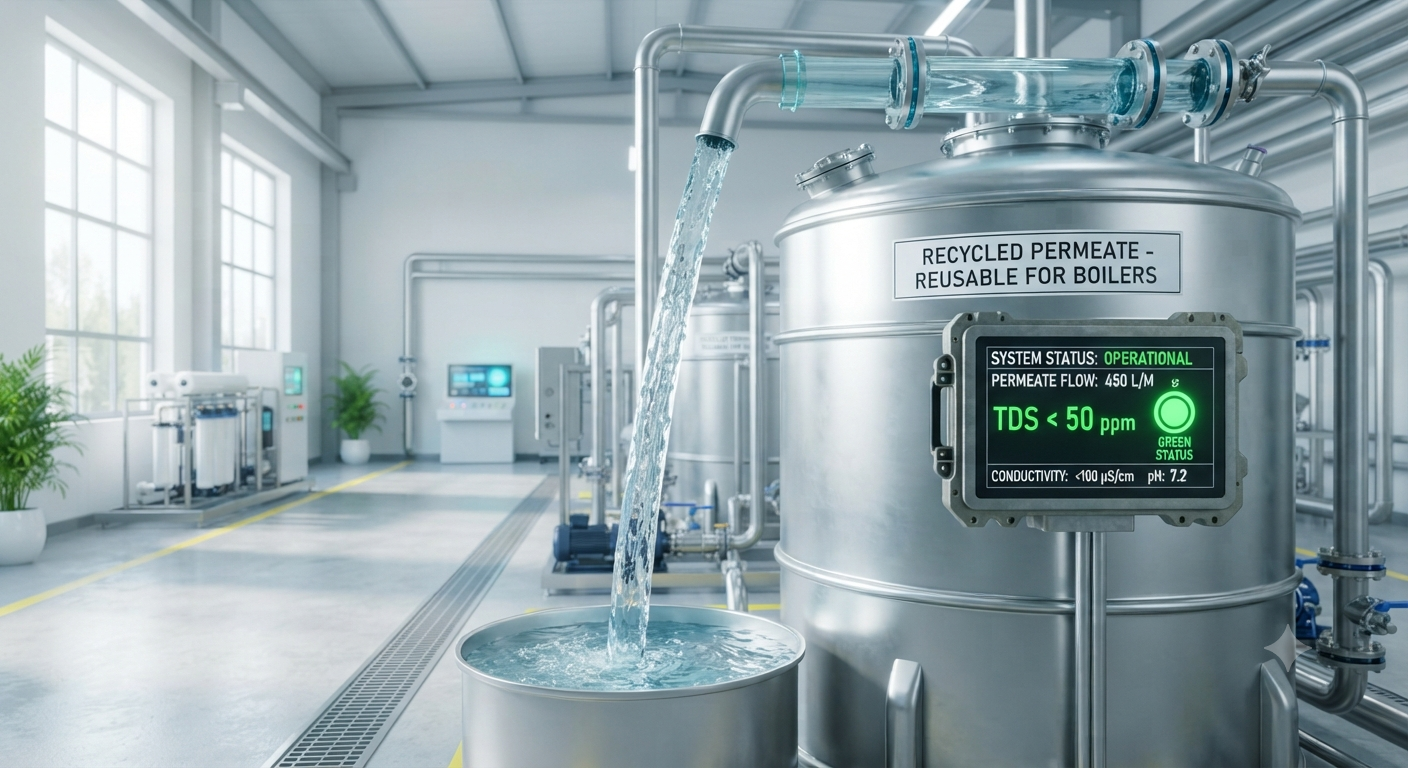
ZLD process se recover kiya gaya yeh recycled water is baat ka pramaan hai ki modern biofuel engineering sirf fuel production par hi nahi, balki ecological conservation par bhi barabar dhyan de rahi hai. Sarkar aur industrial units ke is coordinated mechanism ke chalte, aaj desh mein environmental protocols ka sakht paalan ho raha hai.
Yeh technology-driven approach yeh saaf karti hai ki Bharat ka energy transition path na sirf desh ko self-reliant banane ki disha mein agrashar hai, balki hamare natural resources aur environment ko surakshit rakhne ke liye bhi poori tarah committed hai.
Part_5: The Economic Analysis: Rural Ecomony & Macro Data
Chapter 16: The Farmers’ Perspective: Crop Diversification and Income Stability
Ethanol Blending Programme ka rural economy par ek bohot bada aur positive impact dekhne ko mil raha hai. Traditional farming mein kisano ke saamne aksar aane wali ek mukhya chunauti—Glut Market (Fasal ki bohot zyada paidawar aur daam kam hona) hoti hai.
Jab sugarcane ya maize ka bumper utpadan hota hai, toh market supply badhne se pricing par prabhav padta hai aur baazar mein laagat ke anusar returns milna mushkil ho jata hai.
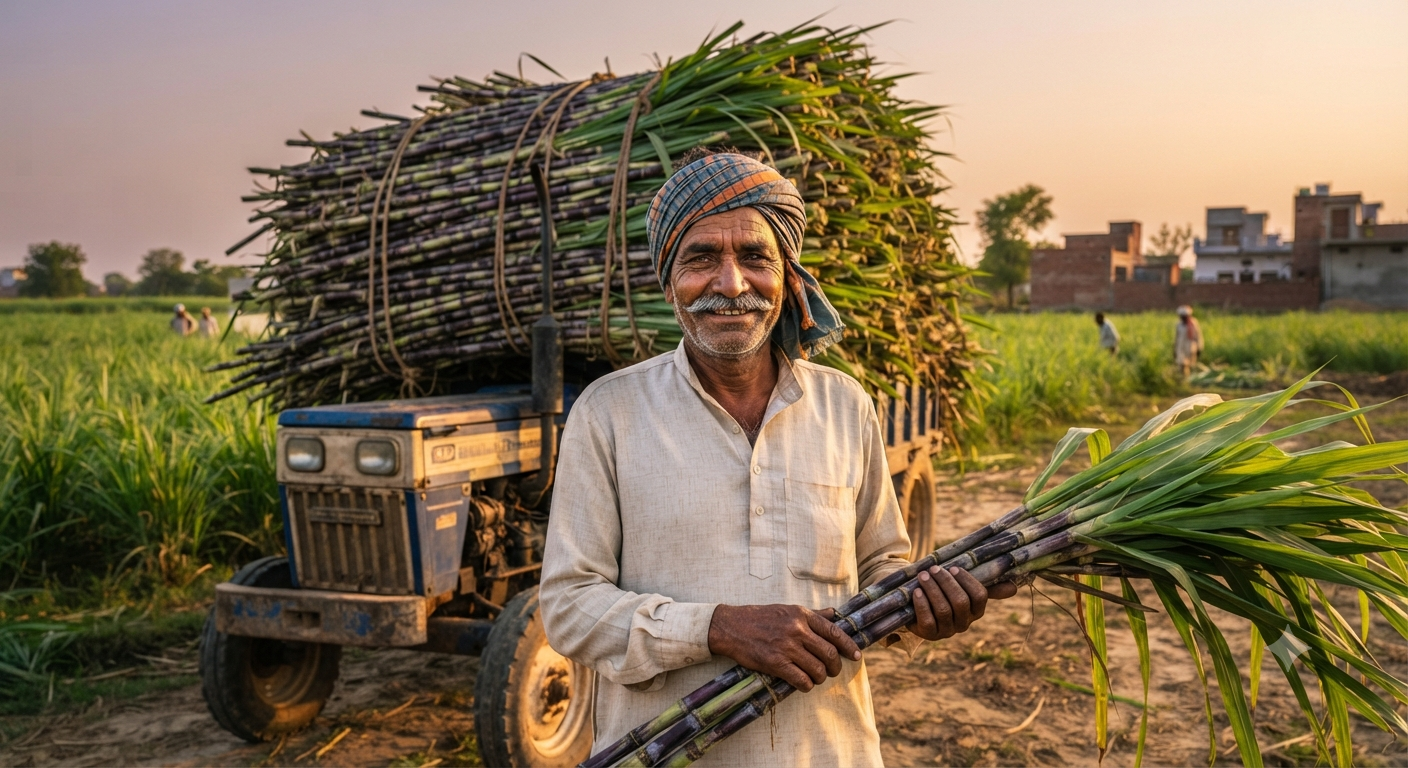
Ethanol policy ne is chunauti ke samadhan ke liye ek alternative market aur naya vikalp tayaar kiya hai. Ab sugar mills aur distilleries surplus crops ko ethanol production ke liye procure kar leti hain.
Isse kisano ko apni upaj ke liye ek assured demand milti hai, jo unhe distress selling (majoori mein saste mein bechna) se suraksha pradan karti hai.
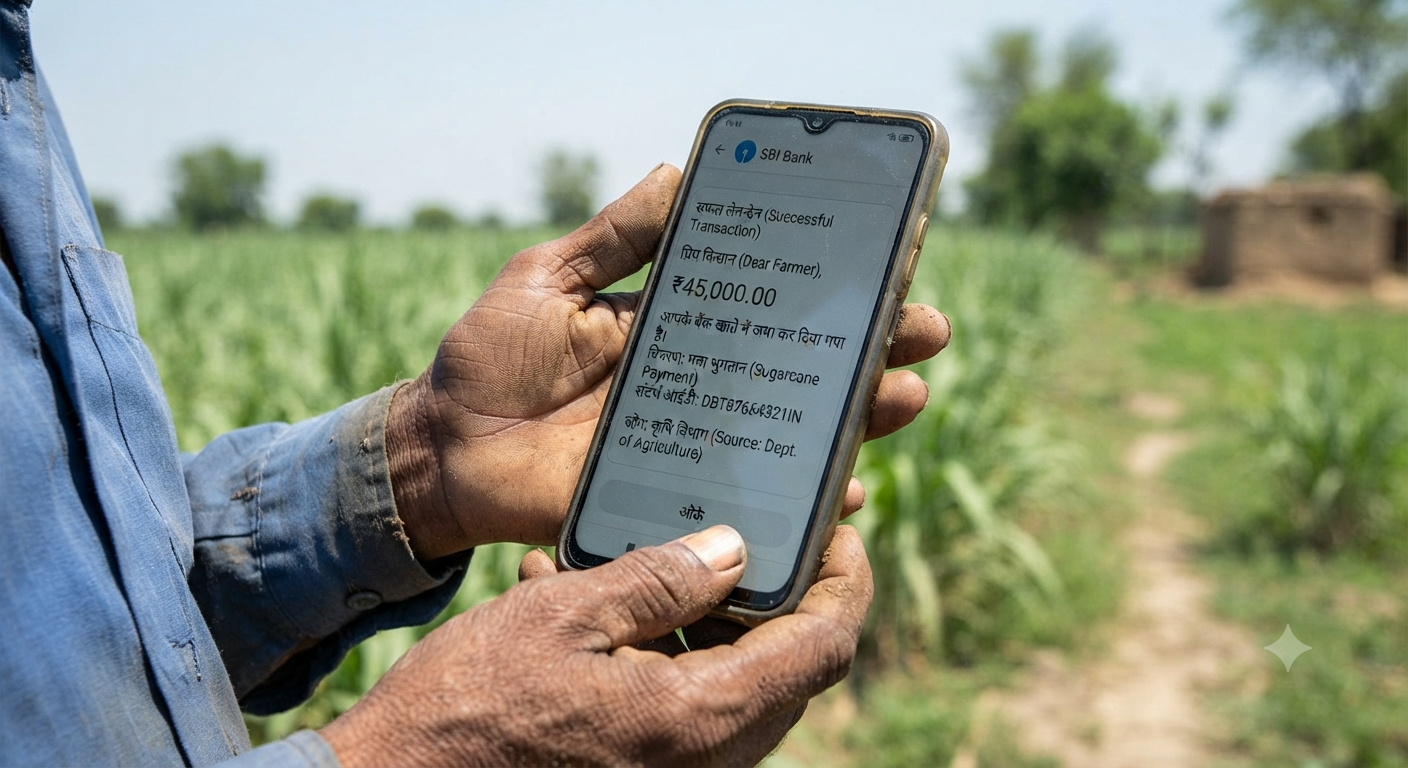
Sarkar ka focus ab multi-feedstock model par hai taaki ganna utpadako ke sath-sath grain (makka aur industrial-grade grains) ugane wale kisan bhi is dynamic economic chain ka hissa ban sakein aur unki income mein stability aa sake.
Chapter 17: Corporate Margins and Guaranteed Pricing Mechanism
Distillery sector ki financial viability aur operational smooth flow ko banaye rakhne ke liye Oil Marketing Companies (OMCs) ek unique aur structured Remunerative Pricing Mechanism follow karti hain.
Policy guidelines ke mutabik, ethanol ka procurement rate niyamit roop se taya kiya jata hai, jo is baat par nirbhar karta hai ki ethanol kis feedstock (Sugarcane Juice, B-Heavy Molasses, C-Heavy Molasses, ya Grains) se process hua hai.

Pricing Hierarchy & Market Security:
- Feedstock-wise Incentive: Sarkar un raw materials par pricing incentives ko balance karti hai jo primary food grains par prabhav nahi dalte (jaise damaged grains ya industrial-grade molasses). Is transparent pricing pipeline se distilleries ko ek long-term business visibility milti hai.
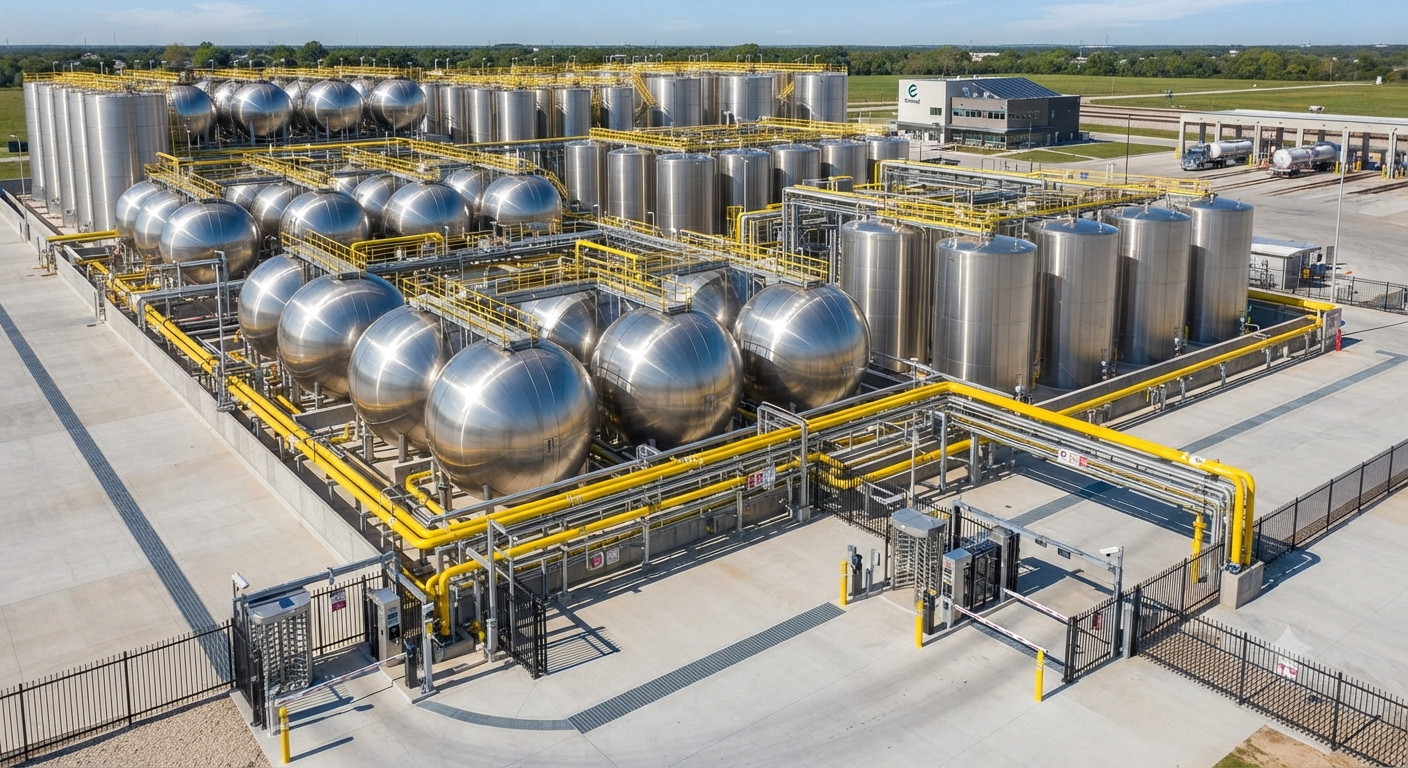
- Fixed Offtake Agreements: OMCs aur distilleries ke beech long-term supply agreements hote hain. Iska matlab hai ki agar plant standard fuel specifications ke mutabik ethanol production karta hai, toh sarkaari companies use ek pre-determined rate par procurement ke liye committed hain. Yeh assurance banking sectors aur investors ko is energy infrastructure mein capital investment karne ke liye ek stable aur secure mahaul pradan karti hai.
- Asset Expansion: High-capacity commercial storage terminals handling bulk bio-ethanol distribution.
Chapter 18: National Economy: Forex Savings vs Government Subsidies
Macroeconomic level par, Ethanol Blending in India desh ke trade balance ko behtar karne aur energy security ko mazboot karne ka ek mahatvapurna madhyam hai.
Bharat apni crude oil ki zaroorat ka lagbhag 85% hissa baahar ke deshon se import karta hai, jiske liye foreign exchange kharch karna padta hai.
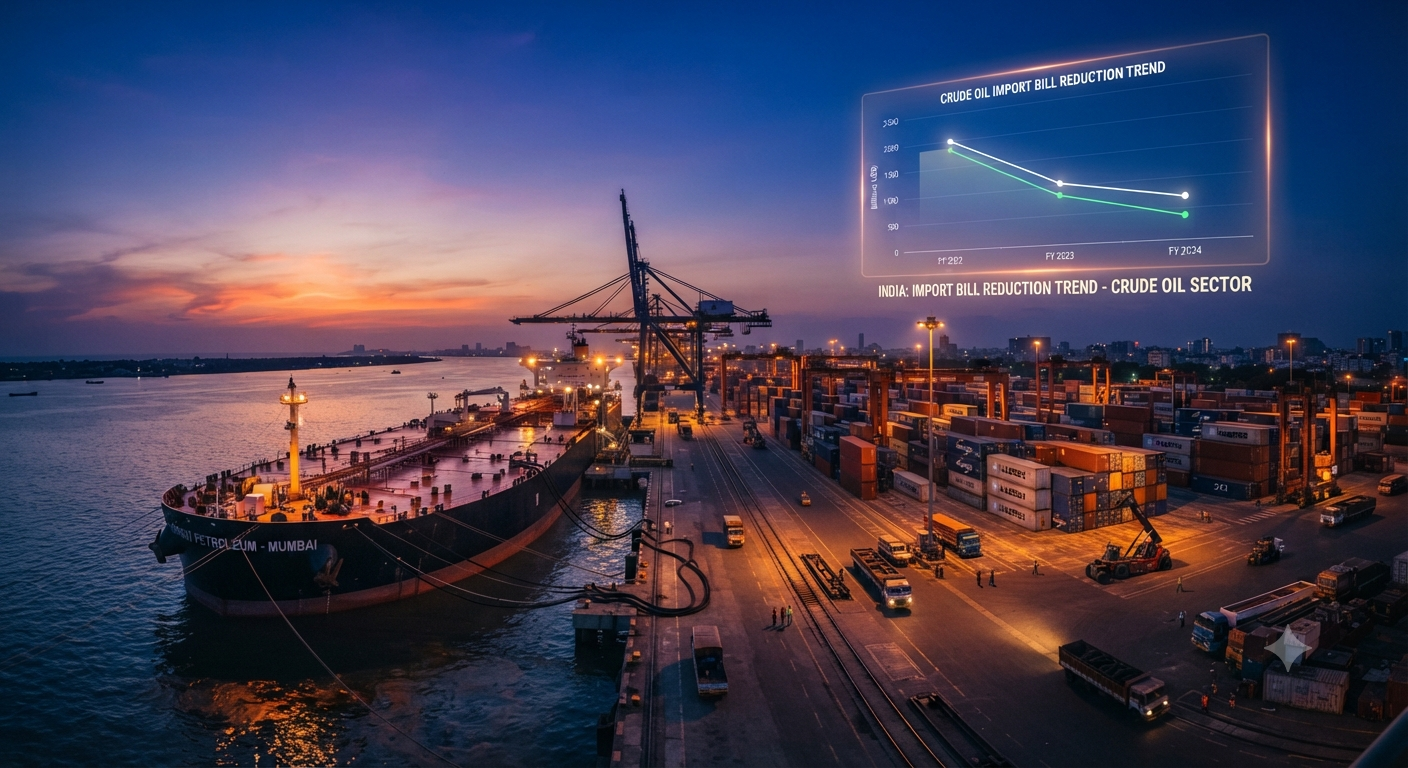
The Financial Balance Sheet:
- Forex Reserve Preservation: 15% se 20% tak ki blending success ke sath har saal desh ke lagbhag ₹30,000 Crore se zyada ki foreign currency ki bachat ho rahi hai. Yeh preserved resource desh ke domestic infrastructure development aur welfare planning mein madad karta hai.
- The Fiscal Balance: Weighing the trade-offs between foreign exchange retention and local infrastructure funding.
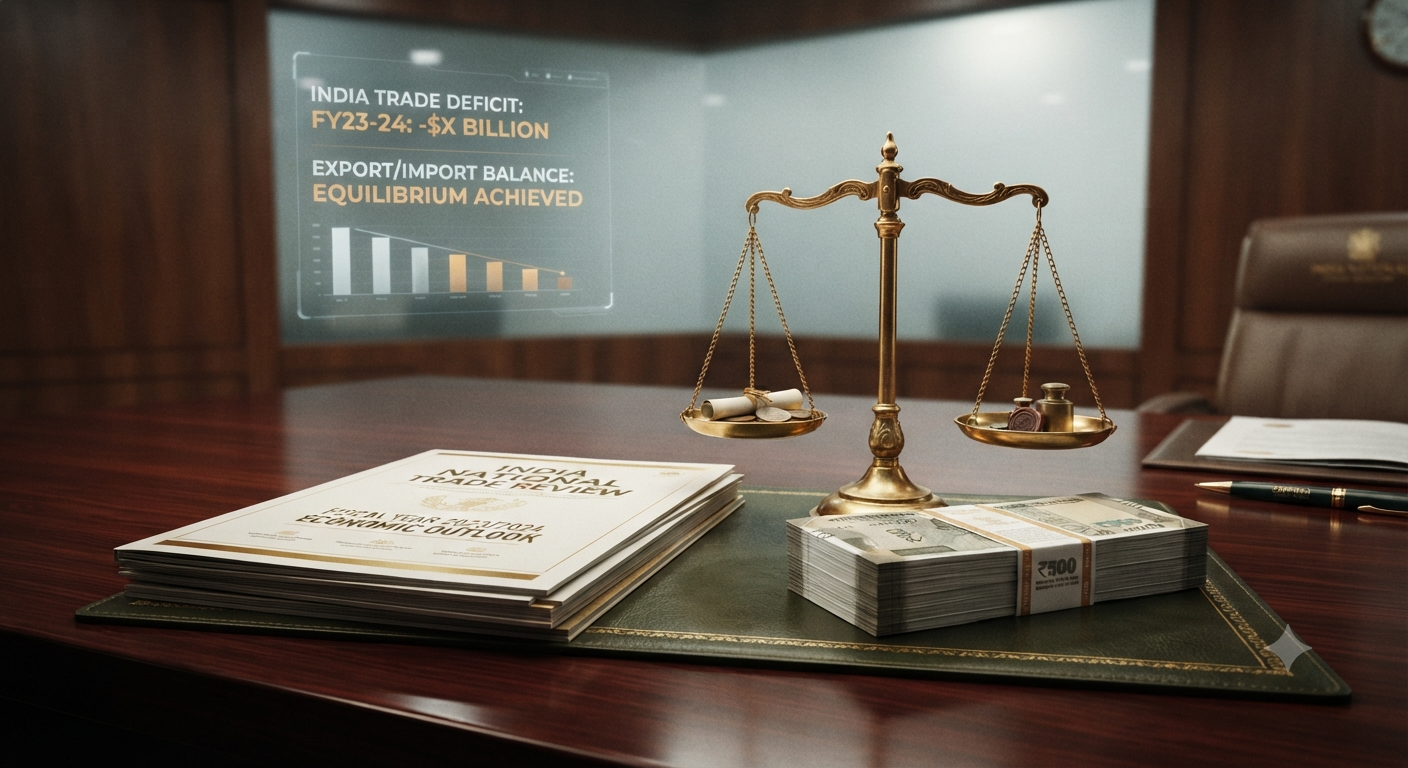
- The Investment Element: Is strategic ecosystem ko setup karne ke liye sarkar capital assistance aur specialized interest subvention schemes (byaaj mein chhoot) pradan karti hai. Halanki yeh financial allocation initial developmental phase ke liye aavashyak hai, lekin long-term energy security aur import bills mein kami ke nazariye se yeh ek profitable aur visionary economic roadmap mana jata hai.
Our Other Blog View: Cricket Pitch Ki Mitti Kaha Se Aati Hai. Click Here
Part_6: The Vehicle Mechanicals & Material Science
Chapter 19: Long-term Reliability of Legacy Engines and Material Degradation
Automotive engineering mein har ek engine aur fuel delivery system ko ek specific fuel chemistry ke hisab se design kiya jata hai.
Jab hum legacy vehicles (purani gaadiyan jo pre-2020 ya pre-E10/E20 eras ki hain) ki baat karte hain, toh unme use hone wale materials blended fuels ke prati alag tarah se adapt karte hain.
Ethanol ek powerful chemical solvent hai jo material properties par asar dalta hai. Purane fuel systems mein jo standard rubber hoses, gaskets, aur plastic fuel lines hoti thin, woh higher ethanol concentration ke lagatar sampark mein aane se dry ho sakti hain, jisse unki durability prabhavit hoti hai.
Iske alawa, carburetor aur injector ke un components mein jahan aluminum aur copper ka upyog hota hai, wahan material properties ke hisab se periodic inspection zaroori ho jata hai.
Yahi kaaran hai ki material science ke nazariye se, legacy engines mein fuel lines aur elastomeric components ki maintenance par dhyan dena ek standard practice hai.
Technical Reference: Material density and thermodynamic property comparisons verified via EngineeringToolBox Fuel Properties Database. (Click Here)
Chapter 20: The Blending Dynamics: Understanding Combustion and Performance
Ethanol-blended fuels (jaise E10 aur E20) ke rollout ke sath hi modern automotive testing mein fuel performance aur combustion efficiency par sabse zyada dhyan diya ja raha hai.
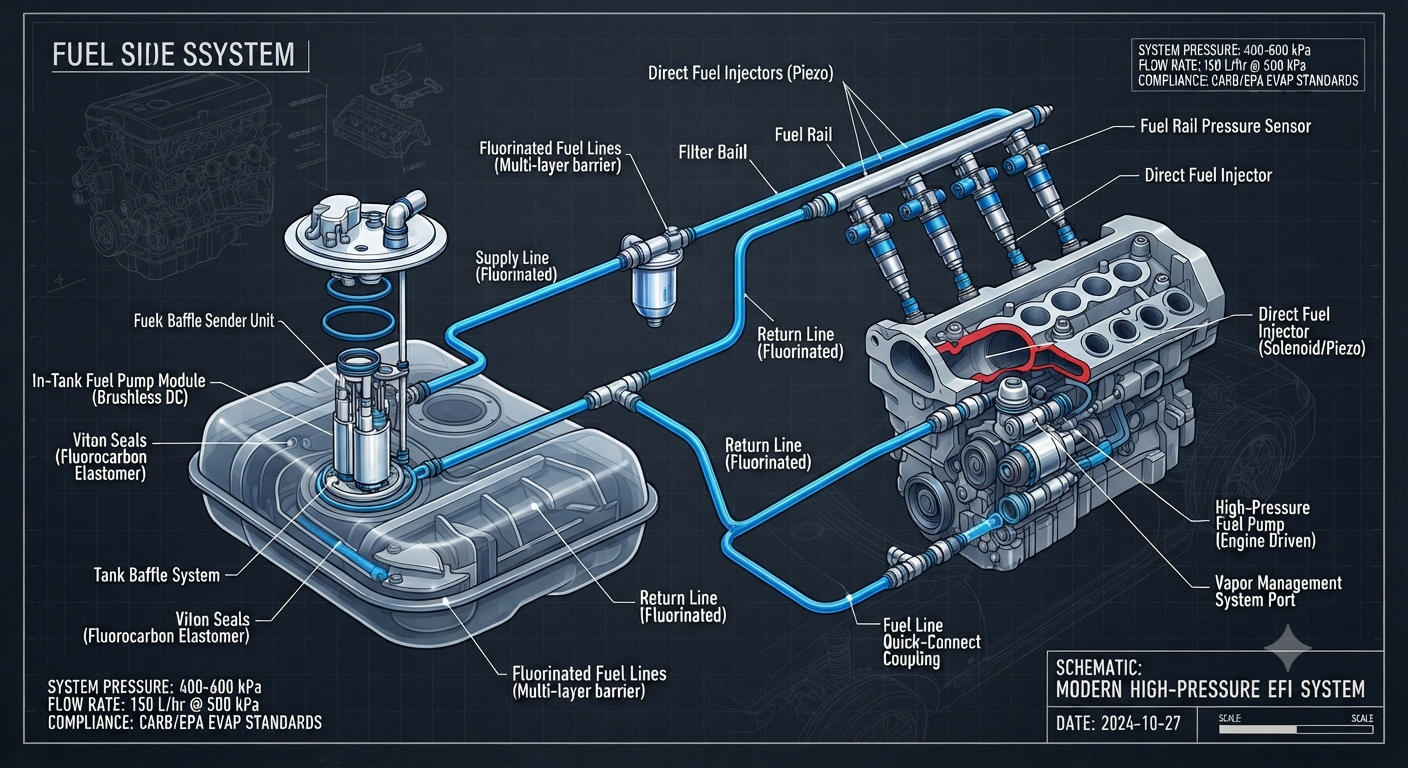
1. Real-World Driving and Efficiency
Official engineering validation aur driving assessments ke mutabik, blended fuel ka performance traffic conditions aur driving environments par nirbhar karta hai.
Shahron ke andar normal bumper-to-bumper ya heavy traffic driving mein ethanol-blended petrol ka mileage lagbhag samanya (unblended) petrol ke barabar hi dekhne ko milta hai.
Highway driving mein, jahan continuous high-speed cruising hoti hai, wahan thermodynamic properties ke karan performance aur consumption mein thoda sa volumetric antar dekhne ko mil sakta hai.
2. Engine Calibration & Optimization
Modern auto manufacturers ab automated Engine Control Units (ECUs) aur dynamic air-fuel ratio sensors ka upyog kar rahe hain.
Yeh technology blended fuel ke chemical structure ke hisab se ignition timing ko auto-adjust karti hai, taaki material safety bani rahe aur optimal fuel-efficiency maintain ki ja sake.
📌 Official Reference Note: As stated by Union Minister Nitin Gadkari in his official interview with ABP News, the mileage of ethanol-blended fuel under standard city driving conditions remains equivalent to normal petrol, with minor volumetric variations observed primarily during highway cruising. Watch the full media statement here: [ABP News Interview ]
Chapter 21: Flex-Fuel Vehicles (FFVs): The Next Phase of Automotive Engineering
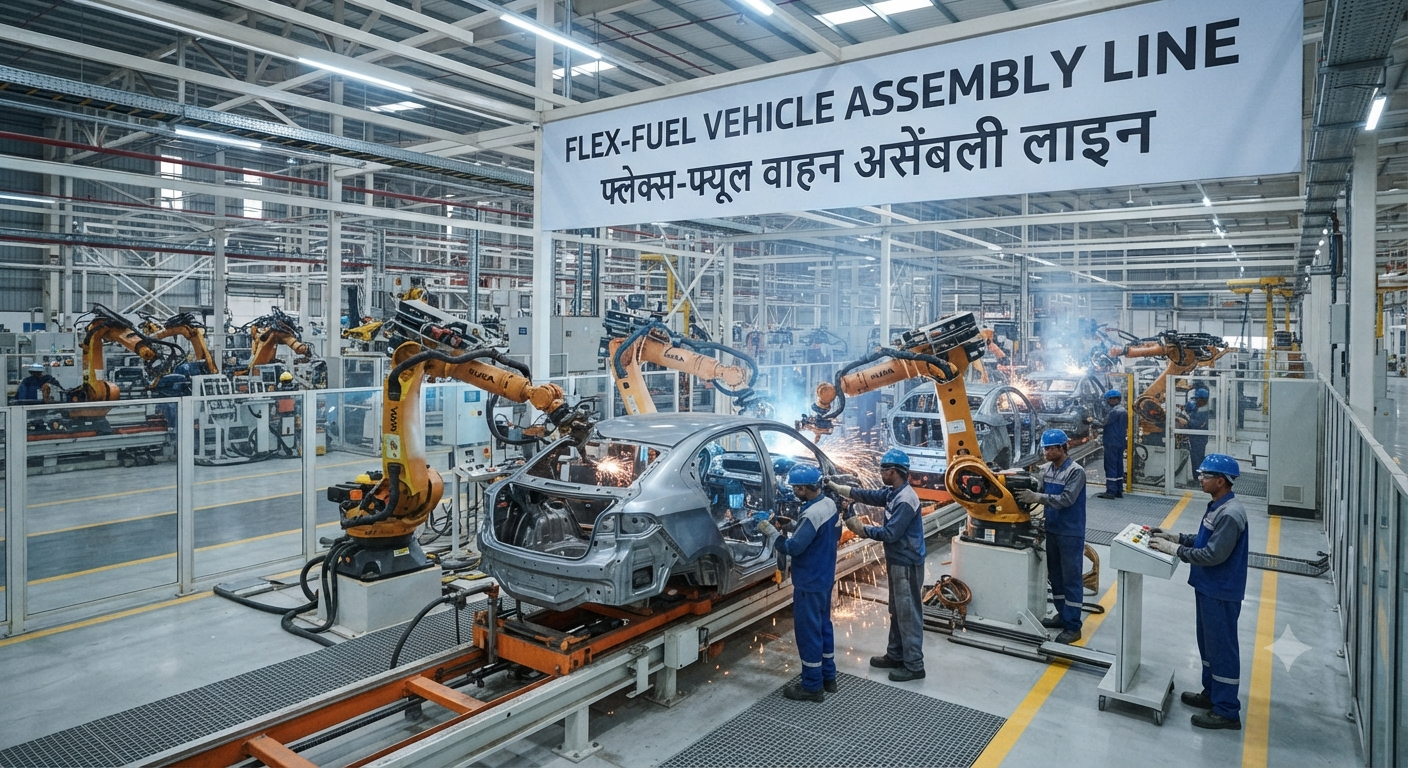
High-percentage ethanol blending (jaise E85 ya E100) ko safely handle karne ke liye standard engine ke bajaye specialized Flex-Fuel Vehicles (FFVs) ka upyog kiya jata hai. FFV ka architecture multi-fuel compatibility ke hisab se design kiya jata hai:
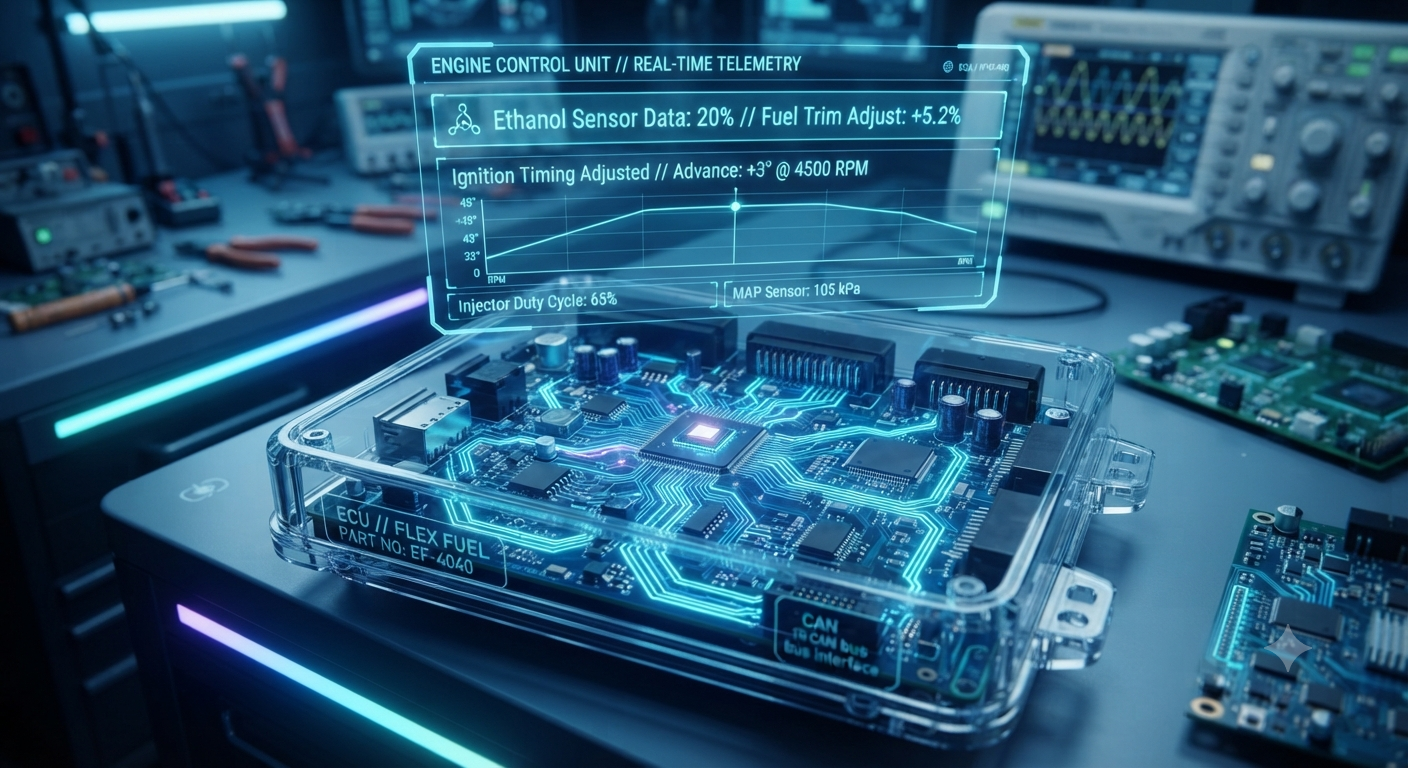
- Fuel Composition Sensor: FFV ke fuel line mein ek smart sensor laga hota hai koi bhi ethanol percentage (chahe wo 10% ho ya 85%) real-time mein detect karta hai aur yeh data immediate Engine Control Unit (ECU) ko transmit karta hai.
- Dynamic ECU Tuning: Fuel data milte hi ECU ignition timing aur fuel injection pulse-width ko automatically adjust kar deta hai, taaki fuel ki energy density ke hisab se combustion hamesha optimized rahe.
- Corrosion-Resistant Materials: FFV ke fuel tanks ko stainless steel ya high-grade polymers se banaya jata hai, aur fuel lines, valves aur spark plugs par Teflon ya special nickel-plating ki coating hoti hai jo ethanol components ke sath fully compatible hoti hain.
Chapter 22: The Consumer Awareness Framework
Sabse mukhya pehlu hai—Consumer Choice aur Awareness. Bharat mein zyadatar petrol pumps par ab blending standards ko adopt kiya ja chuka hai.
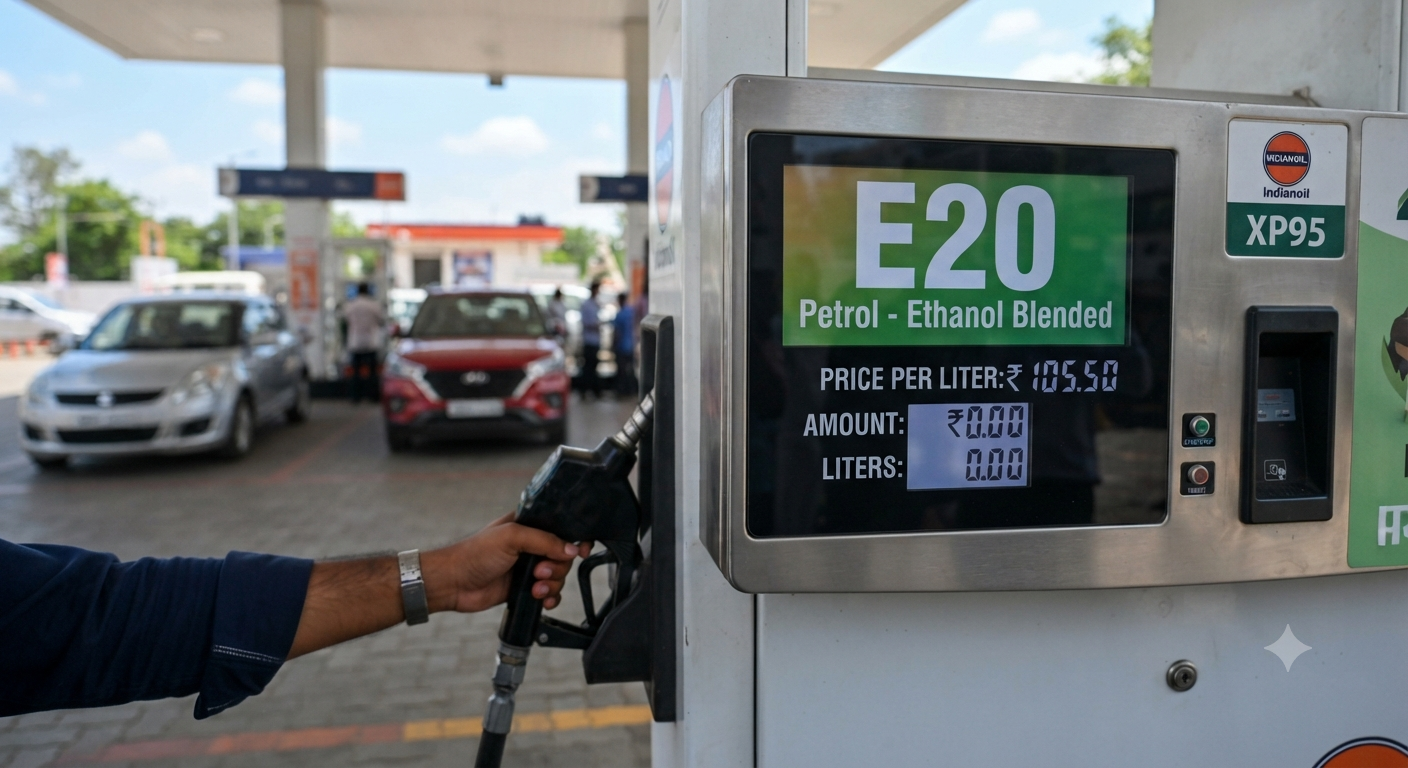
- Technical Compliance: Manufacturers aur automotive standard groups ke anusar, consumers ko humesha vehicle manual ke guidelines ke hisab se hi compatible fuel use karna chahiye.
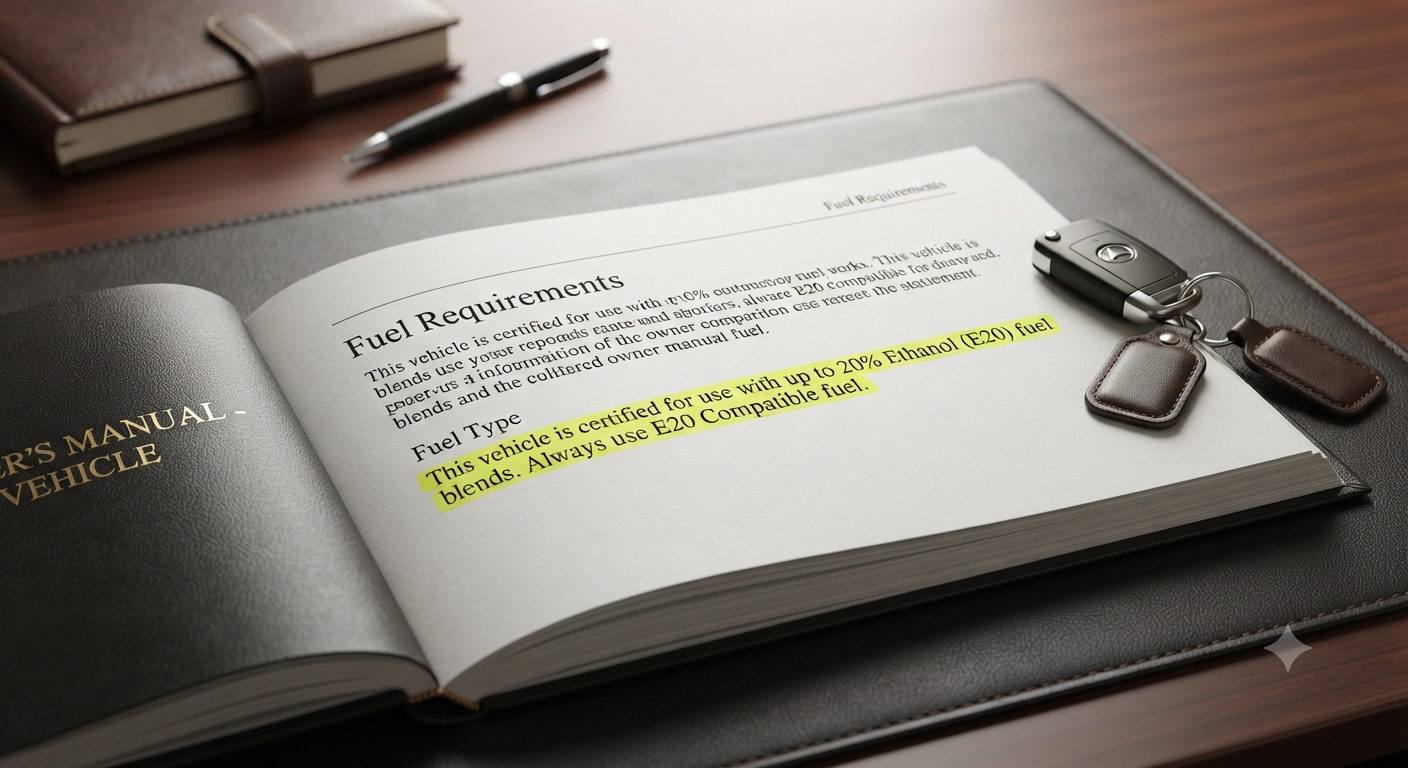
- Warranty Support: SIAM aur major automobile manufacturers ke official statements ke mutabik, companies apni vehicles ke validated fuel guidelines ke tehat warranty protocols ko poori tarah se honor karti hain. Consumer ko hamesha gaadi ke manual ke nirdeshon ka palan karna chahiye.
Part_7: The Technical Insights & Disclaimers
Chapter 23: What Do the Testing & Original Research Papers Actually Say?
Is mudde par ARAI (Automotive Research Association of India) aur IISc (Indian Institute of Science) ki reports sabse pramukh aur pramanik hain.
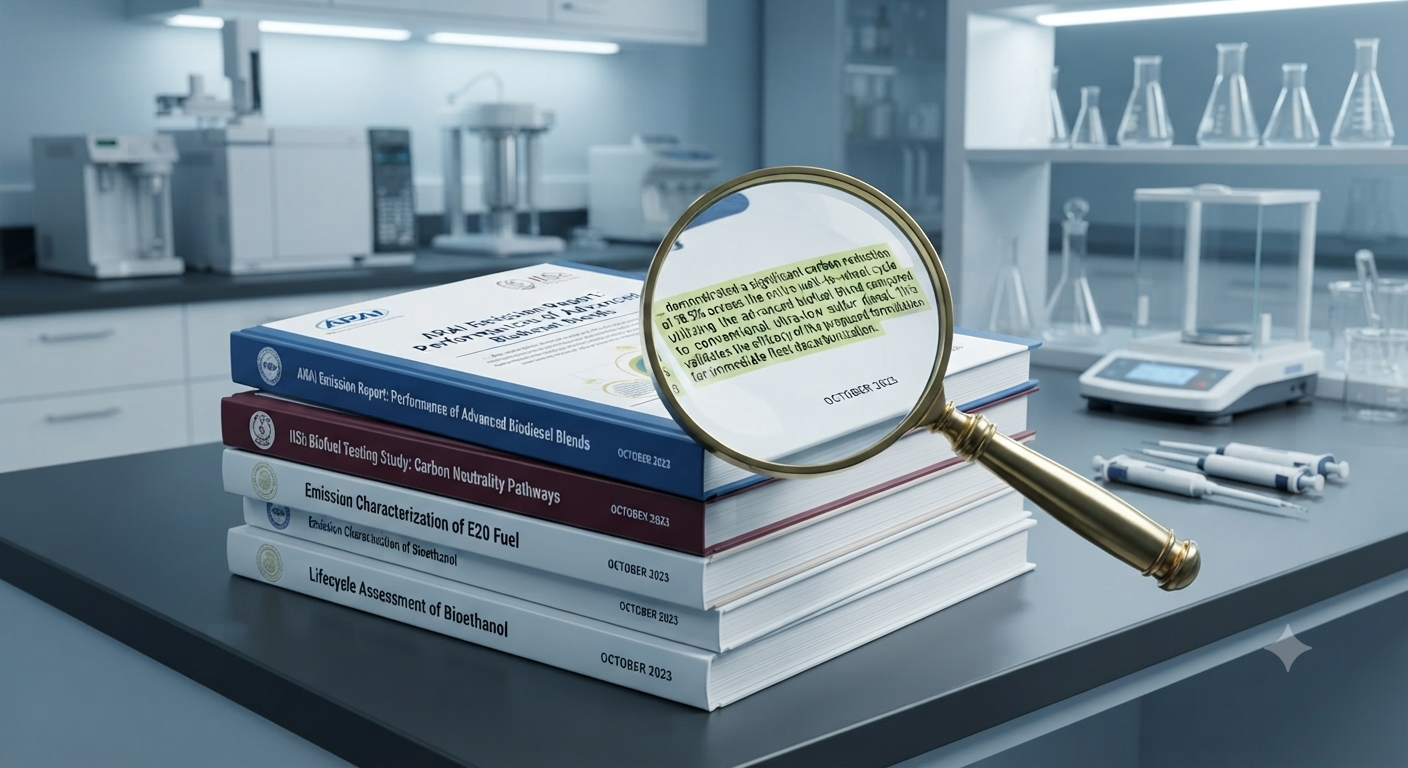
- Engine Performance: In reports ke mutabik, E20 fuel ke sath proper calibration hone par emission profile (CO and Hydrocarbon reduction) mein kafi sudhar (significant improvement) dekhne ko mila hai.
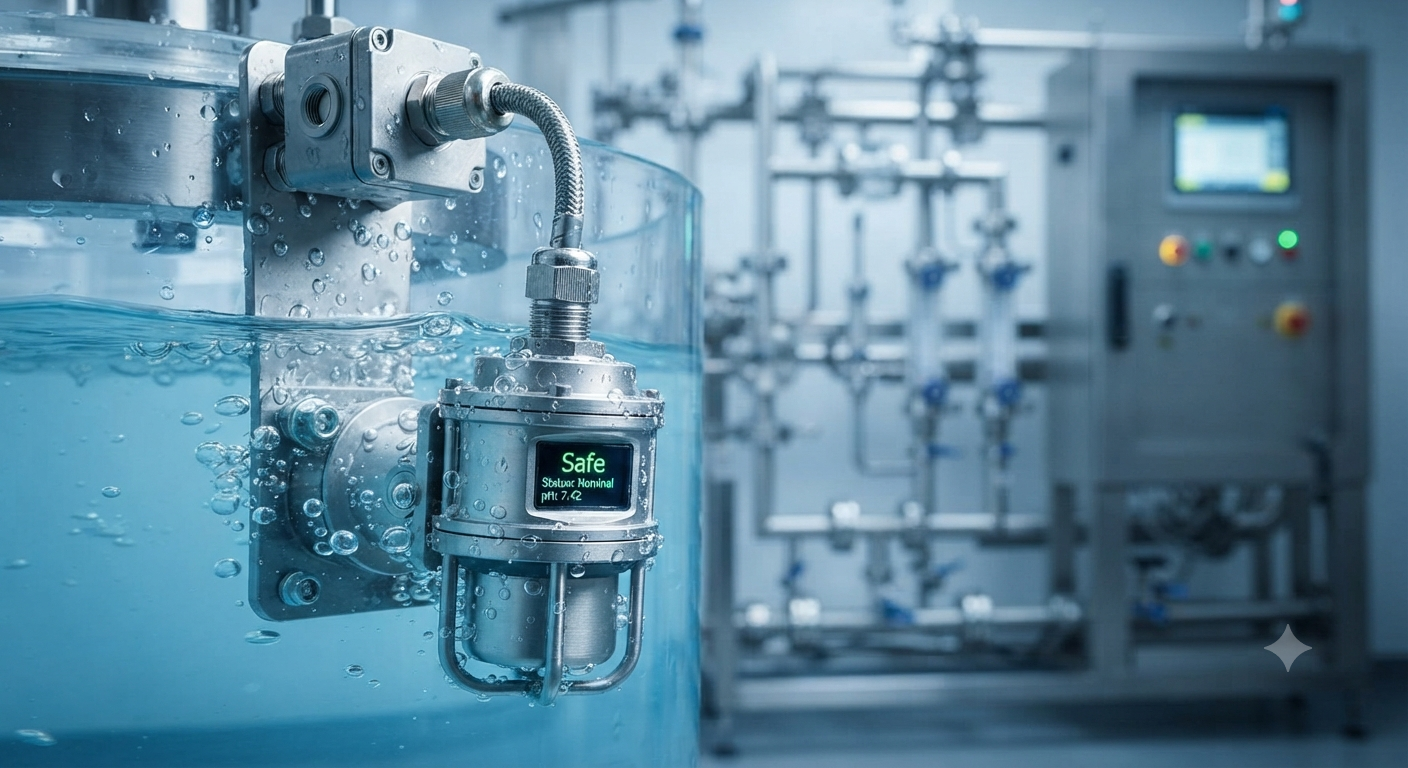
- Environmental Safety Compliance: Environmental guidelines ke mutabik, Zero Liquid Discharge (ZLD) systems ke sanchalan mein real-time monitoring sabse mahatvapurna hoti hai. IoT-enabled sensors ka upyog karke modern distilleries mechanical status ko ensure karti hain aur environmental compliance ko 100% fulfill karti hain.
Chapter 24: Conclusion & Visionary Future Outlook
Bharat ka Ethanol roadmap ek Strategic National Initiative hai. 2026 tak ka target hume globally clean energy alternatives mein aage le ja raha hai, jiske liye Flex-Fuel Accessibility aur Water-Efficient Distillation mein technology-driven investments kiye ja rahe hain.
Final Verdict: Ethanol blending desh ki energy self-reliance ko badhane ke liye ek mahatvapurna aur zaroori kadam hai. Iska bhavishya Second-Generation Biofuel (Agricultural waste/Straw-based) ki taraf badhne mein hai.
jisme paani ka footprint kam hota hai aur food security ka balance bhi poori tarah bana rehta hai. Desh ka yeh transition long-term mein energy aur environment dono ke liye ek sustainable solution banega.
📝 Updated Legal & Content Disclaimer
Legal & Content Disclaimer: The content provided on this blog is for informational and educational purposes only and does not constitute professional, legal, financial, or automotive advice. While every effort has been made to ensure the accuracy of the technical and policy-related information based on government and published industry data, readers are advised to verify vehicle compatibility through their specific manufacturer’s manual. The views expressed here are purely analytical and informative, and do not reflect the official stance of any manufacturer, organization, or government body. The author and the website are not liable for any vehicle damage, economic loss, or individual consequences resulting from the use or interpretation of the information provided herein.
🤖 AI-Generated Imagery Notice: All visual media, diagrams, and images used across the chapters of this article are AI-generated for illustrative and creative representation purposes only. They do not depict real-world entities, actual automotive failures, or official testing events.
Thanks for visiting!